re: a mammy tale

I want to yell so loud that Baby Girl can hear me that dirty ain’t a color, disease ain’t the Negro side a town.  I want to stop that moment from coming-and it come in ever white child’s life- when they start to think that colored folks ain’t as good as whites.- The Help

old photo of baby Ralph in an elaborate lace christening dress held proudly by a large black woman

"Black man with white child and dog." http://www.flickr.com/photos/george_eastman_house/2720789660/

“Black man with white child and dog.” via a “Manny”

"White-capped nurse holding infant." http://www.flickr.com/photos/floridamemory/3248110220/

“White-capped nurse holding infant.” via
"Negro domestic servant, Atlanta, GA, May 1939." http://www.flickr.com/photos/nypl/3110575890/“Negro domestic servant, Atlanta, GA, May 1939.” via

"Child and nurse." http://www.flickr.com/photos/george_eastman_house/2678243048/

“Child and nurse.” via

…the dichotomy of love and disdain living side-by-side is what surprises me- The Help

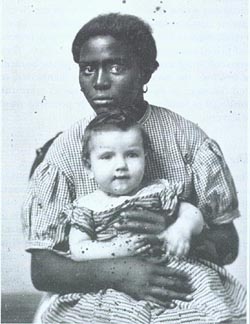
Mammy & Child-1850

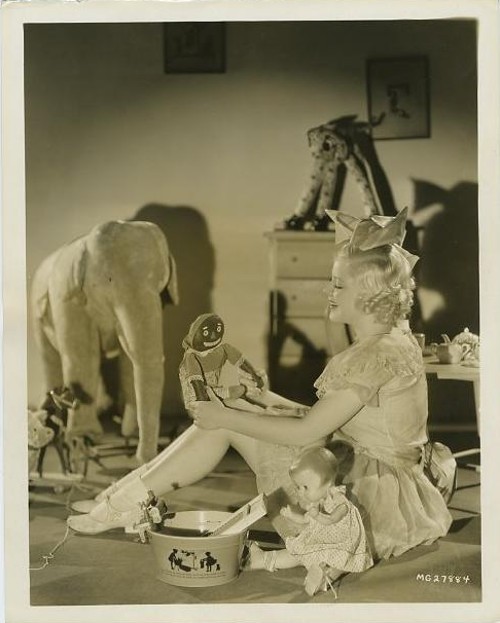
some photos found @ postpostracial

a mammy tale

The following essay is reblogged from Southern-Style.  A real life modern-ish mammy story!  I’ve long been interested in the dynamic between black women and other people’s white children.  When I was in college studying African-American history for the first time, I stumbled upon the thought that Mammies had raised our nation and yet black women generally are not revered (to say the least).  When I was a nanny myself, I thought a lot about mammy.  And, back in January, when I devoured The Help I pondered her some more.  If you haven’t read it yet, please do yourself a favor and put Kathryn Stockett’s The Help on your summer reading list.  It’s one of the greatest books I’ve ever read.  Right up there with The Girl Who Fell From the Sky, Caucasia, The Curious Incident of the Dog in the Nighttime, Memoirs of a Geisha, and Life of Pi.  i.e. the rest of your summer reading list.

I Remember Mammy:
Mattie Lee Martin (“Mammy”)
By one who loved her, Sharman Burson Ramsey

Thirteen year old Mattie Lee Martin took her mentally challenged older sister by the hand and led her down the rutted, red clay country road. Neither looked back. Mattie was determined her sister would not be abused again in their grandparent’s home. She’d finally accepted that her parents would never come back to get them. The road led to the town of Dothan, Alabama, and a life, Mattie Lee hoped, that would be better than the one they’d known on that god-forsaken farm.

Mrs. Bender stood at the door of her variety store, broom in hand, and watched the two girls walk toward her down the sidewalk. Mattie, the spokesperson for the two, stepped forward and boldly asked, “I need work and a place where me and my sister can stay. Do you know of anything?” She looked up at Mrs. Bender quite seriously.  Her black eyes were wide.  Anxiety was written all over her round black face that now dripped in sweat in the hot summer day after her long walk. Mrs. Bender read in that expression that she’d gotten this far, but now the little girl was in a quandary as to what should she do now? She looked at the tight grip she had on her much larger, but obviously more dependent, sister.

Mrs. Bender sized them up and in her gentle voice said, “I hear they are hiring maids across the street at the Wadlington Hotel, but come in here and let me help you with something to wear to your interview. Your sister can rest here while you go and inquire. Tell them I sent you.”

Mattie stood straight and said, “I don’t take no charity. I’ll pay you back.” Mrs. Bender nodded.

That Jewish lady remained a dear friend to Mattie the rest of her life.

Mattie Lee Martin later became highly regarded for her cooking skills. She cooked at the restaurant of the Houston Hotel for awhile and then took a job as the private cook for Dr. Moody, founder of Moody Hospital in Dothan. When the Moodys moved into their big house on Main Street from the house across from the hospital, Mattie for some reason was not going with them. Dr. Moody recommended Mattie to Dr. E. G. Burson, my father. The Moodys gave her a house as a parting gift.

When Mattie Lee Martin interviewed with my mother, she told my mother, “I don’t work with children.”

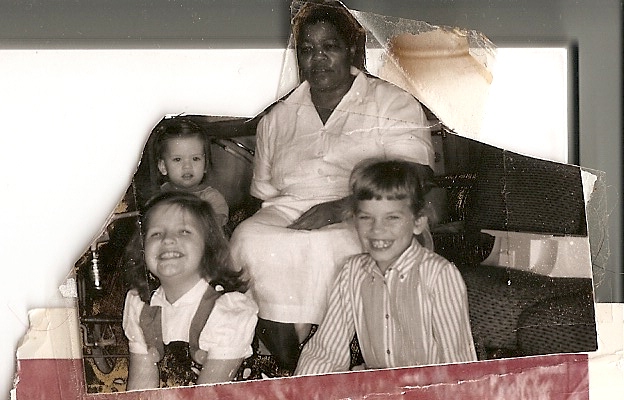
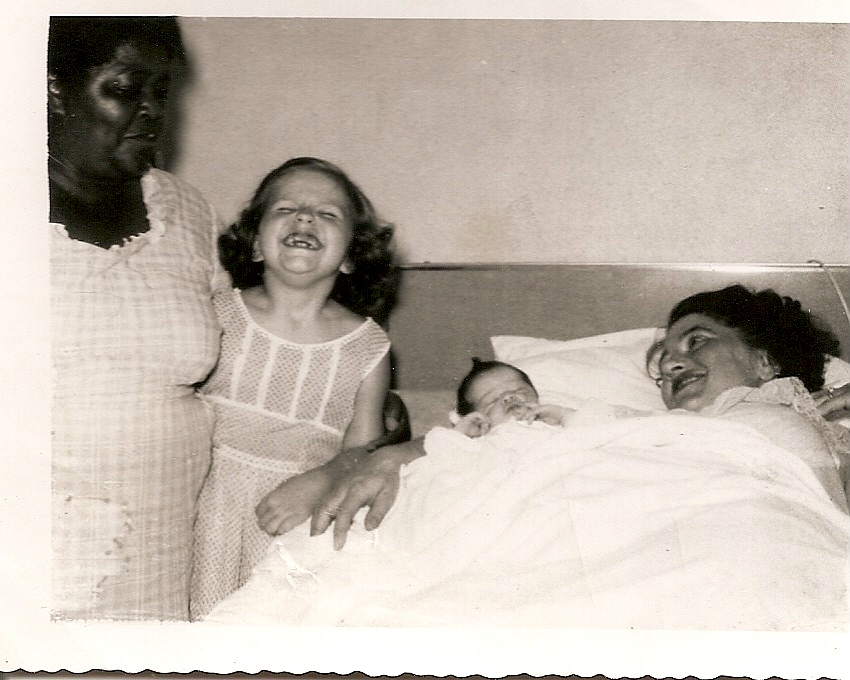
Yet as the pictures reveal, Mattie Lee Martin became as dear to us as our grandmothers and so she deserved just as endearing a name. Thus she came to be called “Mammy.”

Mammy came to work every morning before seven, except Sunday, either by bus or by taxi and stayed until after five.  Even after our overweight dog, Sir Bow Wow, went blind, he would meet Mammy at the bottom of the hill where she got off the bus every morning and together they would plod their way to the house.  She cooked, cleaned, and loved us. I remember seeing one of her paychecks in the amount of $27.00. I also remember the days we’d take Mammy home and she’d ask Mother to stop by the grocery store several blocks away. Then she’d put some money in my hand and I’d run into the grocery store and plunk the money down saying, “Bit o Dental Snuff, please.”

Mammy ordered the groceries to cook for lunch from Murphy’s Market downtown first thing in the morning and a boy on a bicycle delivered them in time for her to cook. Dinner was served at exactly 12:00 noon. (In the South we eat breakfast, dinner and supper.) The meat went on a platter before “the doctor”. The table was set precisely with forks on the left of the plate (with the napkin) and the knife (facing inward) on the right. The glass was placed above the knife. She trained us well.

…Mammy had worked for the aristocracy of the town, Dr. and Mrs. Earl Moody. While she often locked horns with my mother (whose own father had been killed when logs rolled off a log truck when she was 13 leaving her mother to struggle raising five children) she refused to give up on us. “Yo mama, she be mean. But I be mean too, so we get along.” Mother had been awarded campaign ribbon for service in World War II as a nurse at the Battle of the Bulge. She could curse a blue streak and did so on occasion when things did not go to suit her. Sometimes those disagreements would get so heated that Mother would fire Mammy, but we’d cry and carry on so, she’d have to go and ask her to come back. My father was a doctor and his father was a doctor and that made us worth Mammy’s time and effort. My mother might not know what was “proper” but Mammy did, and she was determined to turn us out well.

…Mammy did have her own family…a daughter Lucy Mae Dixon who was my Mother’s age. Mammy had very little education herself and the lists she made could barely be read, so she valued a good education. Mammy skrimped and saved and sent her to college in the North. It must have been a Catholic college because Lucy Mae converted to Catholicism. Mammy was a dedicated member of the Cherry Street AME Church. Lucy earned her Masters and came home to teach. Mammy bought her items of silver “on time” as birthday gifts. The mahogany furniture in their living areas was always covered in plastic to “save” it.

…I guess Mammy told my brother and sister the same thing she drilled into me. “Yo daddy be somebody. You gotta be somebody.” My sister is a cardiologist in New Orleans (Dr. Sylvia Burson Rushing) and my brother (Elkanah George Burson III ) has just started a pharmaceutical company (Burel Pharmaceuticals). Me? After you’ve got a man it’s all right “to rune yo hands” with Ajax, I learned. I wash a mean bathtub and have stayed married to the same man, an attorney of whom she approved (whose family once owned the Houston Hotel where she had worked) for forty years doing a little teaching and writing. This humble generous woman whom I never saw wear a single piece of jewelry gave me a pearl and gold bracelet for graduation from high school.  She who worked from can to can’t all of her life gave me a silver goblet when I got married.  I wonder if she ever knew how much they mean to me and that I realize the sacrifice and love those gifts demonstrated.

…Mammy was a proud person who made the most of her situation and, selflessly, with hard work and determination earned respect and made a good life for herself and her family. She raised us, her white family, to believe we could do whatever we chose to do and that we should make our parents proud. She drilled into us values of honesty, integrity, and a sense of responsibility.  Because we had been given so much; much was expected.  Because we loved her, it was Mammy we wanted to make proud.

Read more HERE

black mother, white children

I accidentally happened upon a fascinating thread discussing the photograph below.  It’s definitely worth checking out if you’re interested in this sort of thing.  Apparently, Mary categorized herself as “white” on the 1880 Census.  I wonder how that was possible.  Whatever the case, the point that there are approximately 3000 descendants of this family who, I have little doubt, consider themselves to be exclusively white brings me back to the novel idea that we are all mixed, we are simply American, and the veil of otherness is a detrimental illusion from which we desperately need to wake up. K?

James William Evans (1814-1883), his wife Mary Eliza Hoggard, and their children William, John and Mary Evans. Mary Eliza Hoggard was a descendant of the free African American Cobb and Bazemore families of  Bertie County, North Carolina. James William Evans was from Dorchester County, Maryland.

JAMES W. EVANS,

Mr. Evans married Mary Eliza Hoggard, of North Carolina, February 8, 1844. They have three children: Mary Frances, (who married Mr. Frank Collins, a son of J. W. Collins, Register of Clay County, Missouri, and they live with Mr. Evans on the farm);  John Henry, (was married August n, 1877, at Hainesville);  and William James, (who was born August 29, 1848, and married Caroline Gow, a daughter of Arthur Gow, of Clay County, in November, 1875).

We learn… that the North Carolina counties involved are Clinton County and Clay Counties Missouri. The children grew-up, married and lived in these two counties. The daughter married a Collins.

Apparently, James Evans brought (not bought!) Mary Hoggard from North Carolina and married her in Missouri where they raised their family. This makes sense, since this part of Missouri would have been “Free.”

This indicates to me that whites named Evans and Collins living in these two counties today, have a good chance of being a descendant of the black woman in the photo.

This photo speaks volumes of the kind of dilemma a black mother married to a white man found herself in during the 19th century.  This couple were married in Clinton County, Missouri, went by the surname Evans, and would have approximately 3000 descendants today.

  • The children are mulatto but 100% passable. The time, right around the Civil War. The choice the children had was really no choice. Quite simply, either they turned their backs on the mother and leave the state or be classified as Negro and endure Jim Crow for the rest of the lives.

    The mother is clearly not thrilled with the photograph. I think she was forced to sit for it by her husband. She appears to be thinking it’s not a very good idea, that the photo could prove an embarrassment  to her children. Indeed, it could prove an embarrassment to all her descendants 200 years into the future.

    I think this is what she was thinking.

    Let’s say the tall young man in the rear passed for white, married a white woman and had a family. This photo would not be considered a precious family heirloom but instead an indictment of Negro heritage.

    Does this explains why the mother is not smiling…?

  • The husband was born in 1818. The photo — judging by the clothing — was taken a few years before the Civil War. Location Virginia, a slave state. Things were starting to heat up. All around them slave owners were getting pissed a the North, Lincoln, and most especially those sympathetic to Negroes. You think interracial dating is tough today, imagine how hard it was then.

    All kinds of scary things were going on in the Slave states. People were stock-piling weapons. People were talking about succession. The young man standing was  about military age. Free blacks were being snatched-up and sold back into slavery. If the woman had local relatives she had surely cut herself off from them. No way should could afford to have her kin be part of her new family.

    At school the children were probably catching hell because of their black mother. If the mother wasn’t on the verge of a nervous breakdown she would be around the time her eldest started talking about joining a local regiment to fight the yankees and preserve slavery.

    Her husband’s family surely would have disowned him by then and no white family would have anything to do with them. Of course if they lived on a farm their contact would be minimal, but if they lived on a farm they had slaves and that must  have made her a mess too.

    But the main thing is sitting for the portrait must have seemed insane to her. Her kids look white. Each one could easily pass. Why do something that would doom them forever to second-class citizenship? She had to be thinking that. The sit had to be the last thing she wanted for her children — proof they were black.

    Had the kids looked like mulattoes, it would have been a different story. But these kids look completely white. They could pass with no problem at all — so why do something that could get them lynched?

    And that photo would do that had her eldest married a local white girl.

    That’s my theory why the mother doesn’t look happy.

  • So, Mary Hoggard Evans (the black woman in the photo) has three children who pass for white. They each get married around 1875.

    That’s six generations. Let’s figure each of her descendants in each of these generations had three children who went on to have three children up until today.

    1875 3 times 3 = 9

    1900 3 times 9 = 36

    1925                   108

    1950                   324

    1975                   974

    2000                   2916

    That’s almost 3000 “whites” descended from black Mary Hoggard.

    See how nonsensical this white-black thing is?

yesterday’s history

When I started reading this article I thought, “This is about to be some ‘tragic mulatto’ b.s.”  Much to my surprise, it isn’t really.  I think Sarah played the part of the tragic mulatto very well, and got exactly what she wanted and deserved.  I wonder if the congregation’s response would have been different if “Pinky” hadn’t been quite so pink, but maybe “Brownie” instead.  Just a thought.  I also like this piece of our history because once upon a time, in a former life in which I considered myself black, I was a nanny and I worked in Brooklyn Heights and I walked by that church every day and was very drawn to it.  Part of me knew… And part of me was so clueless.

On This Day in History: June 1
Rev. Beecher’s Freedom Auction

by Vernon Parker

VIA

On June 1, 1856, Henry Ward Beecher, minister of Plymouth (Congregational) Church, and an ardent supporter of the antislavery cause, held a public “auction” of a young mulatto slave named Sarah to dramatize the evils of slavery.

The Brooklyn Daily Eagle reported that “she had been brought from a plantation near Staunton, Virginia.” When Sarah was called to the pulpit, she … “walked slowly, head bowed, and took a seat near the famous minister. She lifted her eyes, stared at the spellbound audience, and burst into sobs. Her plight tugged at the heart of the most stolid Congregationalist as Beecher’s inflamed rhetoric described her life. Daughter of a well-known white citizen, she had been put up for sale by her own father. The slave dealer involved contacted Beecher through a mutual friend and they struck a deal allowing Sarah to go north with the promise of either her return or the full manumission fee.”

The mock auction raised sufficient funds to purchase her freedom and buy her a modest home in Peekskill, New York.

The following is an excerpt from James H. Callender’s book Yesterdays on Brooklyn Heights: “As the anti-slavery agitation increased, Mr. Beecher thundered his invectives against the slave-owners of the South, and many of the leading men of his church were said to be directors of the famous ‘Underground Railroad’ by which fugitive slaves were passed along from the South across the border to Canada. It was at the close of one of his most powerful sermons that Mr. Beecher said he had a little matter he wished to present to the congregation. No one had any idea as to what he was going to say and the people waited in profound silence.

“He then suddenly burst forth, ‘Sarah, come up here!’ As the audience gazed, a little mulatto girl arose in the body of the church, ran up the pulpit steps and took Mr. Beecher’s hand. Turning to the assembled multitude, he said — ‘This little girl is a slave, and I have promised her owner $1,200, his price for her, or she will be returned to slavery. Pass the baskets.’ A scarcely stifled sob arose from the almost three thousand present. Bills of all denominations, jewelry, and watches and chains were flung in the overflowing baskets and when the total was counted, Mr. Beecher announced, amid thunders of applause, that Sarah was free, and enough remained to strike the shackles from the limbs of several others.”

A tintype of Sarah, also known as “Pinky,” the young mulatto slave whose freedom was “auctioned” by Rev. Henry Ward Beecher.

racial identity shaped by social experience, or white mulattoes

This entire post is reblogged from Renegade South: histories of unconventional southerners.  I find it to be a fascinating piece of American history.  It’s one of those stories in which “american” history and “african-american” history are so intertwined that a distinction between the two can hardly be made.  That’s just how it always should be, in my opinion.  This country has just one history.  It’s black and white and everything in between.  The story is long and may be hard to follow, but I think it’s worth the effort.

The Family Origins of Vernon Dahmer, Civil Rights Activist

by renegadesouth

Vernon F. Dahmer, a well known Mississippi civil rights worker, was murdered in 1966 by white supremacists connected to the Ku Klux Klan. Before the night of January 10, 1966, when the Dahmer grocery store and home were firebombed, Vernon had been leading voter registration drives in his community. To facilitate that effort, he had recently placed a voter registration book in the grocery store he owned.

Dahmer Grocery Store

Vernon Dahmer’s grocery store, located on Monroe Road, 3.5 miles from the Jones County line. Photo courtesy of Vernon Dahmer, Jr.

Vernon Dahmer, Western Union Telegram

It took many years and five court trials to convict KKK Imperial Wizard Sam Bowers in 1998 of having ordered the murder of Vernon Dahmer. Today, Dahmer is revered for his courageous work on behalf of black civil rights. In honor of his memory, both a street and memorial park in Hattiesburg bear his name.

In the essay that follows, Dahmer’s grandniece, Wilmer Watts Backstrom, and Yvonne Bivins, a member of his extended family, enrich our understanding by telling the story of his family roots in southern Mississippi. Dahmer’s multiracial heritage included white, black, and Indian ancestors. The narrative begins with the story of his grandmother, Laura Barnes.

The Family Origins of Vernon F. Dahmer, Mississippi Civil Rights Activist

By Wilmer Watts Backstrom and Yvonne Bivins

Laura Barnes was born in Jones County, MS in October 1854. According to her daughter, Roxanne Craft, “she was given to a black family to raise because she was born out of wedlock to a white girl.”

The 1870 census for Twp 9 in NE Jones County, Mississippi, shows that fifteen-year-old Laura was living in the household of Ann Barnes, a 55-year-old mulatto woman born in Mississippi whose occupation was housekeeper. A young mulatto boy, Augustus, age 12, also lived in the home.  Living next door to the Barnes family were Andrew and Annice (Brumfield) Dahmer.

Laura Barnes

Laura Barnes, grandmother of Vernon Dahmer, Sr., courtesy of Vernon Dahmer, Jr.

After the Civil War, Andrew Dahmer and his brothers became traveling salesmen who peddled their wares in Wayne, Jones, and Perry Counties in Mississippi. Andrew soon met and married Annice Brumfield, whose mother, Altamarah Knight Brumfield, was the daughter aunt of Newt Knight and Serena Knight.

Andrew and Annice’s neighbor, Laura Barnes, met Andrew’s brother, Peter Dahmer, in the early 1870s. They began a relationship that resulted in the birth of a baby boy in 1872, who Laura named George Washington Dahmer. Peter apparently did not acknowledge his child, and soon moved to Chickasaw County with several brothers, where they farmed and built a mercantile business.

For giving birth out of wedlock, Laura became a “marked woman.” During this period in her life, she operated a boarding house for the railroad and sawmill workers in northeast Covington County and near “Sullivan’s Hollow” in Smith County. The “Hollow” was notorious for its lawlessness and racial bigotry.  Blacks were not welcome there.  Black families that did live there were descendants of Craft and Sullivan slaves.

Laura hired a black man from the hollow named Charlie Craft. Working closely together on her place, they soon fell in love and developed a relationship. This would bring trouble, because although Laura was raised by a mulatto woman and listed as mulatto on census records, whites still considered her off limits to a black man.

Charlie and Laura Barnes Craft

Charlie and Laura Barnes Craft, grandparents of Vernon Dahmer. Photo courtesy of Vernon Dahmer, Jr.

Charlie Craft was born in Smith County, MS, around 1853.  According to family history, he was part Creek Indian and part African, with piercing eyes and coal black straight hair. A former slave of Bryant Craft, Charlie was known as a man who had never run from a fight. Story has it that after a shootout with the infamous Sullivans, he left Smith County, but doubled back to spirit away his siblings. Because newly freed slaves were not welcome in Smith County, they moved to Covington County, where they settled on a ridge south of the Hollow in the Oakohay area. Here, they established a prosperous community called Hopewell.

By 1880, thirty-year-old Charlie and twenty-eight-year old Laura lived in the Oakohay District.  Four children lived with them: George (Laura’s son by Peter Dahmer), age 10; [Roxanne] Viola, age 7; Bettie, age 5; and Elnathan, age 2. All, including Laura and her son George, were listed as “mulattos” on the 1880 federal manuscript census for Covington County.  Living nearby were Charlie Craft’s mother, Melvina, and several siblings.

One night a local white mob filled with home brew surrounded and attacked their home.  Both Laura and Charlie were excellent shots. Laura shot and killed one of attackers as they tried to protect their children from the mob and, in so doing, the couple had to flee “the ridge.” Laura’s son, George Dahmer, helped them escape.  Upon arriving in the Kelly Settlement, they moved off in the swamps on the Leaf River on the old “William Jenkins Place.”

George Washington Dahmer

George Washington Dahmer, father of Vernon Dahmer, son of Laura Barnes Craft and Peter Dahmer, stepson of Charlie Craft. Photo courtesy of Vernon Dahmer, Jr

The area commonly known as Kelly Settlement was settled by John Kelly, a white man born in North Carolina about 1750.  John and his wife, Amelia, left Hancock County, GA, and arrived in Mississippi in late 1819, settling in Perry County.  By 1820, the Kelly household included John, Amelia, sons Green, 16, and Osborne, 18, Osborne’s wife Joene, and nine slaves. Among these slaves were the parents of Sarah, whose descendants later formed Kelly Settlement. Although the 1820 federal manuscript census for Perry County listed no free blacks living in the household of John and Amelia Kelly, descendants claim that Sarah’s folks were not slaves, but free people who accompanied the Kelly family to Mississippi.

After the Civil War, Sarah’s children began to homestead land, marry, and raise children.  Working together as they had down on John Kelly’s place, they cleared the land to raise crops, cut timber, and hauled it to the Leaf River by oxen to float it down to the Gulf Coast.

Laura Barnes Craft’s son, George Dahmer, moved to the Kelly community ahead of the rest of the Crafts. In 1895, George married Ellen Louvenia Kelly, the daughter of Warren Kelly and Henrietta McComb.  Like his own mother, Laura, Ellen’s mother, Henrietta, was a white child born out of wedlock and given to a black family, the McCombs, to raise.  The McCombs were living on the William Jenkins place when the Crafts arrived in Perry County.  Ellen Kelly’s father, Warren Kelly, was the mulatto son of Green H. Kelly and the grandson of John Kelly, the original white settler of the area. Warren Kelly’s mother was Sarah, the daughter of John Kelly’s slaves (or perhaps free black servants).
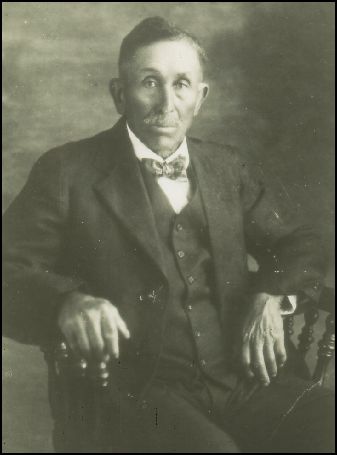
Warren Kelly

Warren Kelly, son of Green Kelly and Sarah Kelly, father of Ellen Kelly Dahmer, grandfather of Vernon Dahmer. Photo courtesy of Vernon Dahmer, Jr.

It was to this community that Charlie and Laura Barnes Craft fled with the aid of Laura’s son, George Dahmer. According to Wilmer Watts Backstrom (their great granddaughter), Charlie and Laura’s family lived in isolation for many years after being forced out of Covington County; they were prone to violent disagreements and exhibited heated tempers. This family drank heavily with much cursing.  They lived down in the swamps isolated from the community until the children were all grown.  As the children became adults, they gradually moved out of the swamps, married and had families of their own.

Charlie was employed by Green Kelly as a night watchman on the Leaf River. He died before 1910 in Forrest County, MS.  By that year, several of his and Laura’s children were married and living in Kelly Settlement, MS. Although Laura’s name does not appear on the 1910 Census, she was still alive that year. In 1920, she lived with her oldest child, daughter Roxanne Craft Watts, on the Dixie Highway, Forrest County, MS.  Laura died on 5 June 1922.

Ellen Louvenia Kelly

Ellen Louvenia Kelly, wife of George Dahmer, mother of Vernon Dahmer, daughter of Warren and Henrietta McComb Kelly. Photo courtesy of Vernon Dahmer, Jr.

Laura’s son and Charlie’s stepson, George Dahmer, identified as a black man even though his mother and biological father were white, demonstrating how strongly one’s racial identity is shaped by social experience.

George and Ellen Kelly Dahmer were the parents of Vernon Dahmer. George was known as an honest, hardworking man of outstanding integrity, rich in character rather than worldly goods. Like his father, Vernon worked hard and became a successful storekeeper and commercial farmer. Before his tragic death, he served as music director and Sunday school teacher at the Shady Grove Baptist Church, as well as president of the Forrest County Chapter of the NAACP. He and his wife, Ellie Jewell Davis, were the parents of seven sons and one daughter.
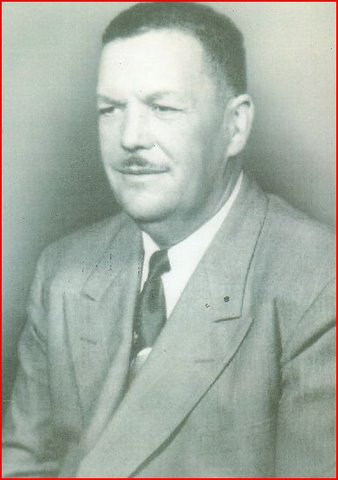
Vernon F. Dahmer, Sr.

Vernon F. Dahmer, Sr. Photo courtesy of Vernon Dahmer, Jr.
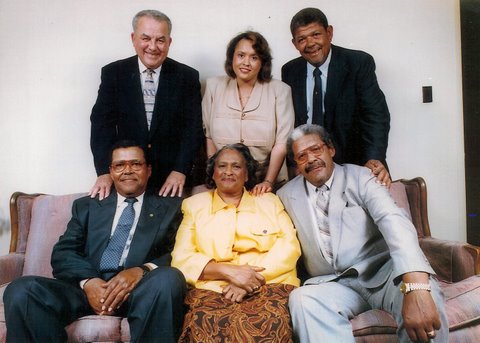
Vernon and Ellie Dahmer Family

Vernon Dahmer’s wife and children: seated left to right, George Weldon, Ellie J., Alvin; standing, left to right, Vernon Jr., Betty Ellen, Harold. Photo courtesy of Vernon Dahmer, Jr.

empower women, eliminate racism

March 24, 1912 – April 20, 2010

Thank you, Dr. Dorothy Height!

Here’s an excerpt of a 2008 NPR interview with Dr. Height.  You can read the transcript in its entirety HERE.

Civil Rights Elder Sees Dream Come True

hosted by Michel Martin

MARTIN:  Dr. Dorothy Height began a lifetime of activism during the Great Depression, a time when the simple right to vote free of the fear of violence seemed like an impossible dream for many African-Americans. And at the of 96, she is still going to the office just about every day trying to further the cause of equal rights for all Americans. She’s serving as chair and president emerita of the National Council of Negro Women. She was kind enough to receive us at her office on historic Pennsylvania Avenue yesterday. We’re talking about President-elect Barack Obama’s historic win.

MARTIN: I wanted to ask you about that because you have been working in this field since you were a very young woman. I mean, really, your entire adult life. Since your early 20s you’ve been an activist. Did you believe this day would come in your lifetime?

…Dr. HEIGHT: Well, you know, I guess I got to – my faith was renewed working for 33 years with the YWCA of the United States. And I went there as a secretary or a staffer or something related to interracial education. After 33 years, I retired as a director of the Center for Racial Justice, and I split this organization, that from 1946 really set out to open its services to all women, regardless of race or with full regard for race, and so I saw the way an organization that was founded by white, Protestant women that now is very inclusive, and I was a part of that development.

When the YWCA in 1946 adopted an interracial charter, that was ahead of the Supreme Court’s decision on Brown versus the Board of Education, so that in a sense I had already the experience. And I listened to people when they kept saying – well, some people, particularly white people, will say this but they won’t go in. I also know that I worked with many white women who took a strong stand but they didn’t discuss it at home because their husbands didn’t agree with them, but they worked hard to see that the YWCA was integrated, as they called it. And today, the YWCA has Empower Women and Eliminate Racism as its slogan. And I think that made me know that there are many people who know that this is right to do and that they were willing to do it, but they didn’t necessarily announce it.

MARTIN: I remember that, reading in your memoir how your organization, the YWCA, was one of the first – and some precursor organizations were among the first to have integrated meetings, and how dangerous it was for some of these women to participate.

Dr. HEIGHT: At that time there were – when we had meetings, sometimes we were talking about the klan. Sometimes we found that we were denied services that we had been promised when they realized fully what it meant that we would be women of different races. But you know, I found that were strong women in all racial groups, and I think that’s what Barack Obama has shown us. There are people in every group who know what is right and who want to move, and they just need some kind of direction and some kind of feeling that other people are with them. I remember Dr. Mayo(ph) saying, I hear people say the time isn’t right. And he said, but if it isn’t right then it’s your job to ripen the time, and that’s the way I feel about it.

12 Nov 1960, New York, New York, USA — Eleanor Roosevelt is presented the Mary McLeod Bethune Human Rights Award by Dorothy Height, President of the National Council of Negro Women. — Image by © Bettmann/CORBIS

…MARTIN: What role do you think civil rights organizations have now?

Dr. HEIGHT: Well, there’s still a lot of unfinished business. Right now you have going across the country a whole effort to destroy affirmative action. In other words, we’re finding that people are using civil rights in a negative way, and they’re calling it, this is a civil right. In a sense, these bills that are being introduced are really anti-civil rights, and they just use the term civil right in order to fool people and make them vote.

MARTIN: Are you speaking about Ward Connerly and some of his efforts to reverse affirmative action…

Dr. HEIGHT: Yes, Connerly has gone into several states, and he has does this in a misleading way, and I think people ought to be alert to it and realize that if you vote for what he is talking about, you’re cutting back something that got started during the days of Lyndon Johnson and was a part of the whole civil rights effort. It is not a preference. It is a way of saying, those who have been denied should be given an opportunity to be sought in (ph) so they can move ahead.

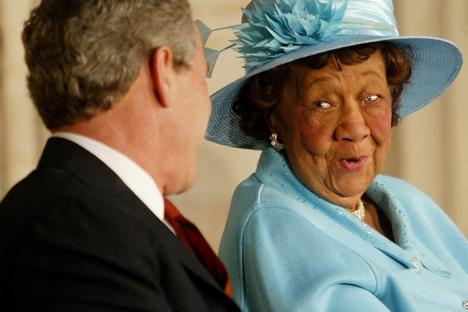
In 2004 President Bush presented Dr. Dorothy Height with the Congressional Gold Medal of Honor.

MARTIN: There are those who would argue, though, that – to be blunt about it – that Barack Obama takes these so-called excuses off the table. People look at that, and they say, look at Barack Obama in the White House. And they say, what discrimination? What could they possibly – what barriers?

Dr. HEIGHT: Yes. I think they will, but I would hope that they would also say to themselves, we need to look at who has the opportunities. We need to look at – Obama himself pointed that to us, that you can’t have a flourishing Wall Street and a destroyed Main Street. He could have also said, I’m working for the middle class, but we still have poverty. And we cannot divide up like that. We cannot say who’s hurting the most. We have to make sure they be dealing with everyone.

I have been working since my teenage days when I did an oration and won my college scholarship on the Constitution of the United States. I chose the 13th, 14th and 15th Amendments. And I looked and realized, here, now, at this age, I’m still working to make the 14th amendment and its promise of equal justice under law, making it real for everybody. That’s what you have to do.

MARTIN: Is there anything that you fear about an Obama presidency, about having an African-American – the first African-American in the White House?

Dr. HEIGHT: I suppose it’s not a real fear. It’s a hope that we will not take it for granted, that now we have achieved and all of our problems are answered. I think we will (unintelligible), as he did, as he said, I will be president of all the people. And by that he meant that he will work for all of us and that we all have to realize that there is unfinished business in civil rights.

It will – we don’t need the marches that we had in the past. But we need more consideration in looking at the boardroom tables and at the policies that are going on, looking at what’s happening in industry, what’s happening in terms of employment opportunities, housing and the like. So that I think it opens up a new way for us to look at our community.

And one thing, I go down now to Deep South and Mississippi and places, where during the ’60s, we moved with fear. I go down now and people are so welcoming that I forget what part of the country I’m in. And I think the people who are saying, we have no problem, have the biggest problem, that they really need to see how we can all work together and recognize that we need each other and see how we can really make this a society in which a person is judged, as Dr. Hayes(ph) said, on the basis of their character and what they do rather than on color of their skin or the language which they speak or their sexual preference, or any of those things.

MARTIN: Since you were a young woman yourself, you’ve been famous when you work with young people. Do you have any wisdom to share, perhaps, to a young Dorothy Height who might be listening to us?

Dr. HEIGHT: I like to say to young people today, you are the beneficiaries of what a lot of people worked and gave their lives for. And you are enjoying things – no matter how bad it may seen, you are still better off than any of those who worked to bring us to this point. And the important thing now is not to go it alone on your own, by yourself, but see how you will join with others. Get organized in how you will serve others and how you will help to move this forward.

And I was so excited to hear President-elect Obama, like they call him now, to hear him say that he needed our help. And I think he does. And we need it not by thinking just of what we want, but how can we help achieve the kind of roles that he has said. Because when you do that and we’re for something bigger than yourself, there’s no way you can help but grow, and that will help to prepare you for the future.

changing attitudes and understandings about race

I thought I was over the Census, but my interest keeps getting piqued despite my best efforts to ignore the chatter.  What I’m most intrigued by at this moment is the notion that in the next decade or two, if we keep changing our attitudes and understandings for the better, a majority of Americans could come to view themselves as mixed race.  And by that I mean Americans who today consider themselves to be exclusively white or black despite the abstract knowledge that we are all mixed up to some extent.  And if that paradigm shift happens there won’t be much use in classifying ourselves in terms of “race” because we will see ourselves as generally more similar than different regardless of color/phenotype.  Although I respect Obama’s right (and that of every individual) to self-identify any way he chooses, I feel that the checking of just one box is holding us back from reaching that “promised land” where we aren’t so entrenched in these antiquated notions of race and color, but perhaps more interested in heart, spirit, intellect …. Once again I’m a bit speechless because I’m not sure what the world will look like when instinctively and instantly we take people for what the truly are instead of what they truly look like.

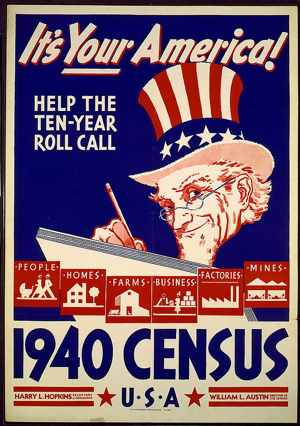
Rep. Patrick McHenry claims every census in history has asked for an individual’s race

SOURCE

In an op-ed piece for the conservative Web site Red State on April 1, 2010, Rep. Patrick McHenry, R-NC, the ranking Republican on the Information Policy, Census and National Archives Subcommittee, sought to tamp down some of the misinformation being spread about the census by “otherwise well-meaning conservatives” and warned that failing to fully participate in the census could create a competitive advantage for Democrats.

Specifically, McHenry attempted to allay the fear among some Republicans who distrust the government and view the census as overly prying.

…In his posting on Red State, McHenry said “the most private question on this year’s form asks for an individual’s race and that question has been asked by every census since the 1790 census conducted under then-President George Washington.”

We decided to check that claim out, which was similar to one from Census Bureau Director Robert M. Groves in a March 15, 2010, press release: “It’s one of the shortest forms in our lifetime with just 10 questions very much like the questions James Madison and Thomas Jefferson helped craft on the very first Census.”

Conveniently, the U.S. Census Bureau keeps historical records online of all the questions asked in every census going back to the first one in 1790.

If you follow the census questions asked through U.S. history, you can see how they reflect changing attitudes and understandings about race.

Yes, the 1790 census and others in the early years of the survey addressed race, but it was hardly a matter of checking a box. Rather, the census asked about the number of free white males and females; the number of “all other free persons” and the number of slaves.

By 1850, the Census asked about people’s “color.” According to the Census archives, this column was to be left blank if a person was white, marked “B” if a person was black, and marked “M” if a person was mulatto. A separate form listed slave inhabitants, the last census to do so. By 1870, the “color” options included “W” for white, “B” for black, “M” for mulatto, “C” for Chinese (a category which included all Asians), or “I” for American Indian. The 1890 census added Japanese and more mixed-race categories — mulatto, quadroon and even octoroon, according to amounts of perceived African blood. By 1920 Filipino and Korean sprang up, along with the improbable racial term “Hindu.” New labels emerged after World War II, with Hawaiian, Eskimo and others joining the parade of terms.  The question morphed into “color or race” in the mid-1900s, and then, finally to just “race” in 1970. In 1980, in addition to race, the Census began asking if a person was of Spanish or Hispanic origin or descent.

It’s fair to say that every census has addressed the issue of race in some fashion. But we think it’s a bit of a stretch when McHenry says “this year’s asks for an individual’s race and that question has been asked by every census since the 1790 census.”

In the 1790 Census (and several after it), a respondent was not simply asked their race. Rather, they were asked to list the number of white people, the number of “other free persons” and the number of slaves. In other words, it didn’t ask for the race of non-whites. One could argue this reflects the common attitude about race at the time. But that’s hardly the same as the 2010 version that simply asks a person’s race.

Prior to the Civil War the census was more concerned with whether someone was enslaved or not, than establishing whether someone was white. This is a very different conception from our modern idea of race. Post Civil War, the terminology changed (from “color” to “race,” for example) and the categories expanded over time. Certainly these are different standards when compared to today’s measures. But again, one could argue that the questions comported with attitudes about race at those times, and the census has always asked discriptive questions that corrolate to race. So we rule McHenry’s claim Mostly True.

the greatest negro?

I immediately thought of Obama while reading this article and am quite, quite certain that most agree that he is indeed a “Negro.”  That there was debate around Douglass’ negrocity ( I like to make up words sometimes) is of interest to me because I’m fascinated by the fact that mulatto was a valid and recognized identity in America before 1920.  Then it wasn’t anymore.  The ranking of Negroes from greatest to least strikes me as ludicrous.  That being said, the question, “Will Obama go down in history as the greatest Negro who ever lived?” popped into my head.  And then I thought that seeing as he isn’t one “in the full sense of the term,”  MLK probably outranks him.  How quickly I went from judging the system of rankings to ordering some myself!

Knoxville’s farewell to a civil-rights icon

By Robert Booker

SOURCE

A large crowd packed into Logan Temple A.M.E. Zion Church to honor the memory of the country’s best known civil-rights advocate. Among them were Knoxville’s black elite.

It was Feb. 25, 1895, and they had come to say farewell to Frederick Douglass, who had been born into slavery and died six days earlier.

Two days before the memorial, The Knoxville Tribune had its say about Douglass and wondered if he was a true Negro: “If we consider Douglass as a Negro, he was the brightest of his race in America. But he was not a Negro in the full sense of the term. Although born a slave, his father was a white man and his mother was a mulatto. Born a bastard and a slave, he rose to distinction and influences, and there were those among a class of white people who delighted to honor him.

“There are those who class him as the greatest Negro. This estimate of him is extravagant and unwarranted. In the first place he was not a Negro, and in the next place he is outranked by other Negroes. The greatest Negro who ever lived was Toussaint L’Ouverture the Haitian general, whose death was and will always be a dishonor to France. No Negro in this country ever approached L’Ouverture in intellect.”

L’Ouverture (1744-1803) was the Haitian independence leader who took part in the slave revolt in that country in 1790. He joined the Spaniards when they attacked the French in 1793, but fought for the French when they agreed to abolish slavery. By 1801 he had virtual control over Hispaniola, but was arrested and died in a French prison.

The blacks who spoke at the Douglass memorial took issue with the Tribunes’s assessment of him.

Attorney Samuel R. Maples said he wanted “to correct a statement in one of the local papers that Douglass boasted of his white blood and denied being a Negro. This was not true. Douglass never denied being a Negro. He was very proud of his race.”

Attorney William F. Yardley, who had introduced Douglass when he spoke here at Staub’s Opera House Nov. 21, 1881, said Douglass “Was the victim of the great American curse – slavery. He slept with dogs and ate the crumbs from his master’s table, but his great mind and energy lifted him to the loftiest heights of fame. He was not a creature of circumstance but of force. He was tireless and had been the greatest blessing to his race.”

Charles W. Cansler spoke of Douglass as “An anti-slavery agitator who represented a great moral principle and not a minister of malice. He was seventy-eight years old when he died and spent his life earnestly in the extension of freedom and in establishing justice among men. He was the Moses of his race, and it is hard to tell what his heath means to us.”

Rev. J.R. Riley, pastor of Shiloh Presbyterian Church, spoke of Douglass as a leader: “He was carved by the hand of deity to be a great leader, though cradled in the most iniquitous institution – American slavery – and schooled in dire adversity, his power of mind and greatness of spirit had surmounted all, and he stood out boldly as the greatest man of his race and the peer of all great men.”

It seems that Riley, who was pastor of Shiloh from 1891 to 1913, knew Douglass personally and they had many experiences together. He said his friend had “great personal magnetism. His quick wit and ability to read men made him irresistible in his influence among men.”

the cover of the sheet music for Frederick Douglass's funeral march

This image shows the front cover of “Frederick Douglass Funeral March.”  At each corner of his portrait are pen and ink drawings in circular frames that depict the slave trade, bondage, auction block, and freedom.

richard dereef

I wanted to know more about this “colored slave owner” after reading that small bit about him in the gullah tour article.  There is more information out there than I’d expected.  I wish I could see a photograph of his Caucasian and Indian (American) parents.  The New York Times article truly fascinates me.  First of all, I’d love to know who wrote it!  Secondly, it’s nice to hear (although there’s nothing nice about the sick and twisted system) that there were legitimate and acknowledged mulatto children.  But that nice feeling quickly disappeared when I searched for more information on Isabella.  I’ll include that in a separate post.

[Richard DeReef]

Richard Edward DeReef was one of the richest black men in Charleston. He had a Wharf at the end of Chapel Street, was in the “woodage business” (wood), and owned rental properties, most of which are located on the East side of Charleston. Because of his dark complexion he would have never been accepted into Charleston’s elite mulatto society but he claimed to be of Indian descent, and he had money.

IMAGE: ON RIGHT — Richard Edward Dereef (1798-1876), a free black wood factor and real estate investor, built this small two story frame single house sometime after he purchased the site in April, 1838. The site was part of a large lot, extending to Calhoun Street, on which Dereef erected several buildings, of which only this house remains. Dereef, a native Charlestonian, was one of the wealthiest men of the free black community. He and his son, Richard, Jr., had a wood factorage business on Dereef’s Wharf at the foot of Chapel Street, and lived nearby on Washington street. By 1867 Dereef had conveyed this property, apparently built for rental purposes, to Margaret Walker, a black woman.
(Stockton, unpub. MS.) SOURCE

COLORED SLAVE OWNERS.; One Family of Mixed Blood in Charleston Owned Forty Negro Servants.

May 26, 1907, Sunday

To the Editor of the New York Times:

Truth is stranger than fiction, and had not the information of the ownership of slaves by colored citizens of Charleston, and elsewhere, been sent forth by such an authority as The News and Courier, the statement would have been regarded as incredible. But The News and Courier has not stated nearly all the truth which is, according to your confession, surprising to you, and, according to your belief, surprising to many others in the North.

The prevalent views, State documents, Congressional debates, and lecture courses bearing upon the general subject render it difficult of belief that the proclamation of emancipation by Mr. Lincoln reduced many colored people of the South, and especially in the City of Charleston, from a state of affluence and competence to a condition of need, if not of poverty.

But such was the case.

Those slave owners were not called “negroes,” but “colored people,” as they were generally of mixed blood- sometimes of Caucasian and African; sometimes of Caucasian and Indian; (American.)  Many of the colored people of Charleston had no African blood whatever.  The question you ask, and The News and Courier failed to answer, is:  How did those people come into possession of their slaves- by inheritance, gift, or purchase?  The answer is, By all these ways.  They were generally the children of rich planters who, in the early days of the coast settlements, established themselves in lower South Carolina, with Charleston as the centre of operation.  These children were regarded as such, and not as illegitimate of slaves.  They bore the name of the father with recognition and as by right.  They were also educated.

Upon the death of the father these children would come, by inheritance, into possession of the estate, including beasts of burden, slaves, etc.  There was a very large number of free colored people in Charleston in the eighteenth century.

An interesting article on this subject may be found in the January issue of The Southern Workman.  Some of those who owned slaves in years before the war were by name De Reefs, McKinlays, Westons, Hollaways, Thornes, and Howards.  There are descendants of some of those people in  New York and Brooklyn to-day.  There is information enough at hand on this subject to fill a book, but let me relate you one story which may prove interesting.

There was a rich planter in Charleston of the name of Fowler.  He took a woman of African descent and established her in his home.  Whether there were a pledge of relationship or form of ceremony is not of record, but it was known that he had no other family.  There was a daughter born in that home to whom was given the name of Isabella.  But the planter insisted upon it that all persons should know her as Miss Fowler.  She grew to womanhood, and was married to Richard De Reef, a young man of Caucasian-Indian blood.  At the time of her marriage her father presented to her as a wedding gift a plantation and a sufficient number of slaves to work it.

The News and Courier says that two colored Charlestonians had each fourteen slaves, but the records of the family showed that at emanicpation Mrs. Isabella De Reef liverated forty instead of fourteen.

In another thing the News and Courier is wrong- that is, in saying those free persons of color had no political privileges.  The De Reef brothers- Richard and Joseph- born, respectively, in 1798 and in 1802, voted on reaching their majority, and ever after.  Some others may have enjoyed the same privilege, but there are colored men in Charleston to-day, and some now living elsewhere, who could claim the right to vote on the “grandfather clause”;  these were never enfranchised by an amendment to the Constitution of the United States.

A former Charlestonian.

New York, May 23, 1907.

click HERE for a link to a copy of the original NYTimes article