jim henson

I haven’t been able to stop thinking about Jim Henson since I posted that quote earlier.  I know it’s not a Jim Henson quote, but it just made me think of him.  And keep thinking of him.  I really loved him.  His work meant so much to me.  Sesame Street, The Muppets, Fraggles!  OMG, the love!  I have never stopped watching Sesame Street.  I don’t watch it everyday or anything, but I will watch it every now and then.  I have Muppet Show and Fraggle Rock dvds.  He was a true genius and a gift!  I’ve collected quite a few Jim Henson photos.  I don’t even know where to begin with the posting of them.  But I have to start somewhere.  And I’ll start with

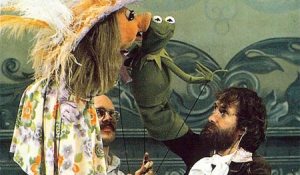
Jim Henson

This one. Because it’s brilliant.

kermit jim frank piggy

classic

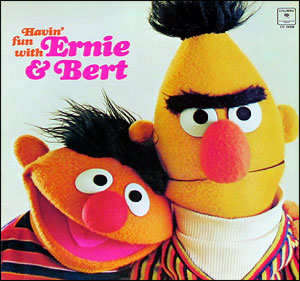
BertErnieSingAlong


Album.havinfun

I heart Bert & Ernie!

kermit and vincent price

I always liked Vincent Price for unknown reasons.  Maybe Thriller.  Anyway, that coupled with the fact that I recently watched the entire first season of True Blood in two days made me want to include this one.

Jim_Henson

Fraggle Rock may be my favorite.  I can’t commit, but that’s the conclusion I keep coming to.  The Doozers!  Those crystal-ish things they contructed for the Fraggles to eat! Madame Trash Heap!  The Gorgs!  Sprocket!  Uncle Traveling Matt! Don’t even get me started.

I think it’s too late for that….

mammy two-shoes

Speaking of cartoons…

While researching Jackie Ormes I somehow found my way to the ListVerse 10 Great Female Cartoon Voice Actors.  I was  so pleased to see Lillian Randolph as number one.  I was not aware of Lillian Randolph beforehand. I was honestly just glad to see a woman of color on the list, not to mention at the top of it.  Biracial Cree Summer is also on the list.  Anyway, my pleasure was kind of short-lived when memories of Mammy Two-Shoes resurfaced.  

I loved Tom & Jerry as kid.  I remember watching it in the morning before school. Any racial overtones/offenses were lost on me at the time.  But as an adult watching that cartoon, I have been shocked by the appearance of Mammy Two-Shoes.  In my opinion it looks like Mammy Two-Shoes has paws for hands, but maybe that’s just how they draw hands.

From ListVerse:  http://listverse.com/entertainment/10-great-female-cartoon-voice-actors/

Lillian Randolph

1lilianmammy

Lillian Randolph(December 14 1898-September 12 1980) was an African-American actress and singer, a veteran of film, radio and television. A native of Louisville, Kentucky, she was the younger sister of actress Amanda Randolph. 

She worked in entertainment, from the 1930’s well into the 1970’s, appearing in hundreds of short subjects, radio shows, motion pictures and television shows. Randolph is best known as the maid Birdie Lee Coggins from “The Great Gildersleeve” radio comedy and subsequent films and television series, and as Madame Queen on the “Amos ‘n’ Andy” television series from 1951 to 1953. Her best known film role was that of Annie in “It’s a Wonderful Life.” She appeared in several featured roles on “Sanford and Son” and “The Jeffersons” in the 1970’s.

Her most profilic acting role, hoever was her uncredited voice-over part as Mammy-Two-Shoes in William Hannah and Joesph Barbara’s “Tom and Jerry” theatrical cartoon series for Metro Goldwyn Mayer during the 1940’s and early 1950’s. Randolph made a guest appearance on a 1972 episode of the sitcom “Sanford and Son” as Hazel, a distant relative of the Fred Sanford character.

In the Tom and Jerry shorts of the 1940’s and 50’s, the only human character was an unnamed lady who was always after Tom (originally named Jasper), a cat, to catch Jerry, a mouse. Radio and film veteran Randolph provided the voice. The character is considered to be a racial stereotype known as a “Mammy”, a servant or maid of African descent, often overweight, loud, and heavily accented, and this has lead to some controversy. The shorts though, never stated that she was a maid and it is implied that she was the owner of that huge house with the well-stocked refrigerator. Also, the name “Mammy Two Shoes” was never used in the cartoons; it was given years later by the media, as typically only the character’s feet were shown. The shorts would be edited in the 1960’s. In some, Randolph’s voice was replaced with a plain-sounding one, and in others, she was replaced entirely with a thin white woman (voiced by June Foray.) Recent DVD releases have somewhat restored the original character.

From http://mammytwoshoes.tripod.com/history.html

By the early 50’s, Mammy was a supporting character just as important as Spike or Nibbles. However, in 1954, the Supreme Court declared racisism unconstitutional, which took a great affect on Hollywood movies and cartoons. So Mammy was forced to retire in 1952’s “Push-Button Kitty”. The new law pressured MGM to reissue the cartoons with her in them. The “White Mammy Two-Shoes” versions were created back in the 1960s for CBS when they were airing these cartoons. The work was done by Chuck Jones’s crew when Jones was making new Tom and Jerry theatricals. I recall reading Chuck’s remarks that at the time MGM still had most of its old animation artwork on file, so it was pretty much just a matter of retracing and repainting the original pencil animation and photographing it against recreated backgrounds. This new “White Mammy” material was then cut into dupe negatives of the cartoons in question to replace the original “Black Mammy” footage. Voice actress June Foray was brought in to redub the soundtracks. (Incidentally, that voice is supposed to be Irish.) Instances where the “White Mammy” has a “Black Mammy” voice (or vice versa) is a result of carelessness. Picture and sound elements on film masters are stored separately. What happens is simply that someone isn’t paying attention and matches a newer “White Mammy” picture element to the original “Black Mammy” sound element (or vice versa). 

honkey-two-shoes1


Click here to hear mammy two-shoes   http://mammytwoshoes.tripod.com/sounds/mousecatcher.wav

jackie ormes

jackie ormes 1st black female cartoonist


From http://www.comixology.com/articles/96/Black-and-White-and-Color

Ormes’ story is a fascinating one. Born of a middle-class family in 1911, she went to what appears to have been an integrated high school and was tapped to do art work for her senior yearbook. After graduating in 1930, she worked as a freelance reporter for the Pittsburgh Courier—she appeared to enjoy covering boxing matches—and by 1937 she had begun drawing her first comic strip, which chronicled the journey of a young southern black woman, Torchy Brown, to the big city in the north. Torchy’s story only ran for a year, and it was seven years before Ormes returned to comics, in 1945, with a single-panel comic called Patty-Jo ‘n’ Ginger. Ginger was a stylish and shapely young woman, bearing—one feels—a strong resemblance to Ormes herself; Patty-Jo was her sassy and strong-minded younger sister. Each week, Patty-Jo would let loose some sort of pronouncement to an often oblivious and always silent Ginger. These pronouncements might be as innocuous as your average Family Circus panel, but more often they reflected Ormes’ own concerns and interests, as well as the events of the day.

Ormes was a staunch supporter of the March of Dimes and of the right to vote, and both issues saw plenty of play and support in her weekly cartoon. In the 1948 panel above (click image for full-sized view), which ran about a week before the presidential election, Patty-Jo comments on the hot topic of racial inequality in the year’s political campaigns: Goldstein notes that Harry Truman had been flogging his civil rights cred (he had just integrated the military with Executive Order 9981), Thomas Dewey was running ads in the Courier itself promising “citizenship for all,” and Strom Thurmond and the Dixiecrats were in the vanguard of segregation protection, for the sake of “the integrity of each race,” of course. Ormes pulled no punches, and didn’t shy away from addressing critical events in the African-American experience: the 1955 cartoon below, in which Patty-Jo refers to a white boy whistling at her like a tea-kettle, appeared six weeks after the murder of 14-year-old Emmett Till, beaten to a pulp in Mississippi for whistling at a white woman. Maybe discussing Ormes’ development along with the history of the song “Strange Fruit” isn’t such a stretch after all.

From http://www.flickr.com/photos/22067139@N05/2342110476/

The Patty Jo character went on to become this nation’s first positive image ‘Negro’ character doll that hit the toy stores in time for Christmas (1948). The Patty Jo dolls are now collector’s items. In the late 70s, arthritis limited her artistic work, however Ormes remained a serious artist, painting murals, portraits (specializing in children’s faces) & panels that decorated her home. She was also a passionate doll collector & member of the Chicago Chapter of the United Federation of Doll Clubs. In the 1950’s as her arthritis became worse, doll collecting began.

Retiring from cartooning in the 1960s Ormes had approximately 150 dolls, including a German-made doll, which was the predecessor to the Barbie of today. The oldest in her collection was 50 years old. Ormes was celebrated in Chicago’s black social & fashion circles. She was also on the board of directors of the DuSable Museum of African-American History and Art. Ormes’ strips were syndicated in black newspapers across the country, making her the only nationally syndicated black woman cartoonist until the 1990s. 

Jackie Ormes died in Chicago on January 2, 1986.

Black Women in America An Historical Encyclopedia
Volumes 1 and 2, edited by Darlene Clark Hine
 

September 4, 1937:
Torchy Brown in “Dixie to Harlem” depicted the escapades of a teenage country girl, starry-eyed and slightly wacky, abounding in pluck, optimism, and determination. Dinah Dazzle, her friend’s cousin, visits from New York City, inspiring Torchy with fanciful daydreams. Here she heads North by train to try her luck at the Cotton Club in Harlem, in a setup ripe for week after week of humorous scenes. While presenting a funny, entertaining story, this strip reflected the real struggles of people moving from the South to the North. Ormes mocks the predicament of passing for white as youthful Torchy puzzles in the southern train station whether to go in the direction of the “Colored” arrow or to the more comfortable “White” section. http://www.jackieormes.com/tbdh.php