2

I’m going to try to get all of this Lena stuff out of my system today. It’ll actually never be out of my system, but as far as blogging goes… you know what I mean. I really enjoyed the following NPR blog post focusing on the racialization of Ms. Lena Horne. I wonder how different things would have been for her if things would have been different.
by PATRICK JARENWATTANANON
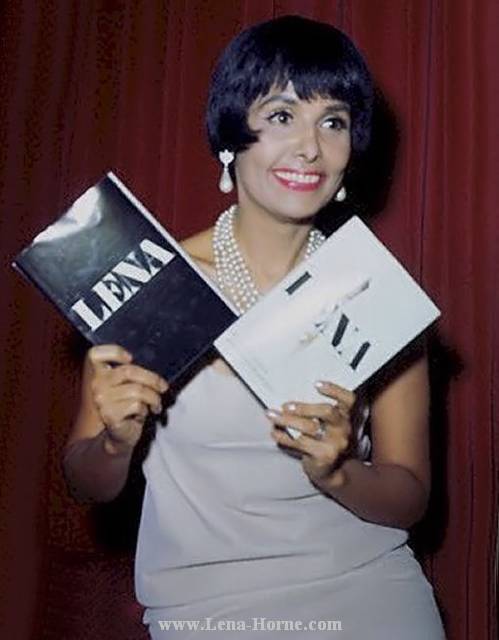
In the reports of Lena Horne’s death that have emerged so far, much has been made of the fact that she was a black woman in an age of popular entertainment dominated by white faces. Her talent was obvious, but her skin hampered her attempts to become a major movie star, assigning her to bit parts that could be removed for Southern audiences.
Eventually, after the civil rights movement, Horne would be recognized as an entertainment icon. Her work as a jazz singer, theatre performer and television actress did much for that legacy, as well. But she also knew that the skin color that worked against her also worked for her. In the obituary that came over the AP wire, she is quoted as saying this:
“I was unique in that I was a kind of black that white people could accept,” she once said. “I was their daydream. I had the worst kind of acceptance, because it was never for how great I was or what I contributed. It was because of the way I looked.”
“A kind of black that white people could accept.” Think on that for a moment, and beyond the idea of being a light-skinned African-American. You could write the entire history of jazz through that lens.

Jazz’s early black stars (Louis Armstrong, Duke Ellington, Nat “King” Cole, Billie Holiday and others) worked overtime to be somehow disarming, or mythologized, or otherwise acceptable to white bourgeois audiences. Meanwhile, the music they and all their colleagues were making was popularized by white musicians — Paul Whiteman, Benny Goodman, the Original Dixieland Jazz Band, the Dorsey Brothers — sometimes well, sometimes drained of its swing energy. This continuing process is a big part of jazz’s transformation from scourge of society into America’s classical music.
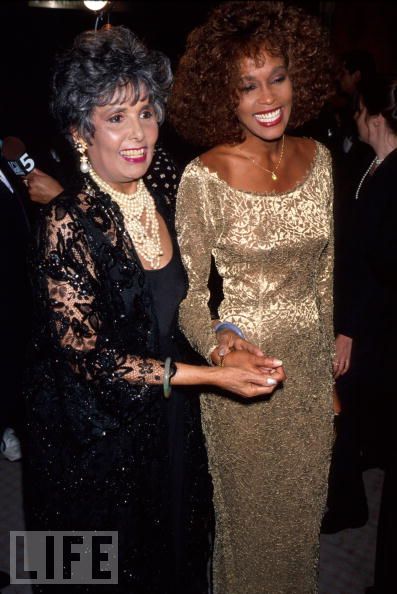
Indeed, the entire cultural history of the U.S. in the 20th century could be viewed like that. Even today, where ethnic identity comes in many more shades, the middle-class white audience still plays arbiter and co-opter of what hits the mainstream. That’s admittedly a reductive viewpoint, ignoring the powerful experience of the art created, and perhaps it’s a bit cynical, too. But it would be true to Lena Horne’s experience, both marginalized and a trailblazer for who she, biologically, was.
So what’s to do about this? Can’t we just remember Horne as a great singer and actress, the woman who did “Stormy Weather,” and the person whose friendship with Billy Strayhorn brought out the best in both of them?
Sure, but I’d rather not do only that. For one, it negates how she stood up against demeaning portrayals in what roles she took, and how she spoke out strongly against discrimination throughout her career. By omitting all that from our narrative of her life, it allows even the most well-meaning of people to conveniently forget how racism profoundly shaped the creation, marketing and embrace of American art, and continues to do so today.

The New York Times‘ obituary has another illustrative quotation:
My identity is very clear to me now. I am a black woman. I’m free. I no longer have to be a ‘credit.’ I don’t have to be a symbol to anybody; I don’t have to be a first to anybody. I don’t have to be an imitation of a white woman that Hollywood sort of hoped I’d become. I’m me, and I’m like nobody else.
Lena Horne didn’t choose to be racialized based on her genetic assignment, but she was. Remarkably, she ran with it, using it as a source of strength and pride and artistic inspiration. That’s worth remembering, to0.




The story of one “lucky” dude:
A U.S. forest ranger in Virginia’s Shenandoah National Park, Roy Cleveland Sullivan (1912-1983) survived being hit by lightning seven different times:
Sullivan shot himself in 1983 … reportedly over a rejected love.
I have never before thought of mulattoes as victims of the Holocaust. How ignorant of me. I now imagine that some of the children fathered by black U.S. servicemen made up the group mentioned in this Delaware memorial. So much history to uncover.
The third community interfaith worship service for Yom HaShoah, Holocaust Memorial Day, will be at 4 p.m., Sunday, April 11, at Epworth United Methodist Church, 19285 Holland Glade Road, Rehoboth Beach.
For the past two years, clergy from six faith communities in the Lewes-Rehoboth area have joined to lead a worship service for the community that remembers the tragic events and honors the victims and heroes of the Holocaust.
Shoah is the Hebrew word for “whirlwind.” It is the term used to describe the Nazi firestorm between 1938 and 1945 that swept up 11 million souls – 6 million Jews and 5 million non-Jews including Poles, Rom Gypsies, homosexuals, disabled, mulatto children, clergy and Germans who didn’t believe in the Nazi ideology.
Men and women, young and old alike, were butchered at the hands of the Nazis. Every year, on Yom HaShoah, people remember the martyrs who sanctified the name of God in the camps, ghettos and gas chambers. Entire article
I looked into the situation further and came across this paragraph on studyofracialism.org:
African German mulatto children were marginalized in German society, isolated socially and economically, and not allowed to attend university. Racial discrimination prohibited them from seeking most jobs, including service in the military. With the Nazi rise to power they became a target of racial and population policy. By 1937, the Gestapo (German secret state police) had secretly rounded up and forcibly sterilized many of them. Some were subjected to medical experiments; others mysteriously “disappeared.”
Here’s insight into Hitler’s had to say about us (found HERE):
MULATTO CHILDREN
Before World War 1 there weren’t very many Black people in Germany. During ww1, France brought Black soldiers in during France’s occupation of Germany. Since there were different colored people living in Germany, the Nazis forcibly sterilized offspring between black men and white women because it held back the campaign for the perfect race. Children that had a black father and a white mother were mulatto children because of their color. Mostly every German despised them and called them ugly names. Hitler wrote,” These mulatto children came through rape or their mother was a whore. In both cases there is not the slightest moral duty regarding these offspring of a foreign race.” This is what happened to children because of the color of their skin.
Black German girl 1930
Nazi propaganda photo depicts friendship between an “Aryan” and a black woman. The caption states: “The result! A loss of racial pride.” Germany, prewar.


 mulatto diaries