exception

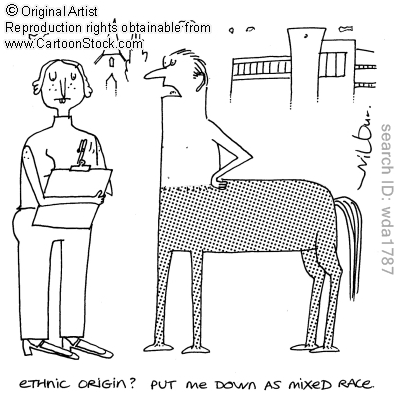
…to the “race doesn’t matter” mantra.  It seems to be relevant when physical health is the issue.  Actually, mental health as well, but that’s a different story.  Anywho, I’m happy to read of this research and find it interesting that supremacists are happy to hear of it too.

Genetic screening may redefine medical treatments

by Carolyn Johnson

SOURCE

SAN FRANCISCO (KGO) — New research out of UCSF shows that tracking a patient’s genetic ancestry can improve the diagnosis of asthma and other lung diseases. The results could have broader implications for other diseases that also rely on standard benchmarks such as race, gender and age.

Doctor’s office visits are the norm for 9-year-old Shamatay Hayes. She was diagnosed with asthma at age 2, something she and her mom have struggled to keep under control.

“It is challenging,” her mother says.

At San Francisco General Hospital and at asthma clinic across the country, Shamatay’s lung function is tracked using standard benchmarks such as age, gender and race. But, researchers say there is now a better way.

“So, what we can now do with modern techniques is estimate what a person’s ancestry is or what their heritage is using a series of genetic markers,” says UCSF researcher Dr. Melinda Aldrich.

The genetic markers more accurately determine lung function rather than a patient’s self-identification as simply white, black or Hispanic.

“With increasing African ancestry, we saw a decrement in lung function,” says UCSF associate professor Dr. Esteban Burchar.

Burchard is director of UCSF’s Center for Genes, Environment and Health, and senior author of a paper just published in the New England Journal of Medicine.

“We said forget what you think you are, what people think you are, and we looked at your genetic ancestry. We were able to reclassify patients more accurately than just using self-identified criteria,” explains.

That is increasingly important because race is used to establish normal reference values for everything from diagnosing disease to establishing disability payments. For instance, a mixed-race firefighter who suffers smoke inhalation might not meet the standards for disability of what is considered normal lung function since that is based on just three racial categories right now.

“What we showed is when you use these race-based standards, you could have as much as a 10 percent error rate depending upon what your true ancestry,” Burchard says.

Burchard believes this research brings us closer to truly-personalized medicine, but he is also aware of the potential controversy.

“We’ve had people contact us who were supremacists that said you know what you’re doing is validating what we believe,” he says.

But, the research actually tells a different story.

“Most of us, all of us in fact, are racially mixed,” he says. “We have a very rich heritage and what we’re doing is acknowledging that mixture and incorporating it into our clinical assessments.”

Scientists believe their results on lung function are just the beginning.

Aldrich says, “Wherever potentially we use race now for making medical decisions, it may have an impact with other diseases.”

This would ultimately make medicine more effective for everyone. The genetic tests used by researchers at UCSF cost about $10 per patient. Scientists see it as a small price to pay for a more accurate assessment of disease, which could lead to more effective treatments for patients.

(Copyright ©2010 KGO-TV/DT. All Rights Reserved.)

if only…

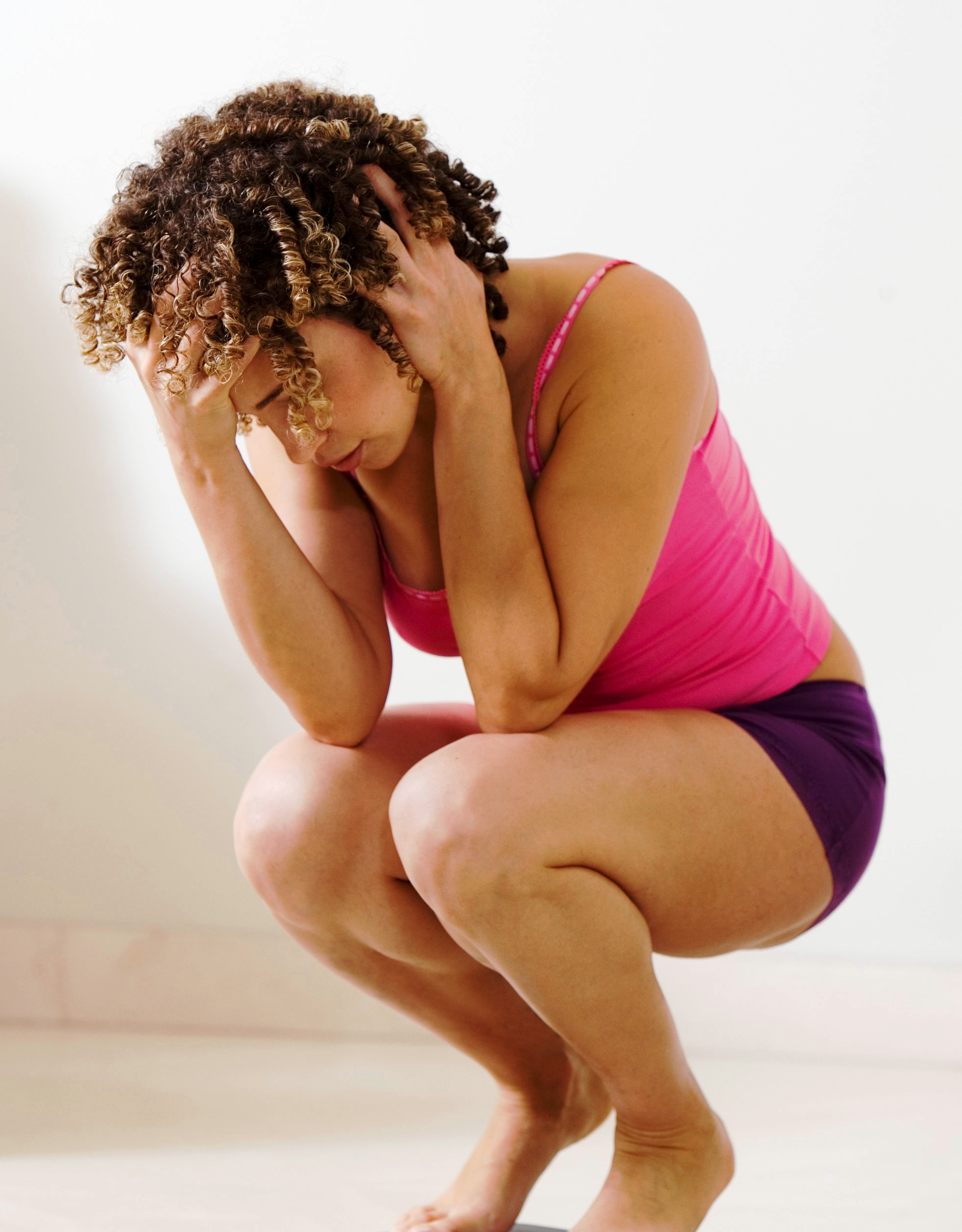
by the way, i’m not depressed (right now).  not that there’s anything wrong with being depressed, of course.  i mean it’s nothing to glorify, but i’m not throwing shade.  especially because i’ve been there.  i think if we’re honest we’ve all been there for a minute at least.  i just got on roll with the topic, so…

another social taboo

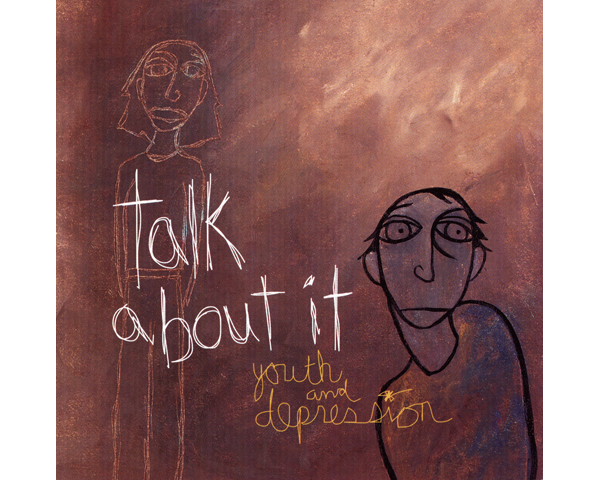
The first taboo being openly discussing biraciality without adhering to the one-drop rule.  Of course I find this blog post to be interesting, or I wouldn’t put it up here.  I appreciate the bit about biracial identity as well as the outline of the overall struggle and the shame that go along with the labels of mental illness in this country.  Especially in the black community.

Coming out of an entirely different closet… the one of mental illness

by Eliza Barnett

VIA

Unfortunately as prevalent as mental health disorders are the nation (50+ million diagnosed in the US alone) and world wide, it still tops the ranks as the most difficult to admit.

Higher than revealing to be a victim of domestic abuse, sexual assault, or molestation, harder than confessing a drinking problem or previous bankruptcy; surveys have even shown it to more difficult than admitting ones gender identity or homosexuality. Sufferers face significant social taboos. And it doesn’t affect just one type of person. Mental illness knows nothing of age, race, gender, or economic background.

You don’t have to personally admit it yourself to believe the notion the reality that people are more likely to break off, or not even start, a relationship with someone with mental issues -which I for one find particularly interesting because members of society are more likely to stay with someone with a physical disability. People with mental disorders tend to prefer to hide their illness like major depression and anxiety, because unlike people with physical illnesses, people with mental disorders must also fear being rejected by family & friends, harassed, fired or not hired, or denied child custody—just for starters.

(Please check out this personal blog discussing the Price of being Bipolar in Public)

Last week I had an entire conversation with a friend about them being practically afraid to admit their Christian faith at their workplace because of the negative assumptions his non-same faith based peers might think about his character or behavior.

Once you know someone’s religious preference it changes your whole personality to people who don’t agree with you. Sometimes it’s like every negative image or thought they have about it becomes who I am as a person- even though I haven’t changed. It’s their behavior towards me that has.

I’ve read more than a few articles of a biracial person attempting, or enjoying the ability to pass for one race over another—not because they have a problem with it necessarily themselves, but because other people do.

Sometimes it’s like every negative stereotype or prejudice they have against a race I share membership of encompasses who I am as a person. Granted racism is an ongoing issue for those of one race, but it is just as prevalent towards those of plural heritage.

Sexual orientation discrimination —don’t even get me started.

(great message board discussion here coming coming out as gay with coming out as bipolar)

Mental illness sufferers are also victims of discrimination and the issue continually needs to be recognized.

“I’m Asian, I’m gay, and I have faced discrimination – but not for the reasons most people think; it was actually when I got depression that I faced most discrimination.”

(Quote from an article in the Guardian)

Attempts to end this discrimination are being lead by strong individuals, in the public eye, and by everyday people. Changed perception comes through increased knowledge and visibility.

People need to be taught that mental disorders don’t come from places of personal weakness, and don’t make everyone violent or unpredictable. They need to be made comfortable in seeking help. (Two thirds of sufferers in need of treatment do not seek it. ) Even more importantly open, honest visibility helps others with the illnesses themselves to stand up without shame.

Negative stigma’s of this variety aren’t just external, they’re internal. Who wants to think of themselves as crazy…? When feelings of guilt, shame, or a notion that you’re somehow weakened for needing help are thrown in the mix, it only reinforces the negative feelings.

Isn’t it always the case that telling the ones you love is the hardest thing to do? This isn’t any different. And ignorance towards the idea of mental disorders can to be hard to deal with; some people may not even believe mental illnesses exist. Americans particularly have vast misconception that all mental disorders can be simply be self-corrected with enough work.

Similar to the first step in admitting you have an addiction; your own acceptance is where it all begins. Examine your own feeling first and foremost. You have control over who you tell, so it’s okay to be cautious about it.

“There is no rule for who needs to know about your mental illness diagnosis, but sharing it with someone is a great way to get support.

The silence helps maintain the ignorance about mental illness.”

(http://www.webmd.com/mental-health/features/coming-out-about-mental-illness?page=2)

That being said,

“It doesn’t mean that it is always beneficial to open up indiscriminately about mental health, to your detriment. It would be wonderful if everybody came out.

But it is a very subjective decision and consequences should be considered. Society isn’t at the place of acceptance that it needs to be. Not everyone in the world needs to know if you struggle with diabetes or hypertension or some other illness. The same is true for mental illness. Those with the disorder, are the ones in charge, and should think about what the payoff is to share information about their mental health. For example, if you need to miss work to see a psychiatrist, you might want to tell your employer about what you are going through.”

When someone does react negatively, agree to disagree or try to educate that person. Share educational materials. Share your own experience. And to those on the receiving end of the information, think before you speak.

“Try to react the same way you would if you were told about a physical health problem that you don’t know much about. Avoid trying to be the hero or savior. Being empathic and understanding is one thing, but trying rescue someone is a completely different. You shouldn’t try to fix them. This is something that is way beyond your capacity.”

Treatment and support from others goes a long way; the mental illness journey is a rough one for everyone involved. Help is required, it’s critical down the path of recovery, management of ones condition, and ability to lead constructive and healthy lives. Support can and does come from strangers as well, who share in this unity of diagnosis. As corny as it sounds, sharing is caring.

–Posted By Eliza Barnett

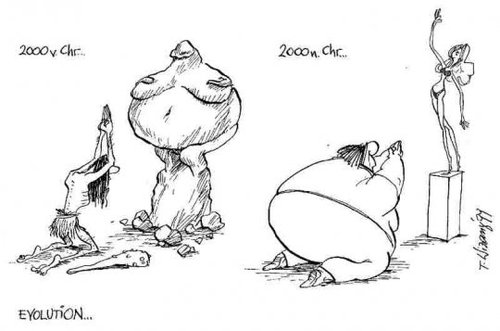
pudgy heads of state

The standard of “beauty” for men is clearly different.  Not that anyone is calling these men beautiful, but I highly doubt that Hillary Clinton or Sarah Palin would have risen to the top of the political arena if they were “fat.”  Too bad Sarah Palin’s not fat…

Hail to the Chef: 4 American Presidents Who Loved to Eat

Feeding an appetite for power rarely fills a guy’s belly. These four pudgy heads of state were as happy raiding the pantry as they were creating policy.

Grover Cleveland: The Glass is Always Half Empty

Large, jovial Grover Cleveland – also known as “Uncle Jumbo” – enjoyed his beer. In 1870 (15 years before he became president), Grover ran for district attorney of Erie County, New York, against Lyman K. Bass. It was a friendly contest. In fact, it was so friendly that Cleveland and his opponent drank and chatted together daily. In the interest of moderation, they agreed to have no more than four glasses of beer per day. But soon they exceeded that and started “borrowing” glasses from the next day and the next day until they’d exhausted their ration for the whole campaign – with the election still weeks away. The solution: Each brought his own giant tankard to the tavern, called it a “glass,” and went back to the four-a-day ration.

An Extra-Cuddly Teddy

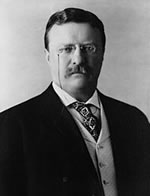
The standard scoop on Teddy Roosevelt was that he was a scrawny, sickly weakling from New York City who built himself up into a rough, tough cowboy type through vigorous outdoor pursuits. What’s seldom mentioned is that Roosevelt went from skinny boy to robust young man to plump (though vigorous) president to obese (though still active) ex-president. While running on the Bull Moose Party ticket in a 1912 attempt to regain the White House, Roosevelt was described as “an eager and valiant trencherman” (it meant he ate a lot). If the main course was roast chicken, TR would consume an entire bird himself, in addition to the rest of the meal. Not to mention the four glasses of whole milk the portly prez routinely threw back with dinner. Photos and films show an aging Roosevelt carrying a decidedly wide load.

W.H. Taft and His Presidential Privileges

William Howard Taft often dieted because his doctor and his wife told the 290-pound president that he must. But without supervision, Will “the Thrill” didn’t just give in to temptation, he sought it. Once while traveling he asked a railroad conductor for a late-night snack. When the conductor said there was no dining car, Taft angrily called for his secretary, Charles D. Norton, who had probably – under instruction from Mrs. Taft – arranged for the diner to be unhooked. Norton reminded the president that his doctor discouraged between-meal eating. Taft would have none of it. He ordered a stocked dining car attached at the next stop and specified that it have filet mignon. “What’s the use of being president,” he said to Norton, “if you can’t have a train with a diner on it?”

Bill Clinton: With an Assist from Helmut Kohl

President Bill Clinton, who famously frequented McDonald’s, was known for eating whatever was put in front of him. He showed a more discriminating, if just as hungry, side in the company of Germany’s chancellor Helmut Kohl, though. Kohl was called “Colossus,” at least in part because he carried 350 pounds on his 6-foot-4 frame. But, in Kohl, Clinton found a gourmand soul mate. In 1994, Clinton hosted the chancellor at Filomena Ristorante of Georgetown for a lunch at which both consumed mass quantities of ravioli, calamari, and red wine, as well as plenty of antipasto, buttered breadsticks, Tuscan white bean soup, salad, and sweet zabaglione with berries. Each ended the meal by ordering a large piece of chocolate cake to go. Clinton once remarked that he and his German counterpart, though the largest of world leaders, were still too slim to be sumo wrestlers.

please allow me

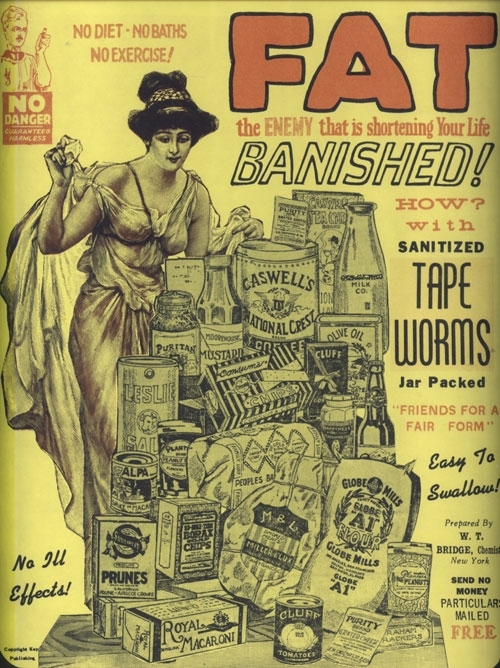
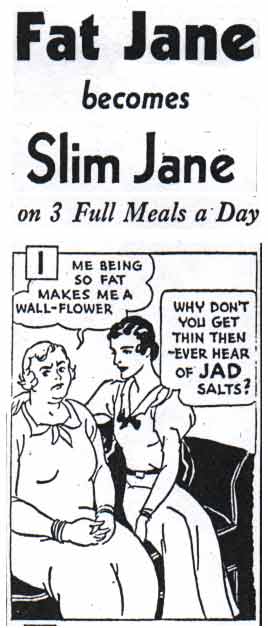
…to harp on this theme for the rest of the day.  A slight diversion from the usual mixed-race programming that I feel important (and even related) in terms of how we’re sold on ideas of good or bad, clean or dirty, fat or beautiful, so that we can buy something to fix ourselves.  It’s really bad today.  It started long ago.  There’s not much money to be made off of self-acceptance and inner beauty, I suppose.

the world’s prime aesthetic object

I think this article is brilliant and I think that everyone should read it.  So, here you go, everyone!

Women and body image: a man’s perspective

Ever wondered why a man can look at an advert featuring a six-pack and laugh, while a woman might look at a photograph of female perfection and fall to pieces? William Leith thinks he might have uncovered the answer

By William Leith

Plenty of guys have told me this story. The guy in question is preparing to go to a party with his girlfriend. She is trying on shoes and dresses. He is telling her how good she looks. She tries on more shoes, more dresses. And then: the sudden, inexplicable meltdown. She crumples on the bed. Something is horribly wrong. Now the party is out of the question.

At this point the other guys will say, ‘Yeah – she looks great.’ And: ‘She looks fine.’ And: ‘I saw her the other day, wearing those shorts.’ And: ‘She is hot.’ Then the first guy will say, ‘That’s what I kept telling her. And that’s when she got really upset. She said, “You just don’t understand.”‘

It’s true – men, by and large, do not understand. In her book The Beauty Myth, Naomi Wolf made this point very powerfully. When a woman has a crisis of confidence about the way she looks there is nothing a man can do to console her.

‘Whatever he says hurts her more,’ says Wolf. ‘If he comforts her by calling the issue trivial, he doesn’t understand. It isn’t trivial at all. If he agrees with her that it’s serious, even worse: he can’t possibly love her, he thinks she’s fat and ugly.’

But it doesn’t stop there, says Wolf. What if the man were to say he loves the woman just as she is – that he loves her for her? An absolute no-no, of course, because then ‘he doesn’t think she’s beautiful’. Worse still, though, if he says he loves her because he thinks she’s beautiful.

There’s no way out. It seems to be, in Wolf’s words, ‘an uninhabitable territory between the sexes’. So why don’t men understand? And, given a bit of education, can the situation be improved?

Well, I’m a man, so let’s see. The first thing to say is that, when it comes to their bodies, men have a completely different attitude. I’m not saying they don’t think about their bodies, or worry about them, because they do. But men relate to their bodies in a simple way.

A man’s body is either fine, or it’s not fine. For a man, the body is a practical object. It’s a machine. Sometimes it works well; sometimes it needs fixing. Some guys know how to fix it, by taking up a sport, maybe, or cutting down on the carbs. Some don’t, and go to seed.

Men see their bodies as machines because, for most of their time on this earth, they have defined themselves as hunters and protectors. They equate being attractive with being strong and fast and muscled. That’s a simple concept, isn’t it? And that simplicity is hard-wired into the male brain.

When his girlfriend has a meltdown, and says she hates her body, that is not a simple concept. Unlike men, women do not have a simple relationship with their bodies. They have a complex relationship with their bodies. This is what men often don’t understand. When it comes to their bodies, women are extremely vulnerable – and, what’s more, lots of people take advantage of that vulnerability. This makes the situation worse.

Men don’t have to contend with this – the hair people, and the make-up people, and the fashion people, and the shoe people, and the bra people, and the nail people, and the eyelash people, and the Botox people, and the cosmetic surgery people, and the perfume people, and the hair-removal people. Oh, and the diet people.

Men are not at the mercy of corporate manipulation on remotely this scale. Sure, there are six-packs creeping into our field of vision every so often. And, sure, this is making us feel insecure. I know – I was fat, and it’s no fun being fat, especially with all those pictures of Brad Pitt nagging away.

And then there are the adverts for Lynx, and the Reebok advert in which a man is chased around town by a big fat hairy belly. But for men the message is very direct. Buy some running shoes. Go to the gym. Cut down on the carbs. For men there is no mystery behind the veil of the adverts. You either tackle the situation, or become a fat slob. End of story.

For men the holy grail is within reach – you just need to get fit, and then you’ll be fine; then you can think about something else. But the messages aimed at women are much more complex and confusing. As the American social commentator Warren Farrell has pointed out, women’s magazines often contain articles about being Superwoman, which are next to adverts about being Cinderella.

In other words, the words tell women how to be independent and in control. But the adverts, where the money is, tell them they have to be beautiful.

Farrell said this more than two decades ago – and, shockingly, nothing has changed. There’s a solid pulse running through everything our culture aims at women – be beautiful, be beautiful, be beautiful.

But being beautiful, it turns out, is a near-impossible task. It keeps getting harder and harder. Everybody knows that it entails being slim – and every year the ideal gets slimmer and slimmer. In 1960 the average model weighed 10 per cent less than the average woman. Now she weighs 25 per cent less. Soon she will weigh 30 per cent less. But she doesn’t have the breasts of a skinny woman – nor, as Susie Orbach has recently pointed out, the bottom. To achieve the ideal is vanishingly impossible.

And it’s getting worse. Orbach believes that we are exposed, on a weekly basis, to several thousand images that have been digitally manipulated. And this, in turn, makes more women opt for cosmetic surgery – which, of course, moves the goalposts even farther away.

When lots of people have surgery to make themselves look more beautiful this has the effect of making everybody else feel less beautiful. And this is happening on a global scale – in 2007 people spent £9 billion on cosmetic surgery; the vast majority of them, of course, were women.

So: men are told they should aspire to fitness and strength, and women are told they should aspire to something more nebulous. But that still does not explain, in terms a man could understand, why the female message is so much more powerful and disturbing.

It doesn’t explain why a tenth of women are anorexic, why a growing number are bulimic, why almost half of women, at any given time, are on a diet. It doesn’t quite explain the meltdowns. And it doesn’t explain why women want to be so skinny. Why they think they are fat, when they are not. It doesn’t explain why, when a woman’s body is perfectly attractive, she often thinks it isn’t, and can’t be persuaded otherwise.

In short, it does not explain why a man can look at an advert featuring a six-pack and laugh at it, whereas a woman might look at a picture of Gisele Bündchen and feel a sense of unease that hangs around for days.

John Updike once said that the female body is the world’s prime aesthetic object – we look at it more than we look at anything else, including landscapes, gadgets, cars. In fact, cars and gadgets are often designed to resemble the female body, and landscapes can be painted to remind us of it. When we talk about ‘the nude’ in art we are almost certainly referring to the female nude. As far as nudes are concerned, the male nude is a distant runner-up.

I once wrote the introduction to a book of male nudes by the photographer Rankin; it was a sequel to his previous book of female nudes. One thing struck me above all – male nudes were a much, much harder thing to portray than female ones.

That’s because the female body carries with it a huge weight of iconic significance – thousands of years of being looked at. The female body has meaning. Pictures of the female body can be profound, serious and complex. For thousands of years they have been depicted with reverence. Now imagine having one of those bodies. It puts a bit of pressure on, doesn’t it?

Now I’m beginning to see why women might be so addicted to perfection. They have a lot to live up to – a couple of thousand years of art history, and a couple of thousand airbrushed boobs and bums to deal with every week.

But what started this off in the first place? Why aren’t there so many airbrushed pictures of men around? Of course, these pictures do exist, and their numbers are increasing. But why are women so much more vulnerable to pictures of perfect bodies than men?

In his book The Evolution of Desire, the American psychologist David Buss goes some way towards explaining why this should be so. Since the Stone Age, he explains, men and women have had different attitudes towards sex. Men can pass on their genes with very little risk – all they need is a fertile woman.

But it’s different for women, because pregnancy is incredibly risky. What women need is a man who looks like a good provider – better still, who looks like a proven provider.

So let’s think about our Stone Age man and woman. If he’s going to settle down, and stop playing the field, he wants one thing above all – a woman who looks fertile. More than that, he wants a woman who looks as if she’ll be fertile for many years to come. In other words, he might consider being a provider and protector, as long as his mate looks young, fertile and unblemished.

And now consider his mate. What does she want? Not just a man who is a good hunter and a good fighter, but a man who has a track record as a hunter and fighter. In other words, an older man. And this is not only true of Stone Age couples. In a survey conducted by David Buss, 10,000 people, in 37 cultures, were polled. ‘In all 37 cultures included in the international study on choosing a mate,’ writes Buss, ‘women prefer men who are older than they are.’

Now I’m getting close to understanding why women are so critical of their bodies. Since prehistoric times they have had a hard-wired link to how they look. For tens of thousands of years it was crucial; it could be the difference between having a protector and not having one – between life and death, even.

For men it’s not the same at all. The odd wrinkle or grey hair doesn’t matter. Hell, it might even be an advantage. As long as you’re good at throwing spears and building shelters, you’ll be fine.

Twenty thousand years on, what has changed? Well, as David Buss points out, it’s unlikely that a Stone Age man would have seen ‘hundreds or even dozens of attractive women in that environment’. But now, when he looks at a Playboycentrefold, he is seeing a woman who has competed with thousands of other women for the part – not only that, he’s seeing the best picture out of thousands.

And it’s not just centrefolds, is it? Just look at newsreaders – mostly, it’s a pretty girl and a grey-haired man. Message to men: relax. Message to women: panic! And then there are the girl groups, and the short-skirted girl onCountdown, and even the characters in the Harry Potter films, where the boys are allowed to look like geeks but the girl must look like a model.

As the art critic John Berger wrote: ‘Men look at women. Women watch themselves being looked at. This determines not only the relations of men to women, but the relation of women to themselves.’ It’s a tough one, isn’t it?

Surely guys can understand that, at least. If it happened to us, we’d have a meltdown, too.

SOURCE
encourage an important social change

I have long held a sneaking suspicion that by honestly exploring the mulatto experience we will encourage important social change.  I am thrilled to hear that way back when, others had the same idea.  But then slavery ended, and the “powers that be” really needed to maintain the color-coded class system that allowed them such control and wealth, and so did our chances (slim though they were) of being counted for what we really are.  This was not a chance, in my opinion, to distance ourselves from blackness, but to disprove the theory that white and black were different species. I do think we’ve moved beyond that antiquated notion, but I’m not so sure there aren’t a great number of people who consciously or unconsciously believe that black and white occupy space at opposite ends of the spectrum of one species.  I think this article says so much and says it very well.

Census reveals history of U.S. racial identity

by Sally Lehrman

Whether or not they can lay claim to a special category, the “Confederate Southern Americans” who want to write themselves into the U.S. census section denoting “race” have a point.

Race, as the social scientists like to say, is “socially constructed.” Since the founding of this country, we have been making it up as we go. Race is a modern idea, historians and anthropologists tell us, a means to categorize and organize ourselves that we constantly adjust.

The U.S. census serves as an archive of this change, a record of classifications that have been “contradictory and confused from the very outset,” says Margo Anderson, a University of Wisconsin, Milwaukee, urban studies historian and expert on U.S. census history. Begun in 1790 as a solution to the problem of how to allocate seats in Congress, the survey didn’t mention “race” originally, but the idea as we understand it today was central. How should slaves be counted? Were they entirely property or were they people? What to do with “civilized” Indians?

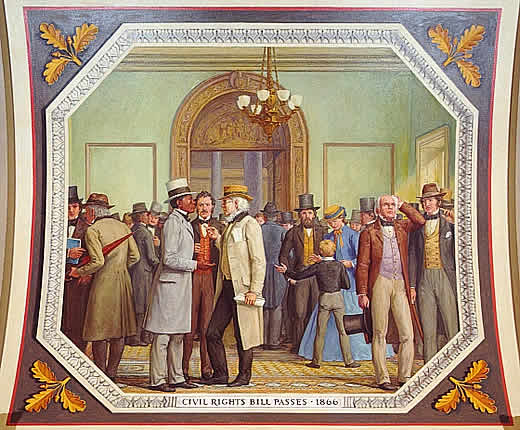
Later Congress debated whether to include the word “mulatto,” Anderson says, and finally agreed – but for opposite reasons. Blacks and whites were different species, some argued, so their “unnatural” offspring should be counted. Others felt that documenting the children of black-white relationships would encourage an important social advance.

“Mexicans” were counted as a race in the 1930 questionnaire, but the Mexican government protested and the category disappeared. “Hindu” lasted for three decades. Koreans were written in, pulled out, and added back again.

All along, the “race” category of the census has been a powerful social and political tool wielded both to discriminate and to guard against discrimination. At first, survey categories reflected ideas about the divide between black and white, which immigrants were eligible for citizenship, and how to sort categories of “Indians.” Later, after the Civil Rights Act of 1964, its groupings also made it possible to measure compliance with equal treatment under the law.

The census reveals the process of race, the categories by which Americans construct difference and with difference, special privileges for some. It measures who and what matters, how resources have been allocated, and reflects the political, economic and social interests that prop up race. Race is defined and contested constantly, shaped in both personal and social realms all at once, according to Michael Omi and Howard Winant, sociologists who developed the central paradigm for studying contemporary race in American society.

Today, for instance, many Latinos refuse to conform to the forms of race described in the census. “Hispanic” is separated out as an “ethnicity” on the survey, so members of this group are expected to choose a race, too. About 40 percent in both 1980 and 2000 selected “some other race,” often writing in an identity such as “Venezuelan” instead.

But that’s not to say race is an illusion, a set of categories we can write in or wipe away like chalk on a blackboard. Race arose in America as a means to support and rationalize the slave economy. By the end of the 17th century, writes social anthropologist Audrey Smedley, wealthy planters had carefully woven it into a “rigid and exclusionist” system, a legal and institutional hierarchy built upon skin color.

We continue to shape race through both our institutions and everyday actions, and it powerfully shapes us. Public health statistics reveal the damage. On average, white people can expect to live about five years longer than African Americans. Even middle-class black people are more likely than any other group to live with a chronic health condition or disability. American Indians and Latinos suffer disproportionately from diabetes, Asian Americans bear a heavier burden of tuberculosis and hepatitis B, and the list goes on. While genetic scientists hunt for possible differences in susceptibility, public health experts shine their light on society.

Forces like everyday prejudice, segregated neighborhoods and unequal schools wear out hearts and immune systems, clog up air passages and make us fat. San Francisco is among the cities, in fact, studying the ways in which we build disparate health opportunity right into our streets. Who enjoys neighborhoods with clean, well-lighted sidewalks? Who has to battle congested traffic and diesel fumes to get to work or school? Who can walk to a farmers’ market on Saturday, and who sees only fast-food outlets block after block?

When confronted with race categories neatly printed out on a form, it’s tempting to see them as natural divisions. The inequities that go along with them, it seems to follow, are natural, too. With their proposition to claim themselves as a race, the Southern Confederates challenge all of us to contemplate what we mean by that term and what role we play in making its harms and hierarchies real. And when we learn about racial differences in health, in economic success, in education or any other measure, we should remember the confederates. Race matters, and we are the hands that shape it.

Read more: http://www.sfgate.com/cgi-bin/article.cgi?f=/c/a/2010/04/17/INA41CUC6V.DTL#ixzz0lZT8DJ4W

no fear, no bias

When I first read this I thought it was a joke.  I suppose it had something to do with naming this a disorder when it seems like we should all be striving to attain such open-mindedness when it comes to race and the perception of otherness.  Then I thought we should all be so lucky as to be born with this “disorder.”  What this article doesn’t mention though is that there’s a lot more to Williams syndrome than lack of racial biases.  It is not a joke.  And hopefully there will be a cure someday.  I’m grateful to those who did this study and hope to hear that further studies with racially-mixed families will be done to test this explanation of fear based racial biases.

Individuals with Rare Disorder Have No Racial Biases

Robin Nixon
LiveScience Staff Writer

Never has a human population been found that has no racial stereotypes. Not in other cultures or far-flung countries. Nor among tiny tots or people with various psychological conditions.

Until now.

Children with Williams syndrome, a rare genetic disorder that makes them lack normal social anxiety, have no racial biases. They do, however, traffic in gender stereotypes, said study researcher Andreas Meyer-Lindenberg of the University of Heidelberg in Germany.

illustration by Anne Sibley O’Brien

Normally, children show clear preferences for their own ethnic group by the age of three, if not sooner, other research has shown.

And, indeed, the children in this study without Williams syndrome reliably assigned good traits, such as friendliness, to pictures of people the same race as themselves. When asked something negative, such as “which is the naughty boy,” they overwhelmingly pointed to the other race.

Children with Williams syndrome, however, were equally likely to point to the white or black child as naughty or friendly.

While this study was done with white children, other research has shown that blacks and people of other races also think more highly of their own, Meyer-Lindenberg told LiveScience.

Williams syndrome is caused by a gene deletion known to affect the brain as well as other organs. As a result, people with Williams syndrome are “hypersocial,” Meyer-Lindenberg told . They do not experience the jitters and inhibitions the rest of us feel.

“The whole concept [of social anxiety] would be foreign to them,” he said.

They will put themselves at great peril to help someone and despite their skills at empathy, are unable to process social danger signals. As a result, they are at increased risk for rape and physical attack.

Nature or nurture?

While the first human population to demonstrate race-neutrality is missing critical genes, “we are not saying that this is all biologically-based and you can’t do anything about it,” Meyer-Lindenberg said.

“Just because there is a genetic way to knock the system out, does not mean the system itself is 100 percent genetic,” he said.

The study does show, however, that racism requires social fear. “If social fear was culturally reduced, racial stereotypes could also be reduced,” Meyer-Lindenberg said.

Despite their lack of racial bias, children with Williams syndrome hold gender stereotypes just as strongly as normal children, the study found. That is, 99 percent of the 40 children studied pointed to pictures of girls when asked who played with dolls and chose boys when asked, say, who likes toy cars.

The fact that Williams syndrome kids think of men and women differently, but not blacks and whites, shows that sex stereotypes are not caused by social anxiety, Meyer-Lindenberg said.

This may be because we learn about gender within “safe” home environments, while a different race is usually a sign of someone outside our immediate kin. (Studies to test this explanation, such as with racially-mixed families, have not yet been done.)

Racial biases are likely rooted in a general fear of others, while gender stereotypes may arise from sweeping generalizations, Meyer-Lindenberg said. “You watch mother make the meals, so you generalize this to everyone female.”

In their heads

Due to the present study, we now know that “gender and race are processed by different brain mechanisms,” Meyer-Lindenberg said, although those involved in gender are less understood.

Previous work has shown that in the brains of people with Williams syndrome, the amygdala – the emotional seat of the brain – fails to respond to social threats. While the amygdala itself is functionally normal, it is misguided by the pre-frontal cortex – the executive of the brain – to block all social anxiety.

This system is now thought to underlie racism, but it seems uninvolved in the formation of sex stereotypes.

Meyer-Lindenberg and colleagues are now using brain imaging to get a clearer picture of how racism and sexism are differentiated in the brain. The present study was published in the journal Current Biology.

SOURCE