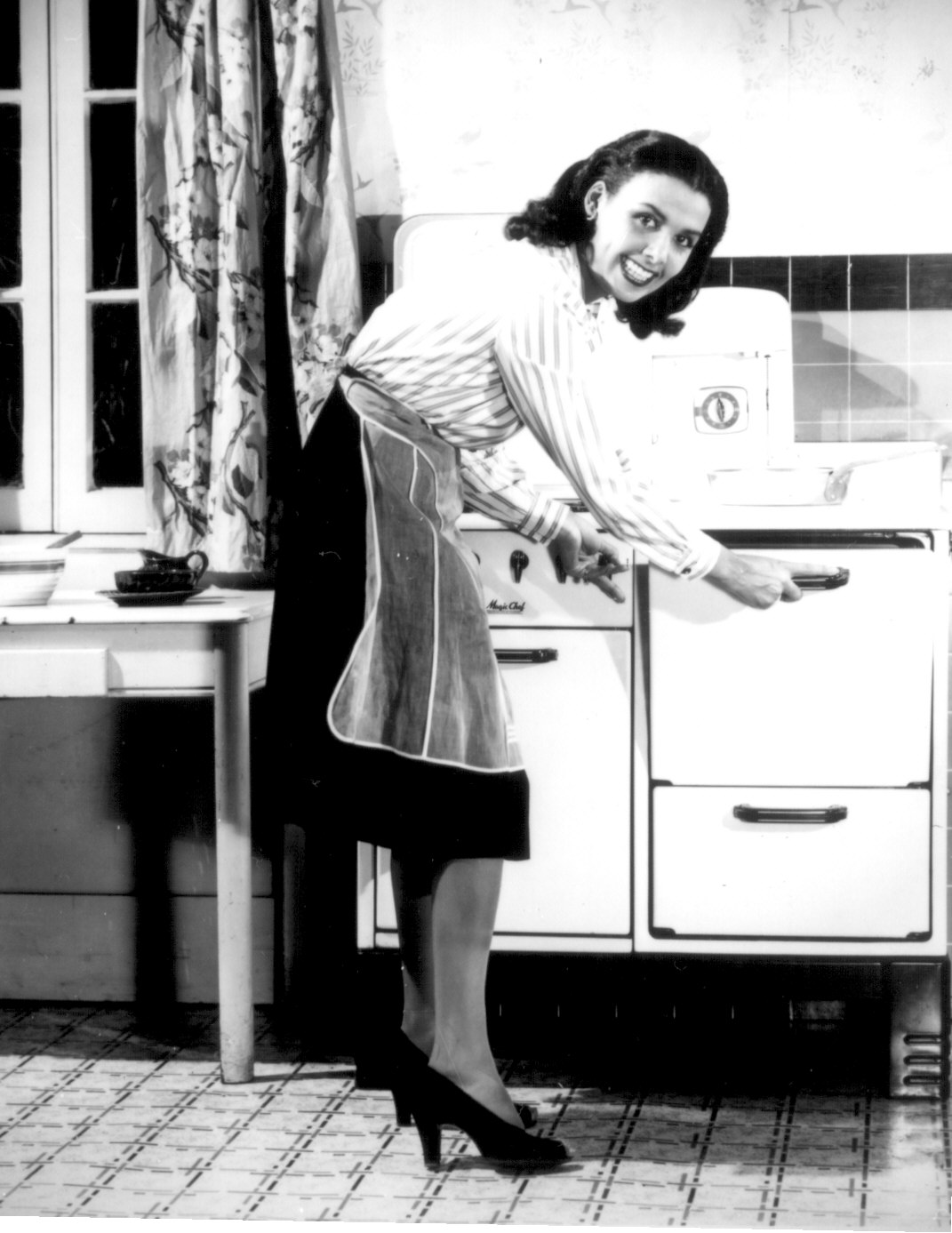
decreasingly on the rise

This article raises more questions for me than it imparts information.  That may be it’s purpose.  I want to know why there is a decrease in the rate of increase of interracial marriages.  Ever since my “a-ha” moment surrounding my biracialness, I’ve been super-interested in the greater number of white women/black men couplings as opposed to black women/white men.  I realized on that day that having a black mom/white dad made me a “minority” within a “minority” within a “minority” (and a majority?).  What!?  I don’t even like the word minority.  Let’s use anomaly.  I perceive myself to be an anomaly within an anomaly.  That’s better.  Anyway, I would love to conduct a study on why exactly the trend in gender and race of black/white couples is as it is.  Lastly, what really stands out to me in the information below is that U.S. born Hispanics and U.S. born Asians are marrying (I assume) U.S. born whites.  What does this mean?  Americans are marrying Americans.  That should be the paradigm that we as a nation collectively shift toward.  Race doesn’t exist. Nationality does.

Interracial Marriage: Who is More Likely to Wed Outside Their Race?

by Lynnette Khalfani-Cox

Interracial marriages are on the rise in the U.S., although they’ve slowed somewhat over the past decade. The latest census figures show that interracial marriages in America now account for 8 percent of all marriages, up from 7 percent in 2000. During the decade from 1990 until 2000, there was a sharp increase in mixed-race marriages, with such couplings growing by 65 percent. Since the year 2000, however, mixed-raced marriages have grown by just 20 percent to about 4.5 million couples.

Looking at the data over the past three decades, which groups are more likely to marry outside their race? According to federal statistics, African Americans are three times more likely to marry whites than they were back in 1980. Some attribute this to an increase in African American educational attainment and more professional interaction among blacks and whites.

Other findings from the census data include:

*14.5 percent of black men and 6.5 percent of black women now marry whites

*38 percent of U.S.-born Hispanics marry whites, compared with 30 percent in 1980

*40 percent of U.S.-born Asians marry whites, a number unchanged since 1980

It would have been interesting to see other data that looked at interracial couples of all kinds, not just a look at which “minority” groups marry whites. In this sense, this data is skewed and rather limited when talking about the full scope of interracial marriages.

We all know that the world is fast becoming multicultural, global in nature and interdependent in numerous ways. From the adventurous traveler who meets and marries someone of a different race and culture in another country to the investor who buys stocks and bonds from companies all around the globe, the world is at once becoming smaller, yet bigger and with more possibilities.

The challenge going forward will be how do we deal with the social, economic and political realities of living in an increasingly multiethnic, interracial society? And will we ever get to a point where race will simply cease to matter — all matters personal, professional and otherwise?

SOURCE

yesterday’s history

When I started reading this article I thought, “This is about to be some ‘tragic mulatto’ b.s.”  Much to my surprise, it isn’t really.  I think Sarah played the part of the tragic mulatto very well, and got exactly what she wanted and deserved.  I wonder if the congregation’s response would have been different if “Pinky” hadn’t been quite so pink, but maybe “Brownie” instead.  Just a thought.  I also like this piece of our history because once upon a time, in a former life in which I considered myself black, I was a nanny and I worked in Brooklyn Heights and I walked by that church every day and was very drawn to it.  Part of me knew… And part of me was so clueless.

On This Day in History: June 1
Rev. Beecher’s Freedom Auction

by Vernon Parker

VIA

On June 1, 1856, Henry Ward Beecher, minister of Plymouth (Congregational) Church, and an ardent supporter of the antislavery cause, held a public “auction” of a young mulatto slave named Sarah to dramatize the evils of slavery.

The Brooklyn Daily Eagle reported that “she had been brought from a plantation near Staunton, Virginia.” When Sarah was called to the pulpit, she … “walked slowly, head bowed, and took a seat near the famous minister. She lifted her eyes, stared at the spellbound audience, and burst into sobs. Her plight tugged at the heart of the most stolid Congregationalist as Beecher’s inflamed rhetoric described her life. Daughter of a well-known white citizen, she had been put up for sale by her own father. The slave dealer involved contacted Beecher through a mutual friend and they struck a deal allowing Sarah to go north with the promise of either her return or the full manumission fee.”

The mock auction raised sufficient funds to purchase her freedom and buy her a modest home in Peekskill, New York.

The following is an excerpt from James H. Callender’s book Yesterdays on Brooklyn Heights: “As the anti-slavery agitation increased, Mr. Beecher thundered his invectives against the slave-owners of the South, and many of the leading men of his church were said to be directors of the famous ‘Underground Railroad’ by which fugitive slaves were passed along from the South across the border to Canada. It was at the close of one of his most powerful sermons that Mr. Beecher said he had a little matter he wished to present to the congregation. No one had any idea as to what he was going to say and the people waited in profound silence.

“He then suddenly burst forth, ‘Sarah, come up here!’ As the audience gazed, a little mulatto girl arose in the body of the church, ran up the pulpit steps and took Mr. Beecher’s hand. Turning to the assembled multitude, he said — ‘This little girl is a slave, and I have promised her owner $1,200, his price for her, or she will be returned to slavery. Pass the baskets.’ A scarcely stifled sob arose from the almost three thousand present. Bills of all denominations, jewelry, and watches and chains were flung in the overflowing baskets and when the total was counted, Mr. Beecher announced, amid thunders of applause, that Sarah was free, and enough remained to strike the shackles from the limbs of several others.”

A tintype of Sarah, also known as “Pinky,” the young mulatto slave whose freedom was “auctioned” by Rev. Henry Ward Beecher.

a fearless champion

I knew nothing of Evelyn Cunningham before her death.  Shame on me.  All I know now is that in the name of Evelyn, in the name of Lena, and in the name of the nameless:  I have got to do better.  I’m posting segments of the New York Times obituary of Ms. Cunningham and what I presume to be one of the last interviews with her that appeared in the NY Daily News in November of 2009.  For whatever reason, today I am particularly struck by what she said about her four husbands.  I feel a feminist kick coming on…

2009-12-14-cunningham.jpg

Evelyn Cunningham, a civil-rights-era journalist and later an aide to Gov. Nelson A. Rockefeller of New York, died on Wednesday (April 28th, 2010) in Manhattan. She was 94 and lived in Harlem most of her life.

At a time when few women worked at newspapers — never mind as reporters handling hard news — Ms. Cunningham covered many of the civil rights era’s biggest stories, including the battle over school desegregation in Birmingham, Ala., and the work of the Rev. Dr. Martin Luther King Jr. and Malcolm X.

Starting in 1940, she worked for more than 20 years as a reporter and editor for The Pittsburgh Courier, a black newsweekly with nationwide circulation. Much of that time she worked out of the paper’s New York office.

In the newsroom, she was nicknamed “Big East,” partly because of her height, 5-foot-11 in heels. She also became known as the “lynching editor,” a reference to her reporting on such killings in the segregated South.

…Ms. Cunningham entered another realm of public life in the late 1960s, when she took a job as special assistant to Governor Rockefeller, who had been impressed with her when she interviewed him as a candidate.

Governor Rockefeller named her to lead an office on women’s affairs, and she later served on many government panels dealing with women’s rights and community issues. She continued to advise him when he became President Gerald R. Ford’s vice president.

Evelyn Elizabeth Long was born on Jan. 25, 1916, in Elizabeth City, N.C., the daughter of a taxi driver and a dressmaker. She moved with her parents to New York as a child, and earned a bachelor’s degree from Long Island University. She had no children.

…Politically, Ms. Cunningham described herself as a “Rockefeller Republican,” Ms. Bell-Stevens said. “She said, ‘That means I’m a liberal Republican,’ and then she would add in more recent years that there hasn’t been a good one since.”

In a statement, Mayor Michael R Bloomberg, who appointed Ms. Cunningham to a commission on women’s issues in 2002, said, “With the passing of Evelyn Cunningham, all New Yorkers and all Americans who value our ideals of liberty and justice for all have lost a good friend and a fearless champion.”

…Ms. Cunningham married four times, taking the name of her third husband. Her fourth marriage was to Austin Brown, a Juilliard-trained pianist and watchmaker who died last year.

“Each one of my husbands tried to diminish my independence and my work,” Ms. Cunningham said in a profile in The New York Times in 1998. “They all loved me most while I was cooking — and I am not a good cook.”

Well-versed journalist Evelyn Cunningham writing piece on ‘unknown black history’

CLEM RICHARDSON

Monday, November 23rd 2009

VIA

She has interviewed and worked with some of the most historically significant people of the past 60 years; Nelson Rockefeller, Martin Luther King and Malcolm X, Sheriff Eugene (Bull) Connor, Supreme Court Justice Thurgood Marshall, and Presidents Richard Nixon and Gerald Ford.

Yet at 93 years old and after a journalism career that began in 1940 with the Pittsburgh Courier, it’s American women of all races who most impress Evelyn Cunningham.

“The women in my country, there does not seem to be anything they cannot be,” she said. “Presidents, heads of banks, millionaires. In the United States, women seem to gain or get practically everything they want.”

Seated on an overstuffed chair in the sunny study of her Riverside Drive apartment in Harlem, the television tuned to CNN, Cunningham said “I’m still a reporter, every inch of me.”

Though she doesn’t get out as much as she used to, Cunningham said she’s busy.

With the help of a group of local college students who do her leg work (“They think I’m this talky old lady,” she said.), she is writing and rewriting a piece on black history.

“I call it unknown black history, and there is a lot of it out there,” she said. “So much of black history is unknown, but even I am shocked to find out how much of it there is.

“Black people don’t even know what’s missing,” said Cunningham, who declined to give examples pending publication of her work. “That intrigues me to no end. Here I am part of a people who do not know much of their history.”

Cunningham honed her reporting skills covering lynchings in the South before and during the civil rights movement.

She was one of the first reporters to identify the Rev. Martin Luther King Jr. as a rising leader in the movement, and once asked Connor, who became infamous for using police dogs and fire hoses on peaceful demonstrators, for an interview.

He walked away.

Cunningham and several members of the Pittsburgh Courier staff of her era were awarded a George Polk Award in 1998 for the paper’s civil rights reporting.

After the civil rights era, Cunningham went on to hold a variety of civic and government positions, including special assistant to New York Gov. Rockefeller and on President Nixon’s Task Force on Women’s Rights and Responsibilities.

Having lived and worked in the segregated South – she was born in Elizabeth, N.C.- Cunningham said Barack Obama’s election “is hard to believe, hard to believe.

“No, I did not see it happening,” she said. “I never saw it, imagined it, or believed it, and here we got a black President.

“I met him right here in this apartment,” she said. “He came up to see me when he first visited the city. I adored him. He was a natural born leader.

“He is the greatest thing to hit our country.”

But if Cunningham could cover one story today it would not be local.

“I would go to Africa,” she said. “There is so much … I can only put it this way, dirty work going on there that even Africans don’t want people to know.

“That bothers me. It’s terrible and sad.”

re: previous posts

I’ve been meaning to post these things that have some correlation to a few of the week’s previous posts.  So now I’m doing it.

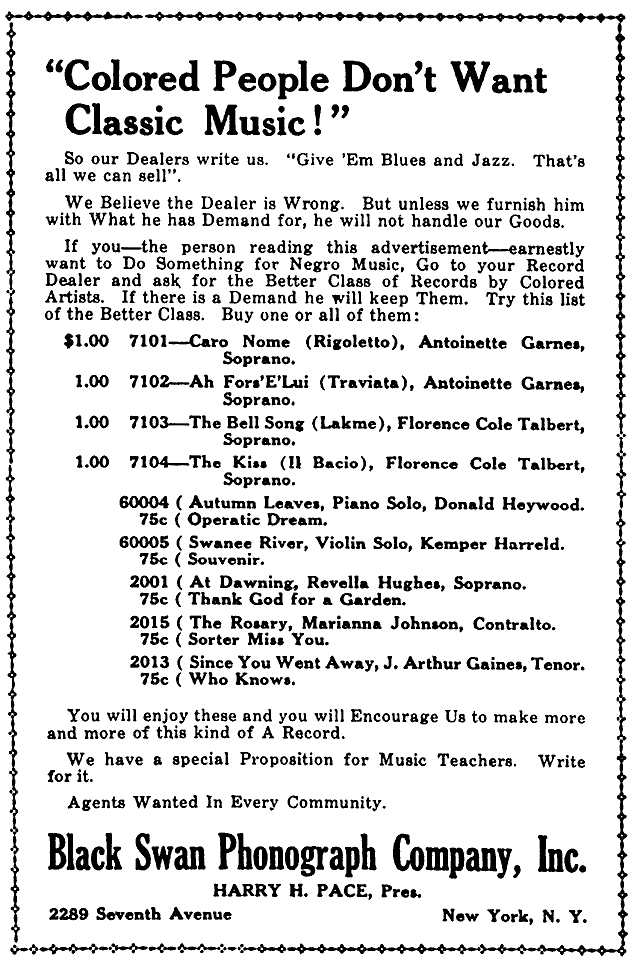
  • I think Philippa Schuyler and George Bridgetower help to disprove the theory that they were trying to disprove in this ad:

  • When I read about Stacey Bush,the white girl who (along with her biracial sister) was adopted by a black woman and is now on a multicultural scholarship, I thought of the mistake that Crayola made when naming this pack of crayons.  Maybe Stacey could explain to Crayola the difference between race and culture.  Throw in ethnicity and nationality too because a lot of people don’t seem to understand that those words are not synonyms:

  • This one goes along with the whole darn blog and it made me smile, so:

the worst kind of acceptance

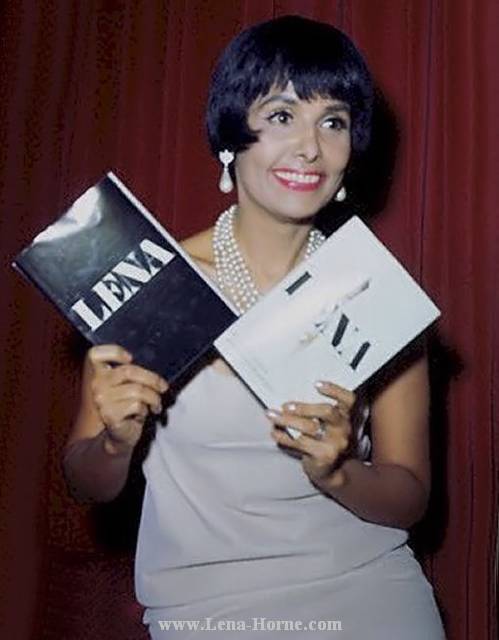
I’m going to try to get all of this Lena stuff out of my system today.  It’ll actually never be out of my system, but as far as blogging goes… you know what I mean.  I really enjoyed the following NPR blog post focusing on the racialization of Ms. Lena Horne.  I wonder how different things would have been for her if things would have been different.

Lena Horne: Of Race And Acceptance

by PATRICK JARENWATTANANON

In the reports of Lena Horne’s death that have emerged so far, much has been made of the fact that she was a black woman in an age of popular entertainment dominated by white faces. Her talent was obvious, but her skin hampered her attempts to become a major movie star, assigning her to bit parts that could be removed for Southern audiences.

Eventually, after the civil rights movement, Horne would be recognized as an entertainment icon. Her work as a jazz singer, theatre performer and television actress did much for that legacy, as well. But she also knew that the skin color that worked against her also worked for her. In the obituary that came over the AP wire, she is quoted as saying this:

“I was unique in that I was a kind of black that white people could accept,” she once said. “I was their daydream. I had the worst kind of acceptance, because it was never for how great I was or what I contributed. It was because of the way I looked.”

“A kind of black that white people could accept.” Think on that for a moment, and beyond the idea of being a light-skinned African-American. You could write the entire history of jazz through that lens.

Jazz’s early black stars (Louis Armstrong, Duke Ellington, Nat “King” Cole, Billie Holiday and others) worked overtime to be somehow disarming, or mythologized, or otherwise acceptable to white bourgeois audiences. Meanwhile, the music they and all their colleagues were making was popularized by white musicians — Paul Whiteman, Benny Goodman, the Original Dixieland Jazz Band, the Dorsey Brothers — sometimes well, sometimes drained of its swing energy. This continuing process is a big part of jazz’s transformation from scourge of society into America’s classical music.

Indeed, the entire cultural history of the U.S. in the 20th century could be viewed like that. Even today, where ethnic identity comes in many more shades, the middle-class white audience still plays arbiter and co-opter of what hits the mainstream. That’s admittedly a reductive viewpoint, ignoring the powerful experience of the art created, and perhaps it’s a bit cynical, too. But it would be true to Lena Horne’s experience, both marginalized and a trailblazer for who she, biologically, was.

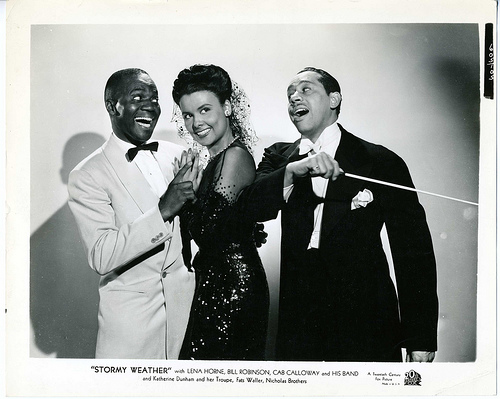
So what’s to do about this? Can’t we just remember Horne as a great singer and actress, the woman who did “Stormy Weather,” and the person whose friendship with Billy Strayhorn brought out the best in both of them?

Sure, but I’d rather not do only that. For one, it negates how she stood up against demeaning portrayals in what roles she took, and how she spoke out strongly against discrimination throughout her career. By omitting all that from our narrative of her life, it allows even the most well-meaning of people to conveniently forget how racism profoundly shaped the creation, marketing and embrace of American art, and continues to do so today.

The New York Times‘ obituary has another illustrative quotation:

My identity is very clear to me now. I am a black woman. I’m free. I no longer have to be a ‘credit.’ I don’t have to be a symbol to anybody; I don’t have to be a first to anybody. I don’t have to be an imitation of a white woman that Hollywood sort of hoped I’d become. I’m me, and I’m like nobody else.

Lena Horne didn’t choose to be racialized based on her genetic assignment, but she was. Remarkably, she ran with it, using it as a source of strength and pride and artistic inspiration. That’s worth remembering, to0.


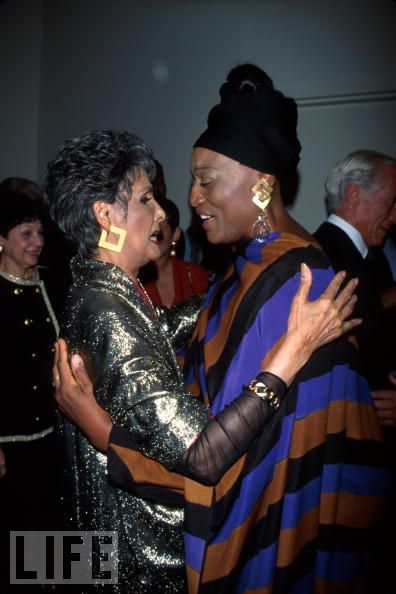
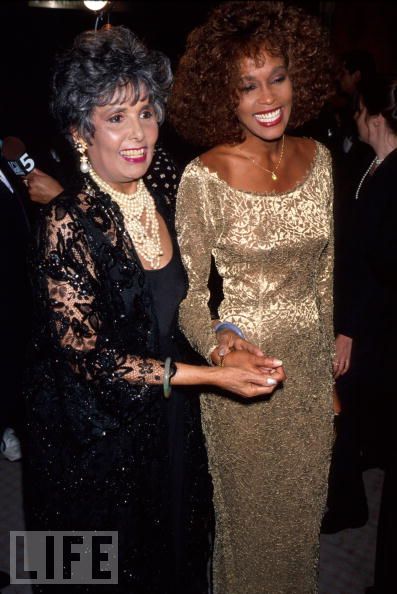
goodbye, lena

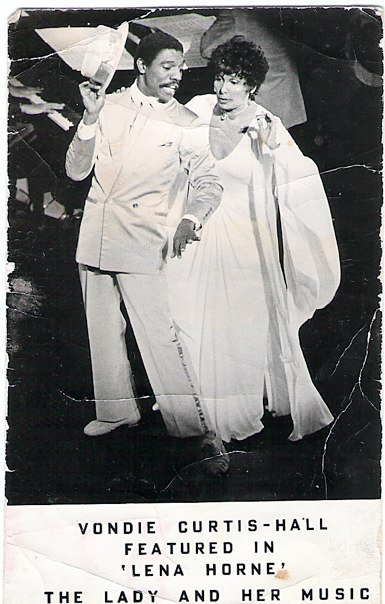
I am deeply saddened by the loss of the legendary Lena Horne.  I don’t think I have much  personal commentary at this moment.  I met Lena Horne once.  I was four or five.  My mom had a friend in Ms. Horne’s Broadway show.

She took me to see it.  We went backstage.  My mom says that with Lena and I it was love at first sight.  From what I can recall, I agree.  On my end anyway.  When I think back on that night the images that come up are all glowy and glittery with a hazy quality.  Almost like a dream.  Lena was truly magical.  She seemed to think I was as well.  Heck, when I was four or five I thought I was magical, too.  Or, should I say that I knew I was. That I hadn’t forgotten.  And nobody had tried to tell me otherwise yet.  I imagine now that Lena sprinkled some kind of fairy dust on me with a whisper never to forget who I am.  Not any part of it.  Especially not the magic.

I digress.

Needless to say I am extremely grateful to my mother and to Vondie and to Lena for that moment.  And also to Lena for breaking down barriers and speaking out against injustices and for paving the way for me to stand here today thinking these thoughts and trying to be a beacon for positive social change.

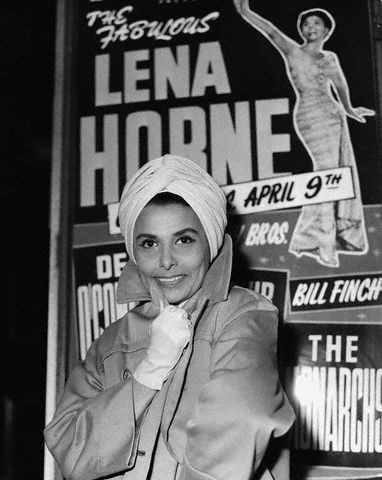
via The Huffington Post

Singer Dies At 92

VERENA DOBNIK

NEW YORK — Lena Horne, the enchanting jazz singer and actress known for her plaintive, signature song “Stormy Weather” and for her triumph over the bigotry that allowed her to entertain white audiences but not socialize with them, has died. She was 92.

Horne died Sunday at NewYork-Presbyterian Hospital, said hospital spokeswoman Gloria Chin, who would not release details.

Quincy Jones, a longtime friend and collaborator, was among those mourning her death Monday. He called her a “pioneering groundbreaker.”

“Our friendship dated back more than 50 years and continued up until the last moment, her inner and outer beauty immediately bonding us forever,” said Jones, who noted that they worked together on the film “The Wiz” and a Grammy-winning live album.

“Lena Horne was a pioneering groundbreaker, making inroads into a world that had never before been explored by African-American women, and she did it on her own terms,” he added. “Our nation and the world has lost one of the great artistic icons of the 20th century. There will never be another like Lena Horne and I will miss her deeply.”

“I knew her from the time I was born, and whenever I needed anything she was there. She was funny, sophisticated and truly one of a kind. We lost an original. Thank you Lena,” Liza Minnelli said Monday. Her father, director Vincente Minnelli, brought Horne to Hollywood to star in “Cabin in the Sky,” in 1943.

Horne, whose striking beauty often overshadowed her talent and artistry, was remarkably candid about the underlying reason for her success: “I was unique in that I was a kind of black that white people could accept,” she once said. “I was their daydream. I had the worst kind of acceptance because it was never for how great I was or what I contributed. It was because of the way I looked.”

In the 1940s, Horne was one of the first black performers hired to sing with a major white band, to play the Copacabana nightclub in New York City and when she signed with MGM, she was among a handful of black actors to have a contract with a major Hollywood studio.

In 1943, MGM Studios loaned her to 20th Century-Fox to play the role of Selina Rogers in the all-black movie musical “Stormy Weather.” Her rendition of the title song became a major hit and her most famous tune.

Horne had an impressive musical range, from blues and jazz to the sophistication of Rodgers and Hart in such songs as “The Lady Is a Tramp” and “Bewitched, Bothered and Bewildered.” In 1942’s “Panama Hattie,” her first movie with MGM, she sang Cole Porter’s “Just One of Those Things,” winning critical acclaim.

In her first big Broadway success, as the star of “Jamaica” in 1957, reviewer Richard Watts Jr. called her “one of the incomparable performers of our time.” Songwriter Buddy de Sylva dubbed her “the best female singer of songs.”

“It’s just a great loss,” said Janet Jackson in an interview on Monday. “She brought much joy into everyone’s lives – even the younger generations, younger than myself. She was such a great talent. She opened up such doors for artists like myself.”

Horne was perpetually frustrated with racism.

“I was always battling the system to try to get to be with my people. Finally, I wouldn’t work for places that kept us out. … It was a damn fight everywhere I was, every place I worked, in New York, in Hollywood, all over the world,” she said in Brian Lanker’s book “I Dream a World: Portraits of Black Women Who Changed America.”

While at MGM, Horne starred in the all-black “Cabin in the Sky,” but in most movies, she appeared only in musical numbers that could be cut when shown in the South and she was denied major roles and speaking parts. Horne, who had appeared in the role of Julie in a “Show Boat” scene in a 1946 movie about Jerome Kern, seemed a logical choice for the 1951 movie, but the part went to a white actress, Ava Gardner, who did not sing.

“Metro’s cowardice deprived the musical (genre) of one of the great singing actresses,” film historian John Kobal wrote.

“She was a very angry woman,” said film critic-author-documentarian Richard Schickel, who worked with Horne on her 1965 autobiography.

“It’s something that shaped her life to a very high degree. She was a woman who had a very powerful desire to lead her own life, to not be cautious and to speak out. And she was a woman, also, who felt in her career that she had been held back by the issue of race. So she had a lot of anger and disappointment about that.”

Early in her career, Horne cultivated an aloof style out of self-preservation. Later, she embraced activism, breaking loose as a voice for civil rights and as an artist. In the last decades of her life, she rode a new wave of popularity as a revered icon of American popular music.

Her 1981 one-woman Broadway show, “Lena Horne: The Lady and Her Music,” won a special Tony Award, and the accompanying album, produced by Jones, earned her two Grammy Awards. (Horne won another Grammy, in 1995 for “An Evening With Lena Horne.”) In it, the 64-year-old singer used two renditions – one straight and the other gut-wrenching – of “Stormy Weather” to give audiences a glimpse of the spiritual odyssey of her five-decade career.
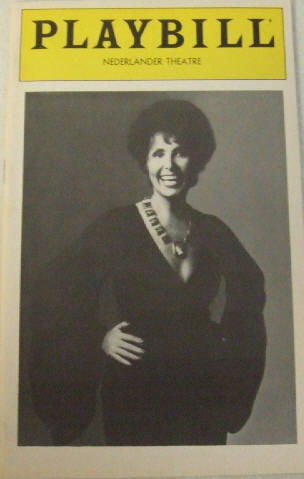
Lena Mary Calhoun Horne was born in Brooklyn on June 30, 1917, to a leading family in black society. Her daughter, Gail Lumet Buckley, wrote in her 1986 book “The Hornes: An American Family” that among their relatives was Frank Horne, an adviser to President Franklin D. Roosevelt.

She was largely raised by her grandparents as her mother, Edna Horne, who pursued a career in show business and father Teddy Horne separated. Lena dropped out of high school at age 16 and joined the chorus line at the Cotton Club, the fabled Harlem night spot where the entertainers were black and the clientele white. She left the club in 1935 to tour with Noble Sissle’s orchestra, billed as Helena Horne, the name she continued using when she joined Charlie Barnet’s white orchestra in 1940.

A movie offer from MGM came when she headlined a show at the Little Troc nightclub with the Katherine Dunham dancers in 1942.

Her success led some blacks to accuse Horne of trying to “pass” in a white world with her light complexion. Max Factor even developed an “Egyptian” makeup shade especially for her. But she refused to go along with the studio’s efforts to portray her as an exotic Latina.

“I don’t have to be an imitation of a white woman that Hollywood sort of hoped I’d become,” Horne once said. “I’m me, and I’m like nobody else.”

Horne was only 2 when her grandmother, a prominent member of the Urban League and the National Association for the Advancement of Colored People, enrolled her in the NAACP. But she avoided activism until 1945 when she was entertaining at an Army base and saw German prisoners of war sitting up front while black American soldiers were consigned to the rear.

That pivotal moment channeled her anger into something useful.

She got involved in various social and political organizations and, partly because of a friendship with singer-actor-activist Paul Robeson, was blacklisted during the red-hunting McCarthy era.

By the 1960s, Horne was one of the most visible celebrities in the civil rights movement, once throwing a lamp at a customer who made a racial slur in a Beverly Hills restaurant and, in 1963, joining 250,000 others in the March on Washington for Jobs and Freedom when Martin Luther King Jr. gave his “I Have a Dream” speech. Horne also spoke at a rally that year with another civil rights leader, Medgar Evers, just days before his assassination.

The next decade brought her first to a low point, then to a fresh burst of artistry. She appeared in her last movie in 1978, playing Glinda the Good in “The Wiz,” directed by her son-in-law, Sidney Lumet.

Horne had married MGM music director Lennie Hayton, a white man, in Paris in 1947 after her first overseas engagements in France and England. An earlier marriage to Louis J. Jones had ended in divorce in 1944 after producing daughter Gail and a son, Teddy.
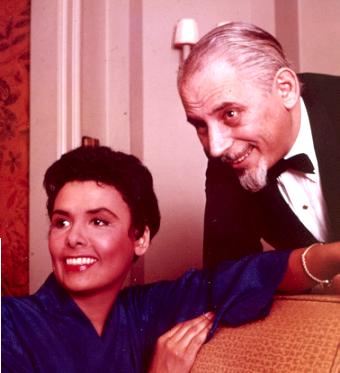
“It was in Hollywood that Horne met her second husband, Lennie Hayton, who was also her musical mentor at MGM. He was also white. When the couple announced their marriage in 1950 — three years after it had actually occurred, they were confronted with angry rejection from the Hollywood community. Despite all the difficulties of a racially mixed marriage, their union flourished, lasting from 1947 until Hayton’s death in 1971.”

Her father, her son and Hayton all died in 1970 and 1971, and the grief-stricken singer secluded herself, refusing to perform or even see anyone but her closest friends. One of them, comedian Alan King, took months persuading her to return to the stage, with results that surprised her.

“I looked out and saw a family of brothers and sisters,” she said. “It was a long time, but when it came I truly began to live.”

And she discovered that time had mellowed her bitterness.

“I wouldn’t trade my life for anything,” she said, “because being black made me understand.”


what’s this world coming to!?

This is a great article chronicling the changing landscape of transracial adoption.  Best advice I’ve read on the matter: “those adopting must be educated to understand ‘the impact of race and racism on the country, their family and the child in particular.'”

Transracial adoptions: A ‘feel good’ act or no ‘big deal’?

By Jessica Ravitz

VIA

(CNN) — “White people adopt black kids to make themselves feel good… A black child needs black parents to raise it.” “Maybe she adopted one because the blacks in the community wouldn’t step forward and adopt?” “What’s the big deal? If no white person ever adopted a black child, they’d be saying why don’t white people adopt black children.” “Who cares what race they are? A woman got a child, a child got a mother…it’s BEAUTIFUL!!! And yes I am black…if it matters.”

These impassioned comments and thousands more poured in earlier this week when CNN published a story on the stirred-up debate surrounding Sandra Bullock’s recent adoption. A People magazine cover photo of the actress beaming at her newly adopted black infant son, and the discussions that have followed, clearly hit a nerve.

So when it comes to transracial adoptions in this country, where are we?

Stacey Bush is the white child of a black mother whose adoption sparked controversy and whose attitude forces people to think about the issue differently.

Stacey wouldn’t change a thing about her life, which is saying a lot for a young woman who spent her early childhood being neglected and bounced through the foster-care system. That was before a drawn-out legal case ended in 1998, allowing a single black woman, Regina Bush — the only mother Stacey had ever loved — to become her forever mom.

Regina Bush stands with her daughter, Stacey, whom she adopted after lengthy legal wrangling.

Regina Bush stands with her daughter, Stacey, whom she adopted after lengthy legal wrangling.

The Michigan lawsuit was filed when a county agency cited concerns about “cultural issues” in an attempt to keep the pair apart. Regina Bush’s adoption of Stacey’s biracial half-sister had already been completed, without challenge, and Bush says she wanted to keep the girls together. (As a matter of full disclosure, this CNN writer’s late father represented Regina Bush in the case.)

At 21, Stacey is thriving in college, well on her way to becoming an early-childhood educator and seamlessly moving between worlds. In one day, she might braid the hair of black friends, address faculty at Central Michigan University where she is on a partial multicultural scholarship, and then go salsa dancing with her Latina sorority sisters.

“People are sometimes startled. ‘She’s white, but she doesn’t seem white,'” she says with a laugh. “I can relate to everyone. I like being exposed to everything. … Seeing me, hearing me — it doesn’t matter what color you’re raised just as long as someone loves you.”

Forty percent of children adopted domestically and internationally by Americans are a different race or culture from their adoptive parents, according to a 2007 National Survey of Adoptive Parents, the most recent study of its kind conducted by the U.S. Department of Health and Human Services.  Legislation passed by Congress in 1994 and 1996 prohibits agencies getting federal help from discriminating against would-be parents based on race or national origin.

How adoptive parents have approached transracial adoptions has changed with time, says Chuck Johnson, acting chief executive of the National Council for Adoption.

“In the old days, meaning the ’70s and ’80s, there was this notion that these parents need to be colorblind. This sounds wonderful, but by being colorblind you’re denying they’re of a different race and culture,” Johnson says. “Families that are successful are those that acknowledge race. … It’s not a curse. It’s not an impossible feat. They just need to work harder to give a child a sense of self-identity.”

It may be ideal and less complicated to match children available for adoption with same-race, same-culture families, says Johnson, who advocates that children be raised in their own countries whenever possible, too.

“But timeliness is of the utmost importance,” he says. “It’s better to find permanency and a loving home.”

The latest figures show that there are 463,000 American kids in the foster-care system, of which 123,000 are available for adoption, Johnson says. Of those, he says, 30 percent are black, 39 percent are white, 21 percent are Hispanic and the rest are of other origins.

Seventy-three percent of official adoptions — including those arranged through foster care, private domestic arrangements and internationally — are done by whites, according to the 2007 survey of adoptive parents. But that doesn’t account for informal arrangements, when relatives take in other family members’ children, which is much more common in the black community, says Toni Oliver, vice-president elect of the National Association of Black Social Workers.  She says the black community takes in “more children than the whole foster care system does,” although Johnson adds that often these arrangements don’t have the safeguards and protections legal adoptions provide.

When handled well, transracial adoption is “a very positive thing,” says Rita Simon, who has been studying these adoptions for 30 years and has written 65 books, including “Adoption, Race & Identity: From Infancy to Young Adulthood.”

“But love is not enough,” said Simon, a professor of justice and public policy at American University in Washington. “You really have to make some changes in your life if you adopt a child of another race.”

In the case of a white parent adopting a black child, that might mean living in an integrated neighborhood, having pictures in the home of black heroes, seeking out other families in similar situations, attending a black church and finding role models or godparents who are black. The same need to integrate a child’s culture applies across the board, whether parents are adopting from Asia, Central America or elsewhere.

“It helps make our society more integrated,” said Simon, who has five biracial grandchildren. “Race becomes less important and other kinds of identity issues become more important.”

Bill Barry and his wife, Joan Jacobson, adopted two boys as newborns. Willie, 17, is biracial and Alex, 15, is black. Race never mattered to the white couple when they set out to adopt, after it became clear they wouldn’t be able to bear children on their own.

Bill Barry and Joan Jacobson pose with their two sons, Willie, left, and Alex, whom they adopted as newborns.

Bill Barry and Joan Jacobson pose with their two sons, Willie, left, and Alex, whom they adopted as newborns.

“We simply wanted a healthy newborn,” Barry says. “We didn’t care about race, didn’t care about sex, and we knew we wanted them locally.”

Had the family uprooted to white suburbia, he suspects, the journey might have been more challenging. As it is, the kids go to public schools in Baltimore, Maryland, live in a multiracial and multicultural environment and grew up in a house where pictures of Paul Robeson and Rosa Parks hung on the walls. But Barry says he and his wife didn’t “go way overboard.” The white pair didn’t, for example, suddenly start celebrating Kwanzaa.

“My wife is Jewish, though not so practicing, and we did Christmas and Hanukkah. Double the presents — they quickly celebrated that,” he says. “Kids are always trying to figure out their identity and who they are, and race is just part of it.”

That may be true, but the National Association of Black Social Workers has long argued for keeping black children in black homes. About 40 years ago, the association released a four-page position paper on transracial adoption in which it went so far as to call such adoptions “genocide” — and that word choice has dogged the organization ever since.

But Oliver, the vice-president-elect, says when that position was written decades ago, blacks were being discounted as adoptive parents, not being given the same resources to help keep families together and thereby prevent the need for child placements, and that agencies weren’t recruiting families within the community. By speaking strongly, the organization helped jolt the system — although more still needs to be done, she says.

The preference, Oliver says, remains that kids be placed in same-race households whenever possible. And if it isn’t possible, or if a birth parent selects an adoptive family of a different race, then those adopting must be educated to understand “the impact of race and racism on the country, their family and the child in particular,” she says.

“There is a negative impact that children and families are going to experience based on race,” she says. “The idea that race doesn’t matter is not true. We would like it to be true, but it’s not.”

Regina and Stacey Bush have faced challenges along the way. They’ve received their share of stares and under-the-breath comments like, “What’s this world coming to.” When a young Stacey once started climbing into the van to join her family at an Arby’s restaurant, patrons came running to grab her, yelling that she was going into the wrong car. The girl was given detention at school, accused of lying because she called a young black boy her little brother, which he was. At a movie theater one time, someone called the police because they feared Stacey had been abducted.

Regina says she got attacks from both sides.

“White babies were a precious commodity. ‘Blacks can’t take care of white children,'” she remembers hearing. “And blacks were outraged” because there are so many black children in the system who need homes, and “they didn’t understand why a black woman wouldn’t adopt one of her own.”

But she says she simply wanted to keep Stacey and her half-sister in the same home and give them a loving family, together.

Stacey says that upbringing taught her to embrace all people.

“It gave me so much opportunity to talk to so many different people. There were no limitations. I stood up for a lot of things, and it made me break peoples’ mind-sets,” she says. “We’re accountable for each other as brothers and sisters. We need to look out for each other because at the end of the day we’re all human beings.”

brown babies

I’ve been meaning to post more about these AfroGerman children since blogging about  the holocaust memorial last month.  This post is mostly a reblog from MochaJuden.com.  As someone who has a hard time embracing my German heritage (none of which is “afro”), I find myself fascinated by this piece of our history.  I would love to track down some of these “brown babies” and interview them about their experiences in Germany and in the U.S.  The Black German Cultural Society website is definitely worth checking out.  So many resources, so much information.  I have a feeling I’ll be touching on this topic again…. and again.

Germany’s Brown Babies

Many of our constituents are children who were born to German mothers who were abandoned by African American soldiers during the U. S. Occupation following World War II. While some remained in Germany, many were raised in orphanages or with foster families; a few remained with their natural mothers. Many were offered for International Adoption to African American Families and accepted into the US under the Displaced Persons Act of 1948 (amended June 16, 1950) , where it was assumed that they would “more easily assimilate into the culture.”

This result is a generation of culturally displaced persons who remain disconnected and alienated from the mainstream of the societies in which they lived and from both ethnic communities to which they belong.

Adoption is a wonderful concept and is generally accepted as an ideal social mechanism for improving lives and circumstances for abandoned or orphaned children. However, recent psychological and sociological research has determined that these children often suffer significant lifelong emotional and social problems such as identity deficits, separation and attachment disorders, and chronic depression, as well as other problems as a result of separation trauma and what has been identified as “the primal wound.”

The issue is magnified and the outlook becomes ever more complicated when we explore the international adoption and abandonment of interracial children who were created by opposing forces following a major global war. For the most part, there was no professional follow up in terms of the physical, social and emotional well being of these children once they were placed.

Historians in the last decade have begun to study and write publications about the Brown Baby Plan and the cooperative attempt between the two governments to place and provide for these unwanted and displaced children. Autobiographical Interviews and publications have given voice to the trauma and lifelong suffering stemming from the dramatic loss of identity and heritage and the cultural alienation that these children faced, particularly while growing up both in post war Germany and in the US during the Civil Rights era, a period when intense racism and discrimination was under scrutiny and identified as a major problem in both societies.

“We struggled through childhoods filled with confusion, fear, anger, and feelings of inferior self-esteem. Navigated adolescence in extreme conformity to perceived structures of authority, in order to redeem our existence, or in defiance to them in utter rebellion. Adulthood was either accomplished successfully by integrating the powerful nuances of our diversified selves, or postponed until safety could be found in the distanced wisdom of experience. Some of us didn’t make it. Some of us are just now coming of age.” ~ Rebecca, Black German Cultural Society.

American Homes For Germany’s Brown Babies Are Scarce – Jet Mag, May 15, 1952

Tan Tots Attend German Schools – Jet Magazine, July 24, 1952

Brotherly Love – Jet Magazine, December 18, 1952

2607979643_5a07458832_o

German Brown Babies Arrive in US – Jet Magazine, January 29, 1953

Brown Babies Become Americanized – Jet Magazine, May 21, 1953

Brown Babies Find New Homes In America – Jet Mag, Oct 8, 1953

all photos found atVieilles_annonces of Flickr