critical need

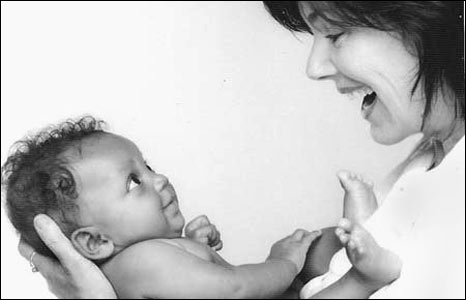
I know I’ve posted about this before, but I’m gonna do it again.  And again and again, probably.  The fact that biracial (and af/am) children are in the “critical need” category based solely on their race is unsettling to me.  So, let’s get out there and adopt them 🙂

Catholic Charities to hold information session on adoption

Wilmington, Del. –

Catholic Charities Inc. will host a free informational session for parents who want to learn more about building a family through adoption.

All are welcome to explore opportunities to adopt children in critical need, including African American children, biracial children and special needs children at the late February program.

“These children, ranging in age from infants to age 17, need parents now,” Catholic Charities’ Executive Director Richelle A. Vible said. “If you can, please consider opening your heart to the possibility of creating a family through adoption. It is a special blessing to become the most important person in a child’s life.”

Read more: www.sussexcountian.com

Adoption process is more involved than many realize

By Karamagi Rujumba, Pittsburgh Post-Gazette

Within the United States, a private adoption could cost that much($22,000-25,000), in both time and money, especially depending on the race of the child a family wants to adopt, experts say.

“We are always in need of families to adopt African-American and mixed-race babies,” said Connie Bach, director of adoption for Children’s Home of Pittsburgh and Lemieux Family Center, a full service agency in Friendship.

Full service means that her agency helps walk prospective adoptive parents through the process, which includes a security background check, a family analysis profile, matching and placement of the child before a court can put its stamp of approval on an adoption.

“Something people should know about adoption is that it often takes time, but if a family is truly committed to the process, it can be the most rewarding thing,” said Ms. Bach, whose agency mostly focusses on adoption of babies within the United States.

Read more: http://www.post-gazette.com/pg/10022/1030194-53.stm#ixzz0eZyBSjYM

undercovers

This sounds cool to me.  I hope they make the characters biracial!

J.J. Abrams finds ‘Undercovers’ female lead

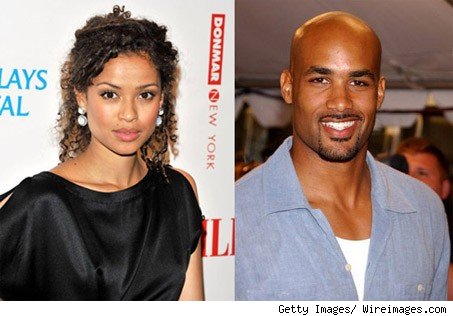
British actress Gugu Mbatha-Raw to star with Boris Kodjoe

By Nellie Andreeva

J.J. Abrams has cast another ingenue as the female lead of his newest TV project.

After a lengthy search, British actress Gugu Mbatha-Raw has landed the female lead opposite Boris Kodjoe on “Undercovers,” Abrams’ pilot for NBC.

“Undercovers,” which Abrams co-wrote with Josh Reims, revolves around a domesticated husband (Kodjoe) and wife (Mbatha-Raw) who are re-activated as CIA agents after years of retirement.

Abrams also will direct, marking the first pilot he has helmed since “Lost” in 2004.

Mbatha-Raw, a graduate of London’s Royal Academy of Dramatic Art, broke through during the summer when she was cast as Ophelia opposite Jude Law in the Donmar Warehouse production of “Hamlet,” which had successful runs in London’s West End and on Broadway.

The daughter of a South African doctor and an English nurse, Mbatha-Raw hasn’t appeared on American TV but has done arcs on several popular British series including “Spooks” and “Doctor Who.”

She is the latest discovery for Abrams, who is known for breaking new young female talent on his TV series. He cast Keri Russell on “Felicity,” Jennifer Garner on “Alias,” Evangeline Lilly on “Lost” and, most recently, Australian Anna Torv on “Fringe.”

Although Kodjoe and Mbatha-Raw are biracial, casting on the leads for the pilot was done color-blind, producers said, as they looked for the actors who best fit the characters and had the best chemistry.

SOURCE

“it’s like a job to search for identity”

Prejudice inspires filmmaker to discover Afro-German roots

By ABBY LIEBENTHAL

“It all started with a public threat on my life.”

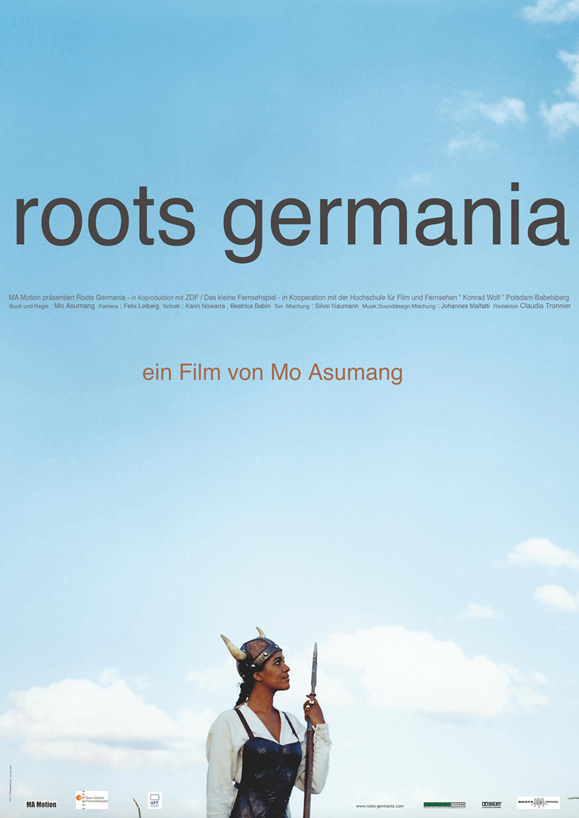
Within the first few minutes of Mo Asumang’s documentary “Roots Germania,” students, faculty and Bloomington residents became part of a search for the director’s identity.

The documentary was presented Friday in Morrison Hall and was followed by a question-and-answer session.

“You don’t hear about German and African relations very often, so I thought it would be something different,” graduate student Sarah Keil said.

Asumang said the journey to find her identity was driven by a desire to understand where racism toward Afro-Germans originated.

“It’s like a job to search for identity,” Asumang said. “It starts when you’re born in Germany – it’s not so easy to be part of that country.”

The film was triggered by a song, written by a Neo-Nazi band the “White Aryan Rebels,” that calls for Asumang’s murder. Lyrics in the song include “This bullet is for you, Mo Asumang.”

Asumang wanted to create a film about racism in Germany and finding her heritage after hearing the song. Throughout the film Asumang illustrated the struggles of having biracial parents in scenes with right-winged Neo-Nazis and Ghanaians.

“I didn’t know who I was,” Asumang said. “I tried to be white when I was younger, so years later I tried to be black.”

Asumang said the movie proves individuals do not consider people of a different race to be German.

While filming, Asumang did not tell Neo-Nazis she was an Afro-German when she called to speak with them – surprising them at their meeting.

Asumang also used the movie as an opportunity to get to know her father and learn more about her mother’s experience with racism.

When Asumang visited Ghana, her father said she did not have to decide exactly who she is and he would always accept her as Ghanaian. Her mother also expressed ideas of acceptance and said that she was forced to move and put Asumang up for adoption because her daughter was Afro-German.

“I can be both, and it’s super,” Asumang said. “I can be on one side a German and on the other a Ghanaian.”

One similarity between her identities, Asumang noted in the film, was spirituality and rituals performed in forests.

Janice Levi, a graduate student, said she took note of the spiritual connection between these two cultures.

“It was interesting how she related it far back to Pagan culture in Europe and experiencing rituals in the forest to both areas,” Levi said.

Asumang ended her film saying that for every Neo-Nazi convention, there are at least three challenging it.

“Some people will never change, but you can change your own life,” she said.

SOURCE

make your own definition

I enjoyed and appreciated this article about “us.”  I’ve been thinking lately about the choice we have to either “interact with the system the way it interacts with you,” or to come up with (and stick to and be ready to defend) our own definition of self.  In other words, you can let everyone else define you because it’s the path of least outward resistance, or you can follow the path of the least inward resistance.  I tried to go along with the system.  I think that was the primary source of my former discontent.  Now that I’m being true to myself, lots of things make a lot more sense and the possibilities seem greater.  Other things seem to make no sense at all and the obstacles loom large.  Yet I’m confident that I’m heading in the right direction.

For fast-growing group of Americans, race isn’t defined by one name

The question hit Tiffanie Grier like a hammer, and more than 15 years later, the impact lingers. She was just 9 years old, a third-grader at a school awards program, when she was asked by a friend’s mother about her ambiguous racial appearance.

What are you?

For Grier, now 26 and career placement director for the Boys & Girls Club of Greater Memphis, it was the first of many instances in which she confronted questions related to her heritage as the daughter of a white mother and an African-American father.

“I get asked a lot,” she said. “(People) feel the need to know.”

Far from being a rarity, however, Grier is part of what may be the fastest-growing demographic, both locally and nationally.

Between 2000 and 2008, the number of people of two or more races rose nearly 33 percent, from 3.9 million to nearly 5.2 million nationwide, according to census estimates.

In Shelby County, the growth rate was even faster. The number of multiracial residents increased some 43 percent, from 6,384 to 9,113 during the eight-year period in which the overall county population grew by only about 1 percent.

The 2010 Census, barely two months away, is expected to show even greater growth in the category, demographers say.

The reasons are twofold. First, the number of interracial marriages, and the children produced by them, has risen steadily since 1967, when the U.S. Supreme Court struck down state prohibitions on the unions.

Second, as a result of a growing acceptance of multiracial heritage, researchers say, people have become increasingly willing to check more than one category for race on the census forms. The election of a mixed-race president, Barack Obama, likely will reinforce that trend.

“It’s the wave of the future, for sure,” said William Frey, a demographer with the Brookings Institution in Washington. “I think symbolically … it might have an impact on how people view race.”

The upcoming census will be only the second in which respondents are able to identify themselves as multiracial.

The 2000 Census showed the emerging “two-or-more-races” group was poised for rapid growth. About 42 percent of them were under age 18, compared to only 25 percent of the general population that young, and 70 percent were younger than 35.

“What that’s telling you is that it’s a young population, and that it’s increasing,” said Nicholas Jones, chief of the Census Bureau’s racial statistics branch.

Among the most common combinations named by people in the two-or-more-races category in 2000 were white-Native American/ Alaskan (1.08 million), white-Asian (about 868,000) and white-black (nearly 785,000).

The significance of the emerging multirace demographic is anything but clear. Frey predicts it will diminish the importance of race — helping to propel society beyond a black-white divide — while others say the impact will be more on a personal level.

“I think it’s important to the people themselves — how they identify themselves,” said Darryl Tukufu, vice president for academic affairs and associate professor of sociology at Crichton College in Memphis.
Memphians (clockwise from top left) Felicia Scarpeti-Lomax, Tiffanie Grier, Cardell Orrin  and Desireé Robertson are members of what may be the fastest-growing demographic, both locally and nationally -- people who may identify themselves by two or more races.

(PHOTO BY MIKE BROWN: Memphians (clockwise from top left) Felicia Scarpeti-Lomax, Tiffanie Grier, Cardell Orrin and Desireé Robertson are members of what may be the fastest-growing demographic, both locally and nationally — people who may identify themselves by two or more races.)

Whatever other effects it might have, the relatively recent census acceptance of multiracial classification recalls the nation’s troubled and convoluted history regarding race.

Although many African-Americans have some white ancestry, the historic “one-drop rule” meant that anyone with so much as a drop of black blood was categorized as black and potentially subjected to disenfranchisement and other forms of discrimination.

That history, said Warner Dickerson, president of the Memphis Branch of the NAACP, blurs the significance of the new census categories.

“I happen to be a fair-skinned black man, and you and I both know why,” Dickerson said. “Most of us are mixed with black blood and white blood.”

Because society has labeled them as black, many people with one African-American and one white parent say they will continue to check only the black category on the census form.

“I will be addressed, especially here in the South, as an African-American,” said Cardell Orrin, 35, a Memphis business consultant and co-founder of a political action committee called New Path. “You decide to make your own definition or interact with the system the way it interacts with you.”

Tukufu said the labeling, and discrimination that accompanied it, tended to instill in many mixed-race people a pride in their black heritage. That’s why they’ve stuck with one racial category on census forms.

“But now you have more of the younger folks who identify with both,” he added.

Grier interviewed people of ambiguous racial appearance, including many of mixed heritage, for her master’s thesis at the University of Memphis. She found that the question of how mixed-race people identified themselves often depends on who raised them.

That was the case with Desireé Robertson, 37, of Millington, who was adopted by an African-American couple and didn’t discover until age 30 that her biological mother was white.

“That’s my primary identification,” Robertson said in explaining why she’ll stay with just African-American as her identity in the census.

But Felicia Scarpeti-Lomax, 39, who was raised by both her white Italian-American mother and her black father, plans to use both racial categories.

“For me to use one racial category, that would be eliminating one of my parents, and that’s not my heritage,” Scarpeti-Lomax said.

She formerly lived in New York City, where racial identity was never an issue, she said.

“I never faced this craziness until I moved to the South,” she said.

Scarpeti-Lomax, like many others of biracial heritage, said she’s glad the Census Bureau finally began offered the choice of multiple categories.

“This is 2010 …” she said, “and I just refuse to live my life identified by a color.”

corinne bailey rae: true and genuine

Corinne Bailey Rae, an English literature graduate with a love of Alice Walker and Margaret Atwood, is talking about words, lyrics and punctuation. Her songs, she says, are an expression of her ‘unfettered self’.

…From the age of 15 she played the guitar and sang in an all-girl indie grunge band called Helen. Their first ‘proper’ gig was at the Duchess of York pub in Leeds in 1996. Her desire to make a go of the band was behind her decision to study at the University of Leeds. She had applied to Balliol College, Oxford, and achieved the necessary four As at A-level, but didn’t get in. She wasn’t hugely disappointed: she had found the Oxford interview process ‘quite alienating. There weren’t many people from my experiences. I didn’t meet any working-class people, I didn’t meet any black people.’

Bailey Rae grew up listening to all kinds of music. Her mother, from Yorkshire, and her father, who had moved from St Kitts in the Caribbean in his late teens, had a collection of Stax and Motown singles (they divorced when Bailey Rae was 12). The progressively minded youth leader at her church introduced her to Björk and the Cocteau Twins: music that he felt was ‘kinda trippy, a bit cerebral, a bit spiritual’. As a result of her mixed race – she dislikes the term but accepts that most people understand it (for a long time, if forced to describe her ethnicity, she preferred to say ‘brown’) – it has always been important to her to embrace all kinds of musical genres. She hates the notion that suggests that ‘Oh, black people only like R&B…

I don’t only like R&B,’ she says. ‘I always love in life when you see people acting in a way that is true and genuine to them but doesn’t fit into the perceived notion of how they would respond to something.’

SOURCE

segregated orphans

A discarded term!?  I guess Bill Kemp has never visited this blog.  I’m grateful for this little piece of our history.

Booker T. Washington Home offered safe haven for black children

By Bill Kemp Archivist/librarian McLean County Museum of History | Posted: Saturday, December 12, 2009

For much of the 20th century, Bloomington-Normal residents thought it necessary to maintain segregated group homes for underprivileged children. One would be hard-pressed to find a better illustration of the embarrassing state of race relations over the decades than the fact that impoverished, neglected and unwanted children were separated by race until the 1960s.

From World War I until JFK and Camelot, African-American children lived at the McLean County Home for Colored Children, later renamed for Booker T. Washington, on Bloomington’s far west side.

This institution dates to 1918 when Alexander Barker and his wife Cedonia, with assistance from Margaret Wyche, took it upon themselves to care for six orphaned black children. Not long after, the Missionary Union, a group of four local churches stepped in to lend much-needed assistance. Though chartered by the state of Illinois in December 1920, the home was a rather primitive operation, with 25 children and 2 adults living in a six-room house with no plumbing or running water.

Improvements in the home, both in its physical plant and operation, soon followed. Located on the 1200 block of West Moulton Street, now MacArthur Avenue, the home’s mission was to “foster self respect, independence and good character.”

Overseen by a 15-member board of progressive-minded women, the home expanded to an adjacent residence. Also acquired in the early years were five nearby lots that were converted to truck gardens so the home could grow much of its own food. The boys generally worked the garden plots and the girls handled the laundry and canning, along with other duties.

The 1920 U.S. Census identified 15 of the 18 children at the home as mulatto, a since-discarded term for someone of mixed-race heritage. Back then, children with one black parent and one white were often outcasts, and into the 1940s, if not later, the home served as a safe haven for mixed-race children abandoned by their parents and local communities.

Money was always tight and the needs of the new arrivals great. “A special effort has been made to give each child his full quota of milk and butter fat, as many of the children were underweight,” read one report from 1921.

“There is absolutely no place of good repute open to such children in Illinois, except this one,” noted The Pantagraph two years later. “The question arises, shall a child be permitted to subsist on the contents of garbage cans … simply because of their race? Paraphrasing the Biblical interrogatory, ‘Who is thy brother’s keeper?’”

sometimes the apple does fall far from the tree

Thank God!  This is such an amazing story.  I’m so fascinated.  Not only by the bravery of a little white girl who crossed KKK, but also the shades of “mulatto” history sprinkled throughout.  Coon-hunting based on the supposed threat that black males posed to white women.  The “black” member of the Klan.  Passing.  Male chauvinism.  Homophobia. This is our sordid past.  And it is still haunting us.

Taking on the Klan

One summer night in 1965, 12-year-old Carolyn Wagner watched as Klansmen bound a young black man to a tree in her father’s field, accused him of violating the “sundown” rules in nearby Booneville, Ark., that forbade blacks from staying in town after dark, and lashed him a few times with a bullwhip as he cried out in pain and fear.

It was no different from beatings at other Klan gatherings her father had attended, but what happened next remains vivid in her memory: the Klansmen decided to tie the man to the railroad tracks below the pasture. When they were done, they ambled back to the field to discuss crops and politics. Wagner, a reluctant witness to her father’s Klan meetings, couldn’t stand it anymore. She stole down to the tracks, used a knife she kept in her boot to slash the rope that bound the man, and told him he could follow the tracks to Fort Smith, the nearest large town.

“That was a turning point,” recalled Wagner, now 56 and living in Tulsa, Okla. “I felt like I had made a difference when I was able to cut that man free. I realized I can make a choice to be a passive observer or I can become involved to diminish the harm that they’re doing. And that’s what I did from that night on, and that’s what I’m still doing.”

After years working for civil rights and children’s organizations, Wagner co-founded Families United Against Hate, a nonprofit group that helps people affected by bias incidents. Her experience growing up with a father in the Klan made her determined and fearless in her fight against hate. “That image of my dad and those men, and even the smells, are still with me, and they’ll always be with me. And it was very important that my children never know the world I knew when I was growing up.”

It was a world where Wagner’s father, Edward Greenwood, and his acquaintances gathered at least once a month at each other’s farms for Klan meetings, often bringing their children and grandkids. Because her father, then in his late 50s, couldn’t see well enough to drive at night, Wagner ferried him to meetings in a 1951 Chevy pickup. (Back then in rural Arkansas, it wasn’t unusual for children as young as 12 to drive on country roads.) The men — including lawyers, judges, cops and pastors — would begin their gatherings with a prayer and eschew alcohol. “They felt like they were doing God’s work,” Wagner said.

Sometimes, the gatherings would feature a beating like the one Wagner witnessed at her family’s farm. The victims were usually young men who’d been picked up on a pretext, such as paying too much attention to a white woman. “We would hear terms like ‘coon’ hunting,” she said. “My father would say, ‘I’m going ‘coon’ hunting.'”

But more often, the men would talk big, complaining about Presidents John F. Kennedy or Lyndon B. Johnson or even threatening to blow up the Supreme Court building. They’d eat bologna sandwiches that Wagner had prepared. Campfire smoke would mingle with the sweet-sour odor of Brylcreem, sweat and Old Spice. It was the one place where her father seemed happy. “I don’t remember seeing him smile or laugh unless he was with those goons,” she said.

…But her father probably would not have found a home in the Klan if his comrades had known about his heritage. “We knew there was this dirty secret in the family,” Wagner said.

In fact, her father’s great-great-great grandmother, Elizabeth Greenwood, was part Cherokee and part black, a former slave who’d settled in Arkansas when it was still part of France’s Louisiana Territory, according to family lore. Her father had cousins who identified as black, though he would have nothing to do with them. Wagner believes part of his racism stemmed from shame about his origins.

Wagner’s mother didn’t share her husband’s views about race, but she felt powerless to oppose him. Divorce was taboo in her family; resources for victims of domestic abuse were nearly nonexistent. “Mother never asked what he did [at Klan meetings],” Wagner said. “It was like she couldn’t bear to know.”

Wagner did receive support from her maternal grandparents, who passionately disliked her father. After Wagner secretly untied the black man from the railroad tracks, her maternal grandfather taught her how to use a 12-gauge double-barrel shotgun. She cut away the springs in the seat of the pickup to create a compartment where she hid the weapon, loaded and wrapped in a blanket. Though she never used it, she says she would have done so to defend herself or to help a potential Klan victim.

It wasn’t the last time she would defy all that her father represented. In April 1968, Wagner drove him to Memphis to take part in a Klan protest during the sanitation workers strike made famous by the appearance of Martin Luther King Jr. She was there when the civil rights leader was assassinated. In a Memphis newspaper, she read that the Department of Justice was planning a crackdown on the perpetrators of civil-rights era violence. After the assassination of Robert Kennedy two months later, Wagner, then 15, wrote a letter to the FBI accompanied by a list of names and addresses she’d copied from her father’s Klan directory. She wanted to get them all arrested. “I included my dad on that list,” she said.

Wagner, who used her maternal grandparents’ home as the return address, never heard back from the FBI.

She left home the day she finished high school and at 19 eloped with Bill Wagner, now her husband of 37 years. Her father died in 1980 when she was pregnant with her younger child, William. “I am so grateful that my children will have no memory of him or his politics,” she said.

But her own memories of her father came back strongly on William’s 14th birthday, the day he told his parents that he was gay. That day she and her husband’s biggest concern was for their son’s safety. “I had a very clear understanding of who the hatemongers were,” she said. They decided to move from their farm in tiny Booneville, a conservative town where homosexuality was widely condemned, to the more liberal university town of Fayetteville, some 120 miles away.

Still, they couldn’t protect their son from hate. Harassment at school culminated in a brutal assault in 1996. William, then 16, left school with friends to get lunch at a nearby convenience store when six teenagers shouted anti-gay slurs. They knocked him off his feet, then kicked him as he lay bleeding on the ground. “I thought about how easily that could have been my father’s group,” Wagner recalled. “And I wasn’t there.”

Two of the attackers were convicted of assault. After the Wagners filed a complaint on behalf of their son under Title IX, the federal anti-discrimination law, Fayetteville became the first public school district in the nation to enter into an agreement with the Department of Education’s Office of Civil Rights that required it to protect all students, including gays and lesbians, from harassment. The Wagners continue to advocate for young people who are targeted because of their actual or perceived sexual orientation.

Looking back on her childhood, Wagner remembers reading novels by Pearl S. Buck and biographies about women such as Harriet Tubman and Florence Nightingale. She wanted to learn about people who had survived difficult circumstances to help others, because she was determined to do the same.

“I found ways to survive,” she said. “I found ways to more than survive — to endure, to become stronger and to make our little corner of the world in the South a little better.”

instead of being a white man (he) is a mulatto

Web Site Tells Forgotten Tales of Slavery

By Dan Nonte and Lanita Withers Goins, University Relations

GREENSBORO, N.C. The 1860 U.S. Census registered the names of slave owners and the age, gender and color of slaves. But there, as in much of the historical record, slaves are nameless.

UNCG’s new Digital Library on American Slavery provides the names of more than 83,000 individual slaves from 15 states and the District of Columbia.

The web site, created in cooperation with University Libraries, features petitions related to slavery collected during an 18-year project led by history professor Loren Schweninger. The petitions filed in county courts and state legislatures cover a wide range of legal issues, including wills, divorce proceedings, punishment of runaway slaves, calls for abolition, property disputes and more.

“It’s among the most specific and detailed databases and web sites dealing with slavery in the U.S. between the Revolutionary War and the Civil War,” said Schweninger, the Elizabeth Rosenthal Excellence Professor in History. “There’s no web site like this, either in extent or content. The amount of information in here to be mined is enormous.”

Started in 1991, the Race and Slavery Petitions Project collected, organized and published the petitions. The Digital Library on American Slavery is the final phase of the project.

A complete collection of the full petitions, “Race, Slavery, and Free Blacks: Petitions to Southern Legislatures and County Courts, 1775-1867,” has been published on 151 reels of microfilm. In addition to UNCG’s Jackson Library, North Carolina university libraries with all or part of the microfilm collection are located at Duke, East Carolina, N.C. A&T, UNC Chapel Hill and Wake Forest.

Schweninger knows the value of conducting research from primary sources, something he learned from his mentor, the late Dr. John Hope Franklin. The stories he found in legal records were often not preserved anywhere else. “This was info that was not tapped,” he said. “Very few scholars had gone to county courts.”

Building the database for the archive was painstaking work. Schweninger visited about 160 county courthouses in the South and 15 state archives between 1991 and 1995. “The first three years, I was on the road 540 days,” he said.

Marguerite Ross Howell, senior associate editor, worked on the project for 11 years and was responsible for entering tens of thousands of slave names and connecting them with their own family members as well as their owners, creating a unique resource from original documents. Nicole Mazgaj, associate editor, worked on the project for seven years and focused her analysis especially on the rich documentary evidence from parish court houses in Louisiana.

“The archive is chock-full of information detailing the personal life of slaves,” Mazgaj said. “It’s probably about the most detailed that you’ll find.”

…The library includes petitions by more than 2,500 slaves and free blacks who sought redress for numerous causes. For example, George Sears of Randolph County, a blacksmith and a free man of color, purchased his slave wife Tillah for $300. He then petitioned the North Carolina General Assembly in 1818 to emancipate his wife and daughters and “render them Competent in Law to inherit the Estate of your Petitioner.”

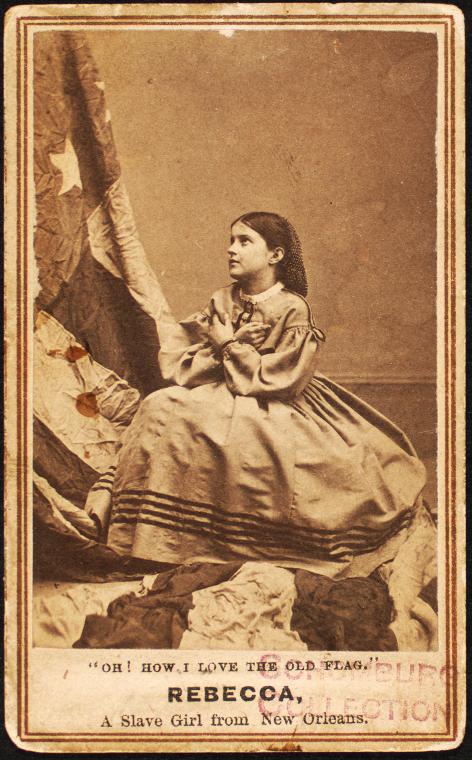
Other petitions show how race and slave status were sometimes in dispute. In one case, a Georgia slave owner sued one of his neighbors for slander for calling him a “damned negro,” averring that he was a black man. In another, a woman in Baltimore petitioned for divorce because her husband “instead of being a white man is a mulatto and in reality had been born a slave.” A New Orleans teenager who was put on the auction block to be sold as a slave asserted in her petition that she was in fact a free white woman.

A number of the petitions also speak to how slaves fought their enslavement, providing details of slaves who ran away, burned down plantations, or plotted to murder slave owners. As the petitions show, the position of free blacks in the South was also precarious, especially as certain states and counties sought to expel them or refused to allow them to enter.

Read more HERE

speaking of adoption

I’m not happy to be posting something connected to Ohio State University, BUT I’d never heard of an adoption like this one and I found it rather interesting, so pardon me fellow Wolverines…


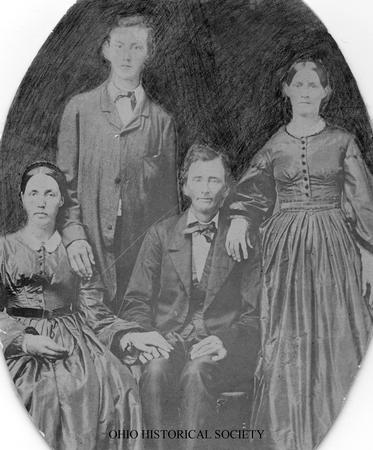
Mary C. Thorne and Family

This is a portrait of Mary C. Thorne of Selma, Clark County, Ohio, with her family. The woman standing is a mulatto fugitive slave that the Thorne family adopted. The image was collected by Ohio State University professor Wilbur H. Siebert (1866-1961). Siebert began researching the Underground Railroad in the 1890s as a way to interest his students in history.

SOURCE

a reunion

Siblings cherish long-awaited reunion with birth mother on Thanksgiving

By Cheryll A. Borgaard

For Helen Ford, finding her birth mother four months ago was “exciting, but scary.”

“I was nervous, but I also had a feeling of happiness,” Ford, 54, said Monday. “If you’ve been the product of adoption, you have some questions, but it felt good. You think, ‘Maybe I’ll meet this person, see who I am, where I came from.’ ”

She learned she was born to a 17-year-old blond-haired white girl from a strict Mormon background and a young black man the teen had met in high school in Seattle.

Early Thanksgiving morning at her Longview home, Ford and her birth mother, Delores Burlew, 72, saw each other for the first time in more than five decades.

Their reunion wasn’t the only one to take place that day. Burlew also met Mark Robinson, 52, another child she had with the man two years after Ford was born.

Growing up in Longview

Ford and Robinson were adopted by a black couple, Melvin and Jeanette Robinson of Longview — she at age 2 1/2, he shortly after his birth. They grew up on Eighth Avenue in Longview in a predominantly black neighborhood.

“We were blessed, in a sense, that we got to grow up in the same household. As far as Mama was concerned, we were hers,” Ford said of her adoptive mother, who gave her children little or no information about their background. “Growing up, we did have issues (being biracial), but for the most part, it made us who we are today.”

…Burlew remembers the day she received the document from Children’s Home Society, asking if she would agree to let Ford contact her.

“I got the letter on Friday, and I was scheduled to go to heart surgery on Monday, Aug. 10,” she said Monday from her home in Ogden, Utah. “In the meantime, I had to send in a consent form, but because of my surgery, the caseworker circumvented it, and Helen and I spoke that weekend.”

One of the first things Burlew told Ford during that phone call was that she’d also given up for adoption a son born March 17, 1959.

“I told her yes, that’s my brother, Mark, and that we’d been adopted by the same couple,” Ford said. “Dee (which is what Ford calls Burlew) was just floored at that point.”

“It was great to find out they were together,” Burlew said.

‘It wasn’t something I wanted to do’

Burlew moved from Utah to Seattle with her mother and stepfather in August 1954, just before her senior year of high school.

“I thought my mother was taking me straight to hell; I hated it there,” Burlew said. “I had to leave all my friends in Utah.”

When Burlew discovered she was pregnant, “My mother told me I wouldn’t handle the stress and couldn’t keep the baby. It wasn’t something I wanted to do.”

Burlew went to a home for unwed mothers in Seattle. “My mother didn’t want anyone to know what happened. My mother was a very, very staunch (Mormon).”

The young man had gone into the service, and when he came back on furlough, “it was one time, and boom, there was Mark,” Burlew said.

This time, her mother kicked her out of the house. Burlew said she got a job baby-sitting until she was far enough along in her pregnancy to return to the home for unwed mothers.

“It was just really difficult for me to go through it again,” she said. “But I wanted them to be wherever they would be the best off. I thought I would try to find them, but I never had the means. That’s why I never changed my maiden name. I thought maybe they could find me.”

She returned to Utah in 1959 following her first marriage and gave birth to another son and daughter.

“When they were old enough to know, I told them I figured I needed to tell them (about Ford and Robinson),” she said. “I wanted to tell them of the possibility that ‘You might not like your brother or sister because they’re biracial.’ ”

Read more of the Ford/Robinson/Burlew story HERE

I really liked this story…until the part where the birth mother said she had to warn her white other children that they might not like their siblings because they are biracial.  Did it not occur to her to raise them in a way that would encourage acceptance of all people?  Please pardon my judgmental tone.  I’m just sayin’.