even if others think differently

This is the first thing I’ve read/heard that makes me want to see Avatar.  Not that that’s the point of the article or anything.  I’m just sayin’.

Supa sista!

Richard Barnett

SOURCE

Philly hip-hop poet Ursula Rucker celebrates black history at Montreal’s Festival Voix d’Amériques

Famed poet and Philadelphia native Ursula Desiré Rucker cannot believe she has never been invited to perform at an event during Black History Month. Ever.

Until now.

“It’s the weirdest thing,” says Rucker, who headlines Montreal’s internationally renowned Festival Voix d’Amériques next week. “Growing up, my family joked it was the shortest month of the year. But today, for me, [Black History Month] is all year long.”

Rucker shot to fame in 1994 after she nervously stood before an audience on open-mic night at Zanzibar Blue in Philly, the City of Brotherly Love most folks these days call “Killadelphia.”

…In many ways, Rucker has become the hip-hop nation’s Maya Angelou – if Angelou’s words were stamped “Explicit lyrics.”

But Rucker isn’t R-rated so much as she is brutally frank about issues ranging from womanhood and slavery to love and politics. For instance, right now many blacks are deeply insulted by John Cameron’s movie Avatar, basically a racist piece of s*** white folks have made the top-grossing film of all time.

Avatar is yet another “white messiah” fable – much like the films A Man Called Horse,Dances With Wolves and At Play in the Fields of the Lord – and Rucker is having none of it.

“The most important thing I try to impress upon my children each and every day is to be who you are even if others think differently,” says Rucker, a married mother with four sons aged 5 to 15. “We went to see Avatar and it was the same old story as Pocahontas: The oppressor comes in and makes everything better. I don’t Facebook much, but I had to post something! My 11-year-old son was like, ‘Must you always be ranting about something!’ But if I don’t speak my mind, then that’s not me!”

…For many white folks, that clenched fist basically means black power. But Rucker is for everybody. In fact, she grew up in a mixed-race family in Philly.

“My mom is Italian and my dad is black from Virginia,” Rucker says. “Growing up was pretty cool except when I was really young. I had issues with it. When I found out everyone else’s mom wasn’t white, I started feeling strange. Sometimes when I was little I’d be embarrassed to go out [with my mom]. Then when I hung out with my mom’s family, one of my aunts would use the term ‘coloured.’ They were old-school.”

“But then in college I got revolutionary. Being light-skinned in the 1980s was interesting in America.” Those years helped shape Rucker and her sweet “song-speak” on her landmark 2001 album Supa Sista before she wowed audiences at the 2005 Amnesty International Australia Freedom Festival. Still, after all these years, Ursula Desiré Rucker has yet to headline a Black History Month event back home in America.

Which is why she is so looking forward to being the guest of honour at the Festival Voix d’Amériques here in February.

“Being a person of mixed race isn’t an issue for me [anymore] – I’m so comfortable with who I am now. I’m proud of both [my racial heritages] but,” Rucker says with typical fire, “I lean [more] to being black in America because that’s where I’m needed most.”

a “half black” rockwell

I think this is so cool.  Just one thing though…. If his father was mixed-race himself, how is it possible for Mr. Claiborne to be half black? Don’t get me wrong, I am not questioning his personal identity.  I would love to have a conversation with him about it.  About how he came to that conclusion.  I used to think that if I could make “half black” kids.  Then one day I realized that… I can’t.

A Rockwell Illustrating a Street-Lit World

By COREY KILGANNON

Jason Claiborne

When Jason Claiborne was a third grader at Public School 187 in Washington Heights, the teacher scolded him for drawing a picture of a naked woman.

“Jason stood up and told the teacher, ‘I come from a family of artists and we have nude paintings on the wall,’ ” recalled his mother, Jane Jaffe, 65, whose father was Richard Rockwell, an artist and a nephew of the famous illustrator Norman Rockwell.

That would make Norman Rockwell — who was born 116 years ago on Feb. 3 — a great-great-uncle to Jason Claiborne, a 33-year-old artist living in Inwood, Manhattan.

If one were to have preconceptions about what a relative of Norman Rockwell would be like, Mr. Claiborne might not match them.

First of all, he is, as he calls it, “half black,” being the product of Ms. Jaffe’s second marriage, to a mixed-race man named Mario Claiborne. Jason Claiborne did not grow up in middle America, but rather in Washington Heights.

Like Rockwell, who died in 1978, Mr. Claiborne makes his living illustrating book and magazine covers. But Mr. Claiborne does not sit at a spindly easel painting sentimental portraits of white-bread middle Americana. He uses a computer to illustrate the covers publications that fall into the so-called street lit genre of publishing: urban tales of city dwellers who deal in guns, drugs, gangs and vice. The characters (and readers, largely) tend to be people of color.

“Norman documented middle America, and I’m documenting the ’hood,” said Mr. Claiborne, president and creative director for Augustus Publishing, which puts out books with titles such as “Ghetto Girls” and “Streets of New York.”

Authors include former prison inmates and gang members, and Mr. Claiborne provides the brash cover art that is more hustlers and hip-hop than the hobos and homespun scenes of “Saturday Evening Post” covers.

“A lot of Norman Rockwell illustrations can be seen as Polaroid images of the American dream,” Mr. Claiborne said. “I’m showing an American dream that’s not as pretty.”

…“Norman drew life as he experienced it, and like him, Jason draws from his personal life experience,” Ms. Jaffe said. “Norman would not be averse to the way Jason’s doing, because Norman was always ahead of his time as well.”

Richard Rockwell — whose father was Jarvis Rockwell, brother of Norman Rockwell — became a notable illustrator for comics and a courtroom illustrator, before dying in 2006. Richard’s daughter Jane Rockwell (later, Jane Jaffe) became a noted dancer and actor and Radio City Rockette, before becoming a lawyer and eventually taking her current position as an administrative law judge for New York State, in Brooklyn.

Mr. Claiborne has been painting on canvas since childhood. His mother raised him as a single parent, and he developed a close bond with Richard Rockwell and spent much time in Richard’s house surrounded by Norman Rockwell’s art and watching Richard Rockwell sketch. Richard Rockwell drew for many comic strips, including the Steve Canyon series for more than 30 years. He was also a prominent courtroom sketch artist, and several of his sketches hang on Mr. Claiborne’s walls.

Ms. Jaffe noted the significance of having an interracial descendant carrying on the Rockwell artistic mantle.

“When my father was on his deathbed, Jason whispered in his ear that he would keep the Rockwell creative juices flowing,” she said.

DESCRIPTION

Read more HERE

people will recode you

I think Professor Daniel hit the nail on the head with this statement from the article below: “There’s really no understanding when a person says, ‘I’m biracial, I’m multiracial,’ ” he said. “People don’t know where to locate you.”  This is exactly why this work, this topic is so important to me.  My sincerest hope is that one day a person can say “I’m biracial/mixed,” and that the majority of Americans will have a basic understanding of what that means to said person.  Right now it’s very vague.  Right now, said person is likely to get a blank stare, a condescending smirk, an accusation of self-hatred and/or denial, and then be “coded” into the category that phenotype makes most logical.  Right now, the majority of people do not understand that the fact that said person comes from two different races and cultures is important to them and informs their identity.  We can’t separate the two things.  Hopefully wouldn’t want to.

Framing mixed race: The face of America is changing

By Jennifer Modenessi
Contra Costa Times

There’s no end to the number of ways people label one another, but what happens when visual cues such as skin color and hair texture don’t fit into categories? Mike Tauber and Pamela Singh interviewed and photographed more than 100 individuals and families (in the recent book “Blended Nation: Portraits of Mixed-Race America,”), capturing the faces and stories of what the authors describe as a group of people dealing with disparity, and living within the gap between how society views them and how they self-identify.

“Some people think I’m just tan and not half-black,” said 10-year-old Isabella Carr. Several years have passed since Isabella, her siblings and her parents, Janine and Evan, who are now divorced, were interviewed and photographed for “Blended Nation.”

In the book, the family talked about the rewards and challenges of their heritage. Being married to an African-American man had allowed Mozée to “see the world through a multicolored lens, and not just the white one I was born with.”

Still, there have been cloudy spots.

“I have people that don’t think they’re my kids or they ask if they have the same father,” Mozée said. She responds that, yes, they are her children and, yes, they have the same father. The conversation might be different with a stranger but Mozée “doesn’t get into those situations much.”

When asked a few years ago by the authors how he self-identified, Mozée’s eldest son, Austin, said that half the time he felt black, the other half of the time he felt white. Now 16, Austin said not much has changed.

“I identify with both ways, white and black,” he said. “I might talk to somebody and nearly make friends and that’s one of the questions they ask: ‘Are you mixed? Are you black and white?’ — partly because of how I look and my personality. I just tell them who I am. I have no problem with that.”

For some, the question never comes. Moses, 29, an Oakland resident, said she’s rarely asked about her ethnicity or background. With her pale skin, long red hair and freckles, not many people guess that her late father was black, Native American and white.

“People don’t see me as mixed” she said. “(They) don’t ask.”

Getting older, Moses said, has tempered her response to being multiracial. Living in the Bay Area, with its rich diversity, has also helped.

“On the East Coast, it was ‘No way.’ It was shock and disbelief,” Moses said. “Here, it ranges from ‘Uh-huh,’ like it’s not a real surprise, to ‘Interesting.’ It doesn’t blow people’s minds.”

Daniel, who for more than two decades has taught “Betwixt and Between,” a UC Santa Barbara course dealing with multiracial identity, has struggled with people’s perception of his mixed-race background.

“There’s really no understanding when a person says, ‘I’m biracial, I’m multiracial,’ ” he said. “People don’t know where to locate you. They know where to locate blacks. They know where to locate whites. They know where to locate Native Americans, Latinos. When you say, ‘I’m biracial, multiracial,’ they say, ‘Who are your people? What does that mean?’ Inevitably people will recode you into whatever they want you to be.”

That’s why self-identification is so important, Daniel said. It’s changing the way people talk about race and where mixed-race people fit in the fabric of American society. “If people really identified with the complexity of their million ancestors, we’d have a really different world,” he said.

Read more HERE

mixed-race avatar

The many faces of race research

by John Goddard
The technology to turn oneself into a mixed-race avatar might be confined to movies, but Brian Banton plays with racial manipulations of himself online.

As a York University graduate student, he explores questions of racial hybridity as related to corporate design. Much of the work is obscurely theoretical, Banton says. “But I also want to be playful. (Mixed race) is a serious issue but I don’t want to be heavy-handed.”

Image

(York University graduate student Brian Banton, who is half-Scottish and half-Jamaican, used an online tool to manipulate his race. The real Banton is top centre.)

Banton was born in Brampton, the offspring of a Scottish-born mother and Jamaican-born father. When visiting his mother’s family, he feels black, he says. When he’s with his father’s family he feels white. He calls himself “mixed” and “biracial” and “just myself,” but he also admits to a low-level underlying anxiety. People have guessed him to be Italian, Greek, Arab and South American, he says, never half-Scottish half-Jamaican.

“There is comfort in being explicitly part of a community,” Banton says. “I’m in this middle space, not fully committed to one side.

Read more HERE

critical need

I know I’ve posted about this before, but I’m gonna do it again.  And again and again, probably.  The fact that biracial (and af/am) children are in the “critical need” category based solely on their race is unsettling to me.  So, let’s get out there and adopt them 🙂

Catholic Charities to hold information session on adoption

Wilmington, Del. –

Catholic Charities Inc. will host a free informational session for parents who want to learn more about building a family through adoption.

All are welcome to explore opportunities to adopt children in critical need, including African American children, biracial children and special needs children at the late February program.

“These children, ranging in age from infants to age 17, need parents now,” Catholic Charities’ Executive Director Richelle A. Vible said. “If you can, please consider opening your heart to the possibility of creating a family through adoption. It is a special blessing to become the most important person in a child’s life.”

Read more: www.sussexcountian.com

Adoption process is more involved than many realize

By Karamagi Rujumba, Pittsburgh Post-Gazette

Within the United States, a private adoption could cost that much($22,000-25,000), in both time and money, especially depending on the race of the child a family wants to adopt, experts say.

“We are always in need of families to adopt African-American and mixed-race babies,” said Connie Bach, director of adoption for Children’s Home of Pittsburgh and Lemieux Family Center, a full service agency in Friendship.

Full service means that her agency helps walk prospective adoptive parents through the process, which includes a security background check, a family analysis profile, matching and placement of the child before a court can put its stamp of approval on an adoption.

“Something people should know about adoption is that it often takes time, but if a family is truly committed to the process, it can be the most rewarding thing,” said Ms. Bach, whose agency mostly focusses on adoption of babies within the United States.

Read more: http://www.post-gazette.com/pg/10022/1030194-53.stm#ixzz0eZyBSjYM

“it’s like a job to search for identity”

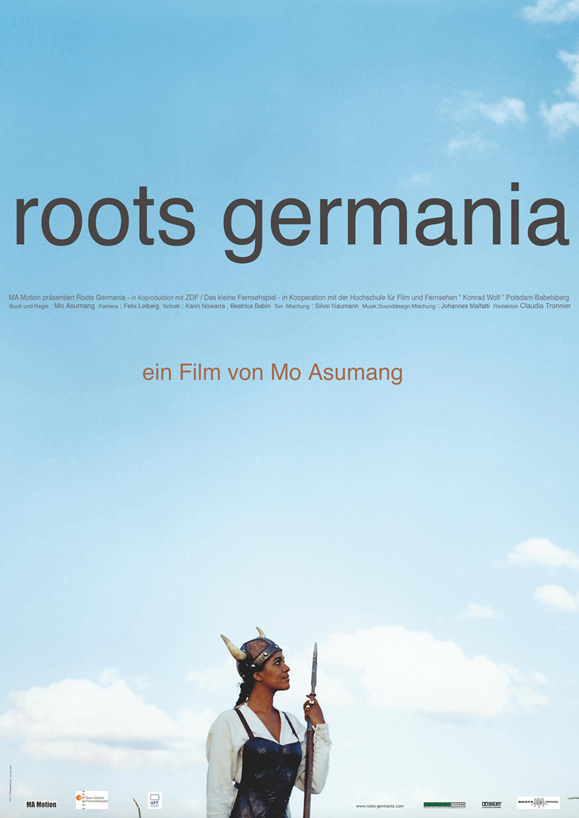
Prejudice inspires filmmaker to discover Afro-German roots

By ABBY LIEBENTHAL

“It all started with a public threat on my life.”

Within the first few minutes of Mo Asumang’s documentary “Roots Germania,” students, faculty and Bloomington residents became part of a search for the director’s identity.

The documentary was presented Friday in Morrison Hall and was followed by a question-and-answer session.

“You don’t hear about German and African relations very often, so I thought it would be something different,” graduate student Sarah Keil said.

Asumang said the journey to find her identity was driven by a desire to understand where racism toward Afro-Germans originated.

“It’s like a job to search for identity,” Asumang said. “It starts when you’re born in Germany – it’s not so easy to be part of that country.”

The film was triggered by a song, written by a Neo-Nazi band the “White Aryan Rebels,” that calls for Asumang’s murder. Lyrics in the song include “This bullet is for you, Mo Asumang.”

Asumang wanted to create a film about racism in Germany and finding her heritage after hearing the song. Throughout the film Asumang illustrated the struggles of having biracial parents in scenes with right-winged Neo-Nazis and Ghanaians.

“I didn’t know who I was,” Asumang said. “I tried to be white when I was younger, so years later I tried to be black.”

Asumang said the movie proves individuals do not consider people of a different race to be German.

While filming, Asumang did not tell Neo-Nazis she was an Afro-German when she called to speak with them – surprising them at their meeting.

Asumang also used the movie as an opportunity to get to know her father and learn more about her mother’s experience with racism.

When Asumang visited Ghana, her father said she did not have to decide exactly who she is and he would always accept her as Ghanaian. Her mother also expressed ideas of acceptance and said that she was forced to move and put Asumang up for adoption because her daughter was Afro-German.

“I can be both, and it’s super,” Asumang said. “I can be on one side a German and on the other a Ghanaian.”

One similarity between her identities, Asumang noted in the film, was spirituality and rituals performed in forests.

Janice Levi, a graduate student, said she took note of the spiritual connection between these two cultures.

“It was interesting how she related it far back to Pagan culture in Europe and experiencing rituals in the forest to both areas,” Levi said.

Asumang ended her film saying that for every Neo-Nazi convention, there are at least three challenging it.

“Some people will never change, but you can change your own life,” she said.

SOURCE

make your own definition

I enjoyed and appreciated this article about “us.”  I’ve been thinking lately about the choice we have to either “interact with the system the way it interacts with you,” or to come up with (and stick to and be ready to defend) our own definition of self.  In other words, you can let everyone else define you because it’s the path of least outward resistance, or you can follow the path of the least inward resistance.  I tried to go along with the system.  I think that was the primary source of my former discontent.  Now that I’m being true to myself, lots of things make a lot more sense and the possibilities seem greater.  Other things seem to make no sense at all and the obstacles loom large.  Yet I’m confident that I’m heading in the right direction.

For fast-growing group of Americans, race isn’t defined by one name

The question hit Tiffanie Grier like a hammer, and more than 15 years later, the impact lingers. She was just 9 years old, a third-grader at a school awards program, when she was asked by a friend’s mother about her ambiguous racial appearance.

What are you?

For Grier, now 26 and career placement director for the Boys & Girls Club of Greater Memphis, it was the first of many instances in which she confronted questions related to her heritage as the daughter of a white mother and an African-American father.

“I get asked a lot,” she said. “(People) feel the need to know.”

Far from being a rarity, however, Grier is part of what may be the fastest-growing demographic, both locally and nationally.

Between 2000 and 2008, the number of people of two or more races rose nearly 33 percent, from 3.9 million to nearly 5.2 million nationwide, according to census estimates.

In Shelby County, the growth rate was even faster. The number of multiracial residents increased some 43 percent, from 6,384 to 9,113 during the eight-year period in which the overall county population grew by only about 1 percent.

The 2010 Census, barely two months away, is expected to show even greater growth in the category, demographers say.

The reasons are twofold. First, the number of interracial marriages, and the children produced by them, has risen steadily since 1967, when the U.S. Supreme Court struck down state prohibitions on the unions.

Second, as a result of a growing acceptance of multiracial heritage, researchers say, people have become increasingly willing to check more than one category for race on the census forms. The election of a mixed-race president, Barack Obama, likely will reinforce that trend.

“It’s the wave of the future, for sure,” said William Frey, a demographer with the Brookings Institution in Washington. “I think symbolically … it might have an impact on how people view race.”

The upcoming census will be only the second in which respondents are able to identify themselves as multiracial.

The 2000 Census showed the emerging “two-or-more-races” group was poised for rapid growth. About 42 percent of them were under age 18, compared to only 25 percent of the general population that young, and 70 percent were younger than 35.

“What that’s telling you is that it’s a young population, and that it’s increasing,” said Nicholas Jones, chief of the Census Bureau’s racial statistics branch.

Among the most common combinations named by people in the two-or-more-races category in 2000 were white-Native American/ Alaskan (1.08 million), white-Asian (about 868,000) and white-black (nearly 785,000).

The significance of the emerging multirace demographic is anything but clear. Frey predicts it will diminish the importance of race — helping to propel society beyond a black-white divide — while others say the impact will be more on a personal level.

“I think it’s important to the people themselves — how they identify themselves,” said Darryl Tukufu, vice president for academic affairs and associate professor of sociology at Crichton College in Memphis.
Memphians (clockwise from top left) Felicia Scarpeti-Lomax, Tiffanie Grier, Cardell Orrin  and Desireé Robertson are members of what may be the fastest-growing demographic, both locally and nationally -- people who may identify themselves by two or more races.

(PHOTO BY MIKE BROWN: Memphians (clockwise from top left) Felicia Scarpeti-Lomax, Tiffanie Grier, Cardell Orrin and Desireé Robertson are members of what may be the fastest-growing demographic, both locally and nationally — people who may identify themselves by two or more races.)

Whatever other effects it might have, the relatively recent census acceptance of multiracial classification recalls the nation’s troubled and convoluted history regarding race.

Although many African-Americans have some white ancestry, the historic “one-drop rule” meant that anyone with so much as a drop of black blood was categorized as black and potentially subjected to disenfranchisement and other forms of discrimination.

That history, said Warner Dickerson, president of the Memphis Branch of the NAACP, blurs the significance of the new census categories.

“I happen to be a fair-skinned black man, and you and I both know why,” Dickerson said. “Most of us are mixed with black blood and white blood.”

Because society has labeled them as black, many people with one African-American and one white parent say they will continue to check only the black category on the census form.

“I will be addressed, especially here in the South, as an African-American,” said Cardell Orrin, 35, a Memphis business consultant and co-founder of a political action committee called New Path. “You decide to make your own definition or interact with the system the way it interacts with you.”

Tukufu said the labeling, and discrimination that accompanied it, tended to instill in many mixed-race people a pride in their black heritage. That’s why they’ve stuck with one racial category on census forms.

“But now you have more of the younger folks who identify with both,” he added.

Grier interviewed people of ambiguous racial appearance, including many of mixed heritage, for her master’s thesis at the University of Memphis. She found that the question of how mixed-race people identified themselves often depends on who raised them.

That was the case with Desireé Robertson, 37, of Millington, who was adopted by an African-American couple and didn’t discover until age 30 that her biological mother was white.

“That’s my primary identification,” Robertson said in explaining why she’ll stay with just African-American as her identity in the census.

But Felicia Scarpeti-Lomax, 39, who was raised by both her white Italian-American mother and her black father, plans to use both racial categories.

“For me to use one racial category, that would be eliminating one of my parents, and that’s not my heritage,” Scarpeti-Lomax said.

She formerly lived in New York City, where racial identity was never an issue, she said.

“I never faced this craziness until I moved to the South,” she said.

Scarpeti-Lomax, like many others of biracial heritage, said she’s glad the Census Bureau finally began offered the choice of multiple categories.

“This is 2010 …” she said, “and I just refuse to live my life identified by a color.”

segregated orphans

A discarded term!?  I guess Bill Kemp has never visited this blog.  I’m grateful for this little piece of our history.

Booker T. Washington Home offered safe haven for black children

By Bill Kemp Archivist/librarian McLean County Museum of History | Posted: Saturday, December 12, 2009

For much of the 20th century, Bloomington-Normal residents thought it necessary to maintain segregated group homes for underprivileged children. One would be hard-pressed to find a better illustration of the embarrassing state of race relations over the decades than the fact that impoverished, neglected and unwanted children were separated by race until the 1960s.

From World War I until JFK and Camelot, African-American children lived at the McLean County Home for Colored Children, later renamed for Booker T. Washington, on Bloomington’s far west side.

This institution dates to 1918 when Alexander Barker and his wife Cedonia, with assistance from Margaret Wyche, took it upon themselves to care for six orphaned black children. Not long after, the Missionary Union, a group of four local churches stepped in to lend much-needed assistance. Though chartered by the state of Illinois in December 1920, the home was a rather primitive operation, with 25 children and 2 adults living in a six-room house with no plumbing or running water.

Improvements in the home, both in its physical plant and operation, soon followed. Located on the 1200 block of West Moulton Street, now MacArthur Avenue, the home’s mission was to “foster self respect, independence and good character.”

Overseen by a 15-member board of progressive-minded women, the home expanded to an adjacent residence. Also acquired in the early years were five nearby lots that were converted to truck gardens so the home could grow much of its own food. The boys generally worked the garden plots and the girls handled the laundry and canning, along with other duties.

The 1920 U.S. Census identified 15 of the 18 children at the home as mulatto, a since-discarded term for someone of mixed-race heritage. Back then, children with one black parent and one white were often outcasts, and into the 1940s, if not later, the home served as a safe haven for mixed-race children abandoned by their parents and local communities.

Money was always tight and the needs of the new arrivals great. “A special effort has been made to give each child his full quota of milk and butter fat, as many of the children were underweight,” read one report from 1921.

“There is absolutely no place of good repute open to such children in Illinois, except this one,” noted The Pantagraph two years later. “The question arises, shall a child be permitted to subsist on the contents of garbage cans … simply because of their race? Paraphrasing the Biblical interrogatory, ‘Who is thy brother’s keeper?’”

a reunion

Siblings cherish long-awaited reunion with birth mother on Thanksgiving

By Cheryll A. Borgaard

For Helen Ford, finding her birth mother four months ago was “exciting, but scary.”

“I was nervous, but I also had a feeling of happiness,” Ford, 54, said Monday. “If you’ve been the product of adoption, you have some questions, but it felt good. You think, ‘Maybe I’ll meet this person, see who I am, where I came from.’ ”

She learned she was born to a 17-year-old blond-haired white girl from a strict Mormon background and a young black man the teen had met in high school in Seattle.

Early Thanksgiving morning at her Longview home, Ford and her birth mother, Delores Burlew, 72, saw each other for the first time in more than five decades.

Their reunion wasn’t the only one to take place that day. Burlew also met Mark Robinson, 52, another child she had with the man two years after Ford was born.

Growing up in Longview

Ford and Robinson were adopted by a black couple, Melvin and Jeanette Robinson of Longview — she at age 2 1/2, he shortly after his birth. They grew up on Eighth Avenue in Longview in a predominantly black neighborhood.

“We were blessed, in a sense, that we got to grow up in the same household. As far as Mama was concerned, we were hers,” Ford said of her adoptive mother, who gave her children little or no information about their background. “Growing up, we did have issues (being biracial), but for the most part, it made us who we are today.”

…Burlew remembers the day she received the document from Children’s Home Society, asking if she would agree to let Ford contact her.

“I got the letter on Friday, and I was scheduled to go to heart surgery on Monday, Aug. 10,” she said Monday from her home in Ogden, Utah. “In the meantime, I had to send in a consent form, but because of my surgery, the caseworker circumvented it, and Helen and I spoke that weekend.”

One of the first things Burlew told Ford during that phone call was that she’d also given up for adoption a son born March 17, 1959.

“I told her yes, that’s my brother, Mark, and that we’d been adopted by the same couple,” Ford said. “Dee (which is what Ford calls Burlew) was just floored at that point.”

“It was great to find out they were together,” Burlew said.

‘It wasn’t something I wanted to do’

Burlew moved from Utah to Seattle with her mother and stepfather in August 1954, just before her senior year of high school.

“I thought my mother was taking me straight to hell; I hated it there,” Burlew said. “I had to leave all my friends in Utah.”

When Burlew discovered she was pregnant, “My mother told me I wouldn’t handle the stress and couldn’t keep the baby. It wasn’t something I wanted to do.”

Burlew went to a home for unwed mothers in Seattle. “My mother didn’t want anyone to know what happened. My mother was a very, very staunch (Mormon).”

The young man had gone into the service, and when he came back on furlough, “it was one time, and boom, there was Mark,” Burlew said.

This time, her mother kicked her out of the house. Burlew said she got a job baby-sitting until she was far enough along in her pregnancy to return to the home for unwed mothers.

“It was just really difficult for me to go through it again,” she said. “But I wanted them to be wherever they would be the best off. I thought I would try to find them, but I never had the means. That’s why I never changed my maiden name. I thought maybe they could find me.”

She returned to Utah in 1959 following her first marriage and gave birth to another son and daughter.

“When they were old enough to know, I told them I figured I needed to tell them (about Ford and Robinson),” she said. “I wanted to tell them of the possibility that ‘You might not like your brother or sister because they’re biracial.’ ”

Read more of the Ford/Robinson/Burlew story HERE

I really liked this story…until the part where the birth mother said she had to warn her white other children that they might not like their siblings because they are biracial.  Did it not occur to her to raise them in a way that would encourage acceptance of all people?  Please pardon my judgmental tone.  I’m just sayin’.

congrats, maya rudolph

Maya Rudolph Welcomes a Girl

by Sarah Michaud

After playing pregnant in this summer’s Away We Go, Maya Rudolph has welcomed a real-life bundle of joy: her second child with director Paul Thomas Anderson.

Maya Rudolph Welcomes a Girl

Maya Rudolph and Paul T. Anderson

The couple’s daughter, Lucille, was born Nov. 6 in Los Angeles, the Saturday Night Live alum’s rep tells PEOPLE exclusively.

Lucille joins big sister Pearl, 4. As with their first child, Rudolph and Anderson, 39, chose not to find out the sex of the baby prior to delivery.

“We didn’t find out with [Pearl], which was kind of fun,” Rudolph, 37, told David Letterman.

“Because when you’re ready to throw in the towel and you’ve got nothing positive to think about or feel, because you’re so heavy and you want to float in a pool of salt water to be buoyant, it was nice to have something to look forward to.”-SOURCE

-I thought this was a cute interview, too.  Not nearly as cute as little Pearl though!-

Actress Maya Rudolph, who is currently pregnant with her second child, sat down recently withBlackBookmag to talk about her daughter Pearl,3. Read below as Maya answers a few questions about being a mother to her first-born.

Q: Did you set out thinking that you’d be a specific type of mother to Pearl?

A:  There’s definitely this fantasy that’s like, “I’m not going to be a mother, I’m going to be Mother-f#$%^*&-Theresa.” And then you realize that you’re still the same person, the same things still bother you, you’re not perfect, but you can still be someone’s parent, someone’s mother, and it can still be okay. There’s no question that you want to give them everything and you want their lives to be perfect. Has any human achieved that? No, probably not.

Q: Once Pearl was born, was she just as you imagined she’d be?

A: We didn’t know if she was going to be a boy or a girl, and, when she finally came out, there was a really quick snip and suddenly, she was resting on my chest, staring at me. And her eyes were super-black. She looked like Marlon Brando in The Island of Doctor Moreau, because she was covered in all of these white blankets staring at me. I remember, in that moment, thinking, Yes, this is my baby. I’d always tried to picture what my baby would look like, and in that second, I was like, Yes, this is the baby I’ve been expecting. And then the doctor said, “Oops, we forgot to see what it was.” I didn’t know if it was a boy or a girl, but I knew it was my baby—you spend so much time being pregnant, not knowing who the hell is coming.

Q: how has it been for you to watch a person forming her own world, using you as her mothership and then going off on her own.

A: There’s no question: you get that proud mom grin sometimes, when it’s like, Check it out. That’s my kid. But, yeah, she is who I thought she’d be in a lot of ways. Let’s put it this way: If she had come out as a total wallflower, and said stuff like, “I hate reading and I don’t like to perform,” then I’d be like, That’s not my kid. So it doesn’t really surprise me that she’s like, “Hey, I’m funny and I like to hang out.”