mixed-race avatar

The many faces of race research

by John Goddard
The technology to turn oneself into a mixed-race avatar might be confined to movies, but Brian Banton plays with racial manipulations of himself online.

As a York University graduate student, he explores questions of racial hybridity as related to corporate design. Much of the work is obscurely theoretical, Banton says. “But I also want to be playful. (Mixed race) is a serious issue but I don’t want to be heavy-handed.”

Image

(York University graduate student Brian Banton, who is half-Scottish and half-Jamaican, used an online tool to manipulate his race. The real Banton is top centre.)

Banton was born in Brampton, the offspring of a Scottish-born mother and Jamaican-born father. When visiting his mother’s family, he feels black, he says. When he’s with his father’s family he feels white. He calls himself “mixed” and “biracial” and “just myself,” but he also admits to a low-level underlying anxiety. People have guessed him to be Italian, Greek, Arab and South American, he says, never half-Scottish half-Jamaican.

“There is comfort in being explicitly part of a community,” Banton says. “I’m in this middle space, not fully committed to one side.

Read more HERE

critical need

I know I’ve posted about this before, but I’m gonna do it again.  And again and again, probably.  The fact that biracial (and af/am) children are in the “critical need” category based solely on their race is unsettling to me.  So, let’s get out there and adopt them 🙂

Catholic Charities to hold information session on adoption

Wilmington, Del. –

Catholic Charities Inc. will host a free informational session for parents who want to learn more about building a family through adoption.

All are welcome to explore opportunities to adopt children in critical need, including African American children, biracial children and special needs children at the late February program.

“These children, ranging in age from infants to age 17, need parents now,” Catholic Charities’ Executive Director Richelle A. Vible said. “If you can, please consider opening your heart to the possibility of creating a family through adoption. It is a special blessing to become the most important person in a child’s life.”

Read more: www.sussexcountian.com

Adoption process is more involved than many realize

By Karamagi Rujumba, Pittsburgh Post-Gazette

Within the United States, a private adoption could cost that much($22,000-25,000), in both time and money, especially depending on the race of the child a family wants to adopt, experts say.

“We are always in need of families to adopt African-American and mixed-race babies,” said Connie Bach, director of adoption for Children’s Home of Pittsburgh and Lemieux Family Center, a full service agency in Friendship.

Full service means that her agency helps walk prospective adoptive parents through the process, which includes a security background check, a family analysis profile, matching and placement of the child before a court can put its stamp of approval on an adoption.

“Something people should know about adoption is that it often takes time, but if a family is truly committed to the process, it can be the most rewarding thing,” said Ms. Bach, whose agency mostly focusses on adoption of babies within the United States.

Read more: http://www.post-gazette.com/pg/10022/1030194-53.stm#ixzz0eZyBSjYM

undercovers

This sounds cool to me.  I hope they make the characters biracial!

J.J. Abrams finds ‘Undercovers’ female lead

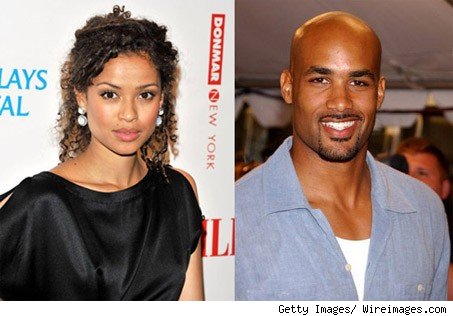
British actress Gugu Mbatha-Raw to star with Boris Kodjoe

By Nellie Andreeva

J.J. Abrams has cast another ingenue as the female lead of his newest TV project.

After a lengthy search, British actress Gugu Mbatha-Raw has landed the female lead opposite Boris Kodjoe on “Undercovers,” Abrams’ pilot for NBC.

“Undercovers,” which Abrams co-wrote with Josh Reims, revolves around a domesticated husband (Kodjoe) and wife (Mbatha-Raw) who are re-activated as CIA agents after years of retirement.

Abrams also will direct, marking the first pilot he has helmed since “Lost” in 2004.

Mbatha-Raw, a graduate of London’s Royal Academy of Dramatic Art, broke through during the summer when she was cast as Ophelia opposite Jude Law in the Donmar Warehouse production of “Hamlet,” which had successful runs in London’s West End and on Broadway.

The daughter of a South African doctor and an English nurse, Mbatha-Raw hasn’t appeared on American TV but has done arcs on several popular British series including “Spooks” and “Doctor Who.”

She is the latest discovery for Abrams, who is known for breaking new young female talent on his TV series. He cast Keri Russell on “Felicity,” Jennifer Garner on “Alias,” Evangeline Lilly on “Lost” and, most recently, Australian Anna Torv on “Fringe.”

Although Kodjoe and Mbatha-Raw are biracial, casting on the leads for the pilot was done color-blind, producers said, as they looked for the actors who best fit the characters and had the best chemistry.

SOURCE

“it’s like a job to search for identity”

Prejudice inspires filmmaker to discover Afro-German roots

By ABBY LIEBENTHAL

“It all started with a public threat on my life.”

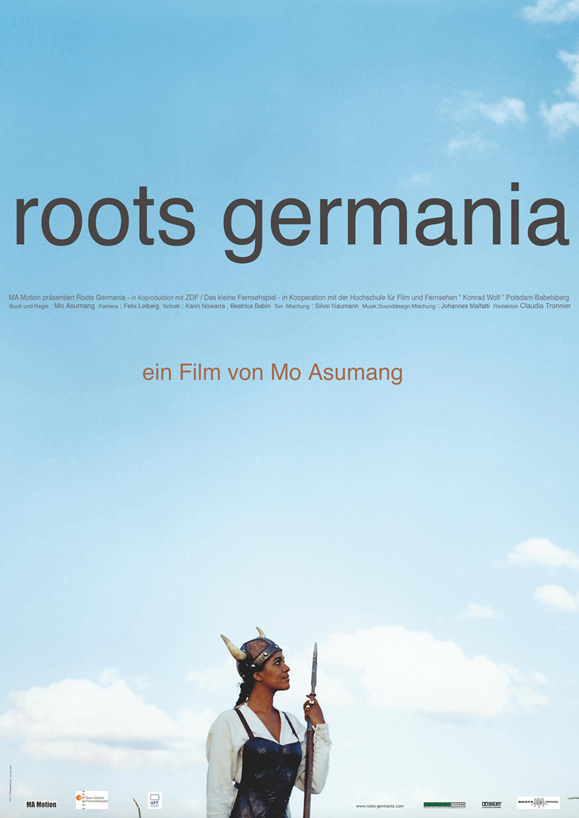
Within the first few minutes of Mo Asumang’s documentary “Roots Germania,” students, faculty and Bloomington residents became part of a search for the director’s identity.

The documentary was presented Friday in Morrison Hall and was followed by a question-and-answer session.

“You don’t hear about German and African relations very often, so I thought it would be something different,” graduate student Sarah Keil said.

Asumang said the journey to find her identity was driven by a desire to understand where racism toward Afro-Germans originated.

“It’s like a job to search for identity,” Asumang said. “It starts when you’re born in Germany – it’s not so easy to be part of that country.”

The film was triggered by a song, written by a Neo-Nazi band the “White Aryan Rebels,” that calls for Asumang’s murder. Lyrics in the song include “This bullet is for you, Mo Asumang.”

Asumang wanted to create a film about racism in Germany and finding her heritage after hearing the song. Throughout the film Asumang illustrated the struggles of having biracial parents in scenes with right-winged Neo-Nazis and Ghanaians.

“I didn’t know who I was,” Asumang said. “I tried to be white when I was younger, so years later I tried to be black.”

Asumang said the movie proves individuals do not consider people of a different race to be German.

While filming, Asumang did not tell Neo-Nazis she was an Afro-German when she called to speak with them – surprising them at their meeting.

Asumang also used the movie as an opportunity to get to know her father and learn more about her mother’s experience with racism.

When Asumang visited Ghana, her father said she did not have to decide exactly who she is and he would always accept her as Ghanaian. Her mother also expressed ideas of acceptance and said that she was forced to move and put Asumang up for adoption because her daughter was Afro-German.

“I can be both, and it’s super,” Asumang said. “I can be on one side a German and on the other a Ghanaian.”

One similarity between her identities, Asumang noted in the film, was spirituality and rituals performed in forests.

Janice Levi, a graduate student, said she took note of the spiritual connection between these two cultures.

“It was interesting how she related it far back to Pagan culture in Europe and experiencing rituals in the forest to both areas,” Levi said.

Asumang ended her film saying that for every Neo-Nazi convention, there are at least three challenging it.

“Some people will never change, but you can change your own life,” she said.

SOURCE

make your own definition

I enjoyed and appreciated this article about “us.”  I’ve been thinking lately about the choice we have to either “interact with the system the way it interacts with you,” or to come up with (and stick to and be ready to defend) our own definition of self.  In other words, you can let everyone else define you because it’s the path of least outward resistance, or you can follow the path of the least inward resistance.  I tried to go along with the system.  I think that was the primary source of my former discontent.  Now that I’m being true to myself, lots of things make a lot more sense and the possibilities seem greater.  Other things seem to make no sense at all and the obstacles loom large.  Yet I’m confident that I’m heading in the right direction.

For fast-growing group of Americans, race isn’t defined by one name

The question hit Tiffanie Grier like a hammer, and more than 15 years later, the impact lingers. She was just 9 years old, a third-grader at a school awards program, when she was asked by a friend’s mother about her ambiguous racial appearance.

What are you?

For Grier, now 26 and career placement director for the Boys & Girls Club of Greater Memphis, it was the first of many instances in which she confronted questions related to her heritage as the daughter of a white mother and an African-American father.

“I get asked a lot,” she said. “(People) feel the need to know.”

Far from being a rarity, however, Grier is part of what may be the fastest-growing demographic, both locally and nationally.

Between 2000 and 2008, the number of people of two or more races rose nearly 33 percent, from 3.9 million to nearly 5.2 million nationwide, according to census estimates.

In Shelby County, the growth rate was even faster. The number of multiracial residents increased some 43 percent, from 6,384 to 9,113 during the eight-year period in which the overall county population grew by only about 1 percent.

The 2010 Census, barely two months away, is expected to show even greater growth in the category, demographers say.

The reasons are twofold. First, the number of interracial marriages, and the children produced by them, has risen steadily since 1967, when the U.S. Supreme Court struck down state prohibitions on the unions.

Second, as a result of a growing acceptance of multiracial heritage, researchers say, people have become increasingly willing to check more than one category for race on the census forms. The election of a mixed-race president, Barack Obama, likely will reinforce that trend.

“It’s the wave of the future, for sure,” said William Frey, a demographer with the Brookings Institution in Washington. “I think symbolically … it might have an impact on how people view race.”

The upcoming census will be only the second in which respondents are able to identify themselves as multiracial.

The 2000 Census showed the emerging “two-or-more-races” group was poised for rapid growth. About 42 percent of them were under age 18, compared to only 25 percent of the general population that young, and 70 percent were younger than 35.

“What that’s telling you is that it’s a young population, and that it’s increasing,” said Nicholas Jones, chief of the Census Bureau’s racial statistics branch.

Among the most common combinations named by people in the two-or-more-races category in 2000 were white-Native American/ Alaskan (1.08 million), white-Asian (about 868,000) and white-black (nearly 785,000).

The significance of the emerging multirace demographic is anything but clear. Frey predicts it will diminish the importance of race — helping to propel society beyond a black-white divide — while others say the impact will be more on a personal level.

“I think it’s important to the people themselves — how they identify themselves,” said Darryl Tukufu, vice president for academic affairs and associate professor of sociology at Crichton College in Memphis.
Memphians (clockwise from top left) Felicia Scarpeti-Lomax, Tiffanie Grier, Cardell Orrin  and Desireé Robertson are members of what may be the fastest-growing demographic, both locally and nationally -- people who may identify themselves by two or more races.

(PHOTO BY MIKE BROWN: Memphians (clockwise from top left) Felicia Scarpeti-Lomax, Tiffanie Grier, Cardell Orrin and Desireé Robertson are members of what may be the fastest-growing demographic, both locally and nationally — people who may identify themselves by two or more races.)

Whatever other effects it might have, the relatively recent census acceptance of multiracial classification recalls the nation’s troubled and convoluted history regarding race.

Although many African-Americans have some white ancestry, the historic “one-drop rule” meant that anyone with so much as a drop of black blood was categorized as black and potentially subjected to disenfranchisement and other forms of discrimination.

That history, said Warner Dickerson, president of the Memphis Branch of the NAACP, blurs the significance of the new census categories.

“I happen to be a fair-skinned black man, and you and I both know why,” Dickerson said. “Most of us are mixed with black blood and white blood.”

Because society has labeled them as black, many people with one African-American and one white parent say they will continue to check only the black category on the census form.

“I will be addressed, especially here in the South, as an African-American,” said Cardell Orrin, 35, a Memphis business consultant and co-founder of a political action committee called New Path. “You decide to make your own definition or interact with the system the way it interacts with you.”

Tukufu said the labeling, and discrimination that accompanied it, tended to instill in many mixed-race people a pride in their black heritage. That’s why they’ve stuck with one racial category on census forms.

“But now you have more of the younger folks who identify with both,” he added.

Grier interviewed people of ambiguous racial appearance, including many of mixed heritage, for her master’s thesis at the University of Memphis. She found that the question of how mixed-race people identified themselves often depends on who raised them.

That was the case with Desireé Robertson, 37, of Millington, who was adopted by an African-American couple and didn’t discover until age 30 that her biological mother was white.

“That’s my primary identification,” Robertson said in explaining why she’ll stay with just African-American as her identity in the census.

But Felicia Scarpeti-Lomax, 39, who was raised by both her white Italian-American mother and her black father, plans to use both racial categories.

“For me to use one racial category, that would be eliminating one of my parents, and that’s not my heritage,” Scarpeti-Lomax said.

She formerly lived in New York City, where racial identity was never an issue, she said.

“I never faced this craziness until I moved to the South,” she said.

Scarpeti-Lomax, like many others of biracial heritage, said she’s glad the Census Bureau finally began offered the choice of multiple categories.

“This is 2010 …” she said, “and I just refuse to live my life identified by a color.”