
I was pained by this headline, but upon reading the article wasn’t as offended as I’d prepared myself to be. There’s a lot of history behind this pain, and I won’t ask anyone not to feel it or to ignore it. That would be detrimental to our progress. I’m glad Jill Scott has put this out there in this way. I wonder, though, if her soul burns when she sees a not-so-successful black man with a white woman. The history is the same and the choice sends the same message wealthy man or not, right? Anyhow, I think we need to dialogue about this so that we’re clear on where these pains and hurts originate, so that eventually the love a person lives will speak to his soul’s credibility. Not the color of the love a person lives.
Jill Scott ‘pained by mixed-race couples’
Jill Scott has reportedly said that her “soul burns” every time she see a “successful black man with a white woman”.
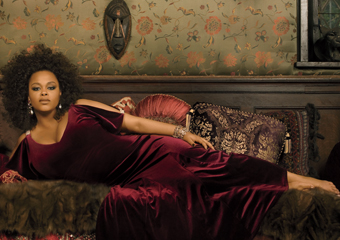
In an interview with Essence magazine, the R&B-soul singer-songwriter said that she wished that a male, African-American friend was married to a black, rather than a Caucasian, woman.
Scott wrote: “My new friend is handsome, African-American, intelligent and seemingly wealthy. He is an athlete, loves his momma, and is happily married to a white woman. I admit when I saw his wedding ring, I privately hoped. But something in me just knew he didn’t marry a sister. Although my guess hit the mark, when my friend told me his wife was indeed Caucasian, I felt my spirit wince. I didn’t immediately understand it. My face read happy for you. My body showed no reaction to my inner pinch, but the sting was there, quiet like a mosquito under a summer dress.”
She continued: “Was I jealous? Did the reality of his relationship somehow diminish his soul’s credibility? The answer is not simple. One could easily dispel the wince as racist or separatist, but that’s not how I was brought up. I was reared in a Jehovah’s Witness household. I was taught that every man should be judged by his deeds and not his colour and I firmly stand where my grandmother left me. African people worldwide are known to be welcoming and open-minded. We share our culture sometimes to our own peril and most of us love the very notion of love. My position is that for women of colour, this very common “wince” has solely to do with the African story in America.”
Scott added: “Our minds do understand that people of all races find genuine love in many places. We dig that the world is full of amazing options. But underneath, there is a bite, no matter the ointment, that has yet to stop burning. Some may find these thoughts to be hurtful. That is not my intent. I’m just sayin’.”








 mulatto diaries